 how-to
When Should You Replace Aging Storefront Signage?
Last Updated: October 27, 2026
Quick Summary
Replace your storefront signage when it shows two or more warning signs, such as fading, lighting failures, or structural damage. Structural or safety-critical problems like a wobbling frame or loose letters mean you should stop using the sign and get an inspection now. If a sign needs more than two repairs in a three-year window, replacement is usually the better financial decision.
- Vinyl graphics typically last 3-5 years before fading and peeling become a problem.
- Inspect your sign in daylight from the ground using a flashlight, binoculars, and a camera phone.
- Level 3 structural issues like exposed wiring or rusted supports require stopping sign use immediately.
- Modern LED illumination typically uses less power and lasts longer than older lighting.
- Wash the sign face every few months with mild soap and water to extend its lifespan.
Table of Contents
- Warning Signs Your Storefront Signage Is Past Its Prime
- How Long Do Business Signs Last?
- Structural Damage and Safety Hazards to Watch For
- Sign Repair vs Replacement: Which Makes Sense?
- Storefront Sign Maintenance That Extends Lifespan
- Business Sign Replacement Cost: What to Expect
- Planning Your Storefront Signage Upgrade with GBCJ Los Angeles
- Frequently Asked Questions
Warning Signs Your Storefront Signage Is Past Its Prime
At GBCJ Los Angeles, we have over 15 years of industry experience. This guide walks you through the warning signs, the repair-or-replace call, and the replacement process from start to finish.
Here is the short answer. If your sign shows two or more of the problems below,
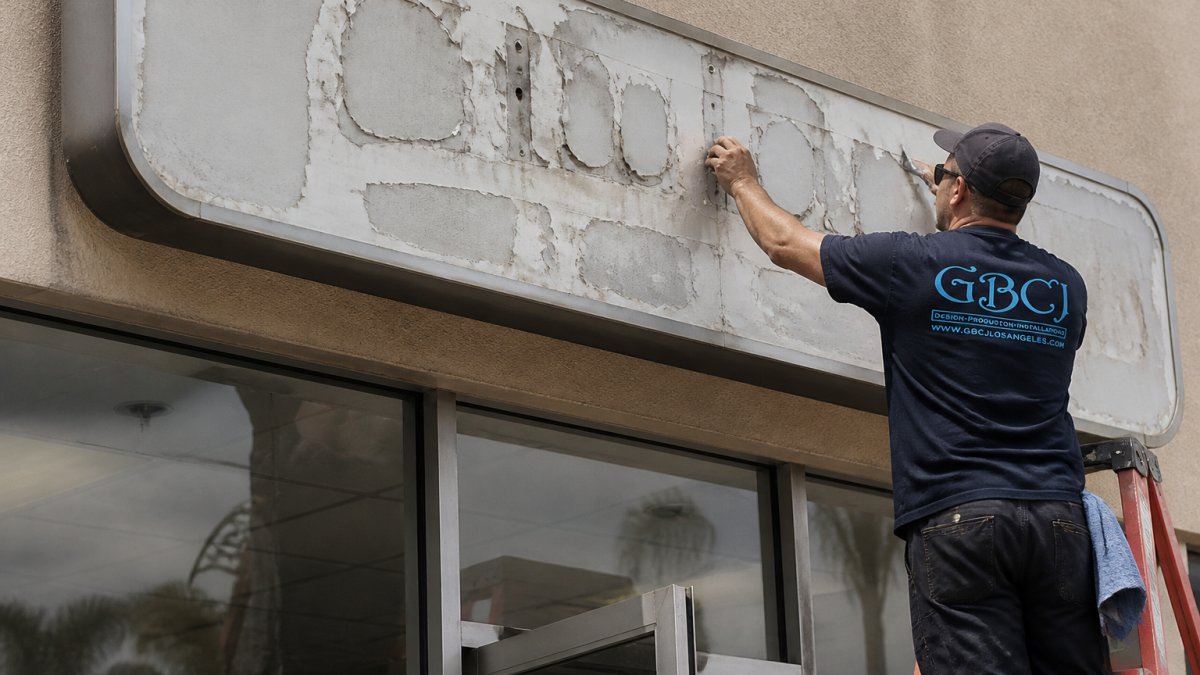
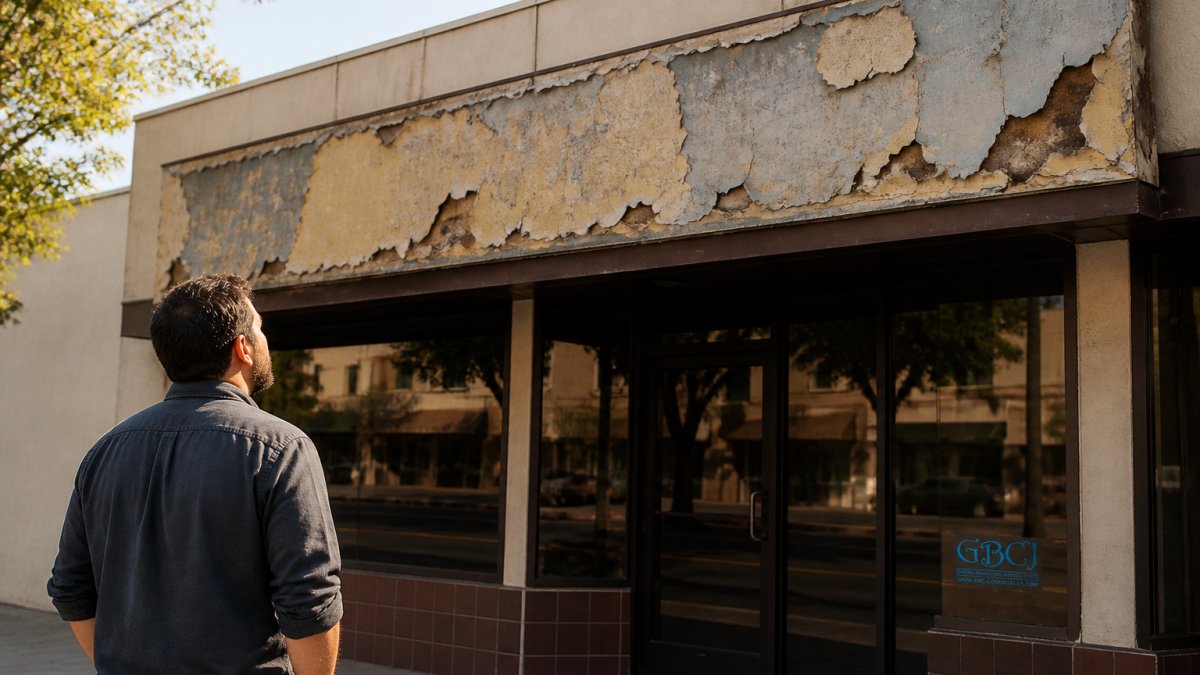
Fading, Peeling, and Weather Damage
Walk outside and look at your sign in daylight. Check for:
- Colors that look washed out next to your logo file
- Bubbles or curling edges on the sign face
- Cracks running through letters or graphics
- Brown rust streaks on the frame or supports
Lighting Failures and Visibility Problems
Check your sign after dark at least once a month. Look for dark letters, uneven brightness, and flickering. Also check legibility from across the street and from a moving car. If you cannot read it in three seconds, it is failing its one job.
How Long Do Business Signs Last?
Here is a rough lifespan guide by material:
| Sign Type | Typical Lifespan | Main Weak Point |
|---|---|---|
| Vinyl graphics | 3-5 years | Fading, peeling |
| Painted wood | 5-8 years | Cracking, rot |
| Aluminum panels | 10-15 years | Paint fade |
| Illuminated channel letters | 10-15 years | LED and wiring wear |
| Monument signs | 15+ years | Masonry and lighting |
Structural Damage and Safety Hazards to Watch For
Structural problems are the one category you cannot postpone. A sign that wobbles, leans, or has loose letters is a safety hazard, and in a busy retail area that is a liability. The problem is that most owners do not know how to tell cosmetic wear from a genuine structural failure. Use the severity levels below to sort what you find into one of three buckets: monitor, repair soon, or stop using the sign.
How to Inspect a Storefront Sign Safely
Do the inspection in daylight, from the ground, without climbing or leaning out. You are looking for movement, gaps, corrosion, and water intrusion, not just appearance. A few tools help: a flashlight, a pair of binoculars, a camera phone for close-ups, and a notepad to record what you see and the date. Photograph every issue so you can compare it on the next inspection.
Severity Levels for Sign Problems
Level 1, Cosmetic (monitor and schedule routine maintenance).
Level 2, Functional (repair within weeks).
Level 3, Structural or Safety-Critical (stop using the sign and get an inspection now). Any of the following:
- A frame that moves, wobbles, or leans when you observe it in wind
- Letters or panels that are detached, hanging, or missing
- Cracks at mounting points, brackets, or where the sign meets the wall
- Rust that has eaten through a support, bolt, or weld
- Water stains, soft spots, or rot where the sign attaches to the building
- Exposed wiring, a damaged raceway, or water inside an illuminated cabinet
- A sign that has shifted after a storm, impact, or nearby construction
What a Professional Inspection Adds
A sign technician checks what you cannot see from the ground: anchor torque, weld condition, the condition of the wall behind the sign, the electrical connections inside the cabinet, and whether the sign was installed to the manufacturer's specification in the first place. Many failures trace back to installation details, undersized anchors, missing backing plates, or fasteners that were never rated for the wall material. An inspection report gives you a written record of condition and a clear recommendation on repair versus replacement, which is also useful if you need to show a landlord or insurer that you acted on a known hazard.
Sign Repair vs Replacement: Which Makes Sense?
Repair makes sense when the damage is cosmetic and isolated. Replacement makes sense when the problem is structural, widespread, or tied to outdated branding. The hard part is the middle ground, where a sign still works but keeps costing money. The framework below compares repair and replacement on total cost of ownership rather than the next invoice.
Step 1: Classify the Problem
Use the severity levels from the inspection section. Level 1 cosmetic issues are almost always repair or maintenance. Level 3 structural or safety issues are almost always replacement, because repairing a failed frame or mounting system rarely restores the original safety margin. Level 2 functional issues are the real decision point, and the questions below resolve them.
Step 2: Compare Lifecycle Costs, Not Just the Quote
- Repair path. Add the repair cost, the expected number of repeat repairs over the next few years, the energy the old sign will consume, and the downtime for each service call. Divide by the years the sign is likely to keep working.
- Replacement path. Add the new sign cost, installation, permitting, and design, then subtract the energy savings from modern LED illumination and the reduced maintenance calls. Divide by the expected service life of the new sign.
Step 3: Apply the Repair-Frequency Rule
A common practitioner rule of thumb: if a sign needs more than two repairs in a three-year window, or if repairs in a single year approach a meaningful share of the cost of a new sign, replacement is usually the better financial decision. Track every service call with the date and cost so the pattern is visible rather than remembered.
Step 4: Weigh the Non-Cost Factors
- Downtime. A face or component swap can often be done in a day. A full replacement involves design, permitting, fabrication, and installation, so plan for weeks, not days. If the sign is your main street-facing identifier, schedule replacement during a slow period.
- Energy use. Modern LED illumination typically uses less power and lasts longer than older lighting, so an illuminated sign that is failing electrically is a stronger replacement candidate than a non-illuminated one.
- Branding. If the logo, colors, or messaging are outdated, repairing the sign preserves the problem. Replacement is the only path that fixes brand perception at the same time.
- Compliance. If the existing sign predates current sign-code or accessibility requirements, a repair may not be allowed to continue noncompliant features. Check with your local permitting office before committing to repair.
- Landlord and lease terms. Some commercial leases make the tenant responsible for sign condition and require landlord approval for changes. Confirm both before you choose a path.
Step 5: Make the Call
When you weigh sign repair vs replacement, count the total cost of ownership, not just the next invoice. Repeated repairs on a failing sign often add up to more than a new sign would have cost. We handle both paths, and our sign repair services cover illuminated and non-illuminated signs, so you can get an honest read before you commit. If you are leaning toward replacement, our guide to why cheap signage costs more long term explains the math.
Storefront Sign Maintenance That Extends Lifespan
- Wash the sign face every few months with mild soap and water
- Check for loose letters and fasteners quarterly
- Test lighting monthly and replace failed components fast
- Trim nearby trees and shrubs so they do not block the sign
- Touch up small chips before water gets behind the paint
Business Sign Replacement Cost: What to Expect
- Size and material. Larger signs and premium materials cost more. For a full breakdown of the factors that shape a quote, see our guide to custom business sign pricing.
- Illumination. Adding LED lighting raises both the parts and labor cost.
- Installation height and access. A sign that needs a lift or a permit costs more to install.
- Permits and landlord approval. Many commercial properties require sign-off before a new sign goes up.
- Design work. Custom design adds to the project but protects your brand.
Planning Your Storefront Signage Upgrade with GBCJ Los Angeles
- Consultation. We look at your storefront, your goals, and your budget. Learn how the consultation process works before you reach out.
- Design. We turn your brand into a sign concept and refine it with you. You can also browse our illuminated signs to see the options available for your storefront.
- Permits and landlord approval. We help you sort out what your property and local rules require.
- Fabrication. We build the sign to spec.
- Installation. We mount it safely and check the lighting.
Frequently Asked Questions
How do I know when to replace a storefront sign?
Replace your storefront signage when you see fading, peeling, cracked faces, rusted frames, flickering or burnt-out lighting, or letters that wobble. These are signs the sign is no longer doing its job of attracting customers. If repairs would cost more than half the price of a new sign, or the damage affects structural safety, replacement is the smarter move. A quick inspection every six months helps you catch problems early.
Can a faded storefront sign be repaired instead of replaced?
Sometimes. Minor fading on vinyl graphics can be refreshed, and a single burnt-out bulb or failed LED module is usually a quick fix. But when the sign face itself is cracked, colors have faded across the whole panel, or the frame is rusting through, repair rarely lasts. Sign repair vs replacement comes down to condition and age: if the sign is past 70 percent of its expected lifespan, put the money toward a new one.
How much does it cost to replace a storefront sign?
Business sign replacement cost depends on size, materials, illumination, and installation. A simple vinyl or acrylic sign costs far less than a large illuminated channel-letter sign. Because pricing varies so much by project, request a quote based on your exact dimensions and design. GBCJ Los Angeles can walk you through options and give you a clear estimate before any work begins.
How often should a business update its signs?
Most exterior business signs last 7 to 15 years depending on material and weather exposure. Beyond physical wear, update your signage whenever your logo, colors, or messaging change, or if the sign looks dated next to newer businesses nearby. A storefront sign maintenance routine, including regular cleaning and quick repairs, helps you get the full lifespan before replacement is needed.
Is your sign fading, flickering, or leaning? Do not wait for a customer to notice before you do. GBCJ Los Angeles brings over 15 years of experience, a customer-centric process, and affordable design to every storefront project. We build custom storefront signs, vehicle graphics, and displays that reinforce your brand and maximize visibility. Get started with GBCJ Los Angeles and give your storefront the first impression it deserves.