 listicle
Custom Business Sign Pricing: Key Factors That Decide Cost
Table of Contents
- What Determines Custom Business Sign Pricing?
- Average Cost of Storefront Signs by Type
- Material Selection and Durability Trade-Offs
- Commercial Sign Installation Fees: Labor and Mounting
- Custom Sign Permitting Costs and Local Rules
- The Hidden Costs of Cheap Signs: ROI and Lifecycle
- Budgeting for Your Custom Business Sign Project
- Frequently Asked Questions
What Determines Custom Business Sign Pricing?
Custom business sign pricing is the total cost of designing, fabricating, and installing a sign tailored to your brand and location. No two quotes look the same because the price depends on a web of variables: the type of sign, the materials, the complexity of the design, the installation method, and the local rules where your business operates. Understanding these factors before you request a quote is the difference between a budget that holds and a surprise invoice.
Most business owners start with a number in mind and work backward. That approach fails because it ignores the largest cost drivers. At GBCJ Los Angeles, we've spent over 15 years fabricating storefront signs, and the most common mistake we see is a client who compares a basic vinyl banner quote to a dimensional channel letter quote and assumes someone is overcharging. They are not comparing the same product.
The real cost drivers break down into five categories: the sign type itself, the materials, the installation labor, the permits, and the design work. Below, we'll walk through each one so you can budget accurately and avoid the hidden expenses that catch most small businesses off guard. We'll also cover why the cheapest quote up front is often the most expensive choice over the life of the sign.
Average Cost of Storefront Signs by Type
The type of sign you choose is the single largest variable in custom business sign pricing. A simple window decal costs a fraction of a fully illuminated monument sign, and each option serves a different purpose.
Here is a practical breakdown of common storefront sign types and what drives their cost:
- Window decals and vinyl graphics: The most affordable option. Cost is driven by square footage and the complexity of the cut or print.
- Vinyl banners: A temporary or low-cost permanent solution. Pricing depends on size, grommet placement, and whether you need wind slits for durability.
- Channel letter signs (individual dimensional letters): Each letter is fabricated separately, often with internal LED lighting. This is where costs rise significantly because of the metal fabrication and electrical components.
- Cabinet or box signs: A single illuminated box with a printed or vinyl face. Simpler than channel letters but still requires a structural frame and lighting.
- Monument and pylon signs: Ground-mounted structures that often require concrete footings, steel supports, and extensive permitting. These are the highest-cost category.
| Sign Type | Relative Cost | Primary Cost Drivers | Typical Use Case |
|---|---|---|---|
| Window decals | Lowest | Square footage, print complexity | Retail storefronts, offices |
| Vinyl banners | Low | Size, wind slits, grommets | Promotions, temporary events |
| Channel letters | High | Metal fabrication, LED lighting | Storefronts needing night visibility |
| Cabinet signs | Moderate to high | Frame, sign face, lighting | Franchises, retail chains |
| Monument/pylon signs | Highest | Concrete, steel, electrical, permits | Standalone businesses, shopping centers |
SBA's guide to storefront signage and small business marketing notes that effective signage is a direct investment in visibility, yet many owners underestimate the cost difference between sign categories. The key takeaway: decide what the sign must do before you decide what it should look like. If you need to attract drive-by traffic at night, a vinyl banner will not deliver results, and a channel letter sign is the appropriate investment.
Material Selection and Durability Trade-Offs
Materials are the second major pricing factor for custom business signs, and this is where durability directly collides with your budget. The substrate, or the base material of the sign face, determines how long the sign lasts and how it holds up against weather, sun, and impact.
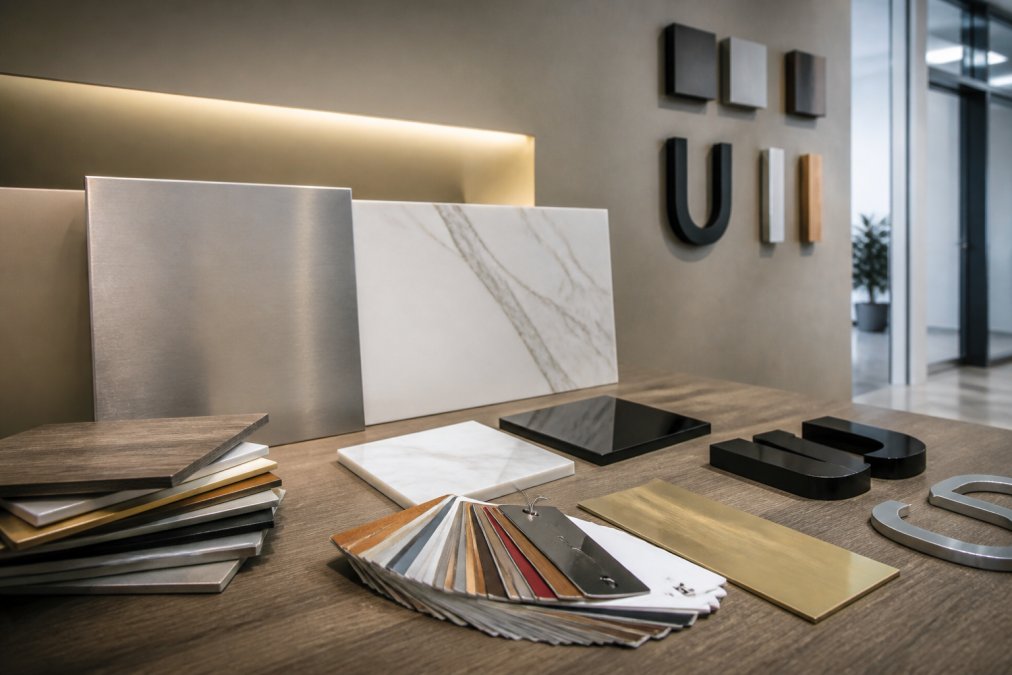
Acrylic and polycarbonate are common for sign faces and letters. Acrylic offers a clean, glossy look and is easy to fabricate, but it can yellow and become brittle after years of direct sun (pubs.acs.org). Polycarbonate is more impact-resistant and handles temperature swings better, but it costs more and can be harder to cut cleanly. Aluminum and steel are standard for dimensional lettering and structural frames. Aluminum resists corrosion and is lightweight, making it a strong choice for outdoor signs. Steel is heavier and stronger but requires proper coating to prevent rust.
The trade-off is simple: cheaper materials fail faster, and a failed sign costs you in replacement labor, lost visibility, and potential damage to your brand image. A common mistake we see is a business choosing a thin, non-UV-stabilized vinyl for an outdoor application to save money, only to have it fade and crack within a year.
Weather resistance is not an optional feature for outdoor signage. It is a core requirement. When you request a quote, ask the fabricator which specific materials they recommend for your climate and exposure. A reputable shop will not upsell you on premium materials you do not need, but they will steer you away from materials that will fail.
Commercial Sign Installation Fees: Labor and Mounting
Commercial sign installation fees are a significant portion of your total project cost, often rivaling the fabrication price. The labor involved is skilled, sometimes dangerous, and always regulated.
Installation costs scale with three factors: the height of the installation, the weight of the sign, and the mounting surface. A sign going on a single-story storefront wall is a straightforward job. A sign going on a second-story parapet or a high-rise building requires specialized equipment like a bucket truck or a crane, which adds substantial cost. The mounting surface matters too. Brick and concrete require different anchors than stucco or metal stud framing, and a surface that cannot support the sign's weight will need structural reinforcement first.
Electrical work is a separate line item. Illuminated signs require a licensed electrician to run the wiring from your panel to the sign, install the junction box, and ensure the connection meets local code. This is not a task for a general handyman, and cutting corners here creates a fire risk and a code violation.
The mounting hardware itself is another cost layer. Flush-mounted signs sit directly against the wall. Projecting or hanging signs require custom metal brackets engineered to hold the sign's weight against wind load. The sign must be engineered to survive wind and seismic forces, which means the hardware is not an off-the-shelf part.
OSHA's guidance on safe installation practices and working at height establishes clear safety protocols for workers installing signs at elevation. Hiring a professional crew that follows these protocols is not just a safety issue; it protects you from liability if an accident occurs on your property. The cheapest installation bid is often the one that skips the crane rental, the structural engineer, or the proper safety gear, and that risk is not worth the savings.
Custom Sign Permitting Costs and Local Rules
Custom sign permitting costs are the line item most business owners forget, and the one that causes the most project delays. You cannot simply install a sign on your property and open for business. Your sign must comply with local zoning regulations, and you must obtain a permit before installation begins.
Permitting is a process, not a single fee. You will likely pay a plan review fee, a permit fee, and possibly an inspection fee. But the real cost is often the time and expertise required to get the application approved. Many jurisdictions require a site plan, a scaled drawing of the sign, and proof that the sign meets local size and height limits. If your sign does not comply, you will pay to revise the plans and resubmit.
Zoning regulations vary dramatically by city and even by neighborhood. Some areas restrict the total square footage of signage allowed per property. Others ban certain types of signs, like animated or flashing LED signs. If your business is in a shopping center or a building with a homeowners association, you may also face restrictive covenants that go beyond city rules. These private agreements can dictate everything from the color of your letters to the type of lighting you can use.
A professional sign company handles this paperwork as part of the project. They know the local code, they prepare the permit drawings, and they coordinate with the building department so you do not have to. At GBCJ Los Angeles, permit procurement is part of our project management process for storefront signs. Trying to save money by skipping the permit is a false economy. Municipalities can issue stop-work orders, levy fines, and force you to remove a non-compliant sign entirely.
The Hidden Costs of Cheap Signs: ROI and Lifecycle
The cheapest quote is rarely the most cost-effective choice. When you evaluate custom business sign pricing, you need to look at the total cost of ownership over the sign's lifespan, not just the installation price.
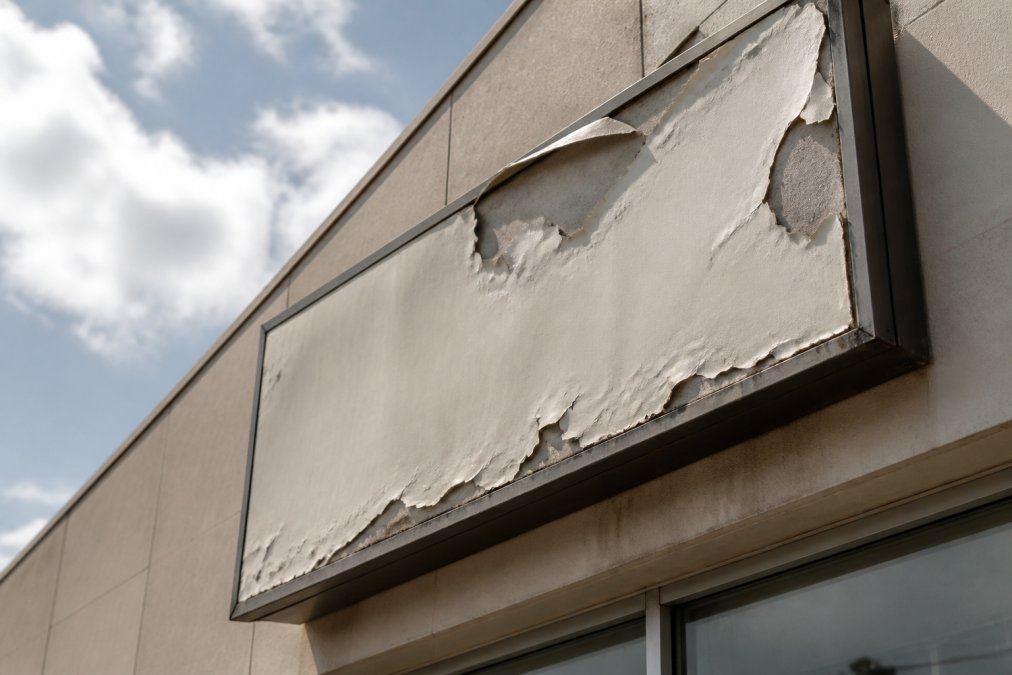
A cheap sign fails in predictable ways. The vinyl fades and peels. The LED lighting burns out prematurely. The paint on the metal letters chips, exposing the substrate to corrosion. Each of these failures triggers a maintenance call, and those calls add up. More importantly, a degraded sign projects a degraded brand image. Your sign is often the first impression a potential customer has of your business, and a sign with flickering lights or cracked letters tells people you do not care about details.
The opposite side of that coin is the return on investment. A well-designed, visible sign does not just mark your location. It drives foot traffic. Signage is one of the few marketing investments you make once and benefit from for years. The signage visibility directly impacts whether a passerby becomes a customer.
Consider the lifecycle cost. A premium sign built with UV-stabilized materials, quality LED components, and proper structural mounting might cost two to three times more than a budget sign. But it can last a decade or more with minimal maintenance. The budget sign might need replacement every two to three years. Over a ten-year period, the premium sign is often the cheaper option, and it looks better the entire time.
This is why a conversation about price is really a conversation about value. When a client at GBCJ Los Angeles asks why our quote is higher than a competitor's, the answer is usually in the materials list and the installation method. We build signs to a standard, not to a price point, and the difference shows up in the years of trouble-free service.
Budgeting for Your Custom Business Sign Project
A realistic budget for a custom sign project accounts for all five cost categories: design, materials, fabrication, installation, and permitting. Most owners only think about the fabrication cost and are blindsided by the rest.
Here is a checklist to build an accurate budget:
- Define the sign's job: Is it for night visibility, day branding, or both? This determines whether you need illumination.
- Get a site survey: Confirm the mounting surface, power availability, and any obstructions. This prevents change orders later.
- Request a detailed quote: Ensure it itemizes materials, fabrication, electrical work, installation, and permit fees separately.
- Verify the warranty: Ask what is covered and for how long. A warranty on the LED lighting and the vinyl is a sign of a quality fabricator.
- Confirm the timeline: Ask how long the permit process takes and build that into your opening schedule.
- Plan for maintenance: Budget for annual cleaning and inspection to extend the sign's life.
Custom sign pricing is not a single number you can look up. It is a function of your specific location, your design goals, and the quality bar you set. The most expensive sign is the one that fails, and the cheapest sign is the one that works without problems for a decade.
When you are ready to move forward, work with a partner who builds signs and manages the entire process. The GBCJ Los Angeles team handles design, fabrication, permitting, and installation for storefront signs, vehicle graphics, and event displays. We have spent over 15 years helping small businesses and property managers create signage that reinforces brand identity and maximizes visibility. Contact us to discuss your project and get a detailed quote tailored to your storefront.
Frequently Asked Questions
What factors influence the price of a custom storefront sign?
The main cost drivers are size, material, illumination type, design complexity, installation labor, and permitting. A larger sign requires more substrate and structural support. Dimensional lettering in metal costs more than flat vinyl lettering. Adding LED lighting increases both material and electrical labor costs. Custom permitting costs vary by city, so checking local zoning rules before fabrication prevents surprise fees.
How much do commercial business signs cost compared to basic storefront signs?
Commercial signage projects generally cost more because they involve engineered mounting, electrical connections, and compliance with zoning regulations. A basic storefront sign might use a simple channel letter set, while a commercial installation on a tall building requires a crane, permits, and structural reinforcement. The cost of storefront signs rises with height, wind load requirements, and the complexity of the mounting surface.
Is it more expensive to choose LED illumination for business signs?
Yes, LED illumination adds upfront cost compared to non-illuminated signs. You pay for the LED modules, power supply, electrical wiring, and the labor to install them. However, LED lights use less electricity and last longer than older fluorescent options, which lowers the total cost of ownership over the sign's lifespan. The visibility benefit often justifies the higher initial investment.
How do installation and permitting affect the total cost of signage?
Commercial sign installation fees cover crane time, mounting hardware, and labor, which vary with the height and difficulty of the install. Custom sign permitting costs include application fees and any engineering drawings your city requires. Both add to the project total, but skipping them risks fines and forced removal. Factor these into your budget before you commit to a design.
Frequently Asked Questions
Q: What factors influence the price of a custom storefront sign?
A: The main cost drivers are size, material, illumination type, design complexity, installation labor, and permitting. A larger sign requires more substrate and structural support. Dimensional lettering in metal costs more than flat vinyl lettering. Adding LED lighting increases both material and electrical labor costs. Custom permitting costs vary by city, so checking local zoning rules before fabrication prevents surprise fees.
Q: How much do commercial business signs cost compared to basic storefront signs?
A: Commercial signage projects generally cost more because they involve engineered mounting, electrical connections, and compliance with zoning regulations. A basic storefront sign might use a simple channel letter set, while a commercial installation on a tall building requires a crane, permits, and structural reinforcement. The cost of storefront signs rises with height, wind load requirements, and the complexity of the mounting surface.
Q: Is it more expensive to choose LED illumination for business signs?
A: Yes, LED illumination adds upfront cost compared to non-illuminated signs. You pay for the LED modules, power supply, electrical wiring, and the labor to install them. However, LED lights use less electricity and last longer than older fluorescent options, which lowers the total cost of ownership over the sign's lifespan. The visibility benefit often justifies the higher initial investment.
Q: How do installation and permitting affect the total cost of signage?
A: Commercial sign installation fees cover crane time, mounting hardware, and labor, which vary with the height and difficulty of the install. Custom sign permitting costs include application fees and any engineering drawings your city requires. Both add to the project total, but skipping them risks fines and forced removal. Factor these into your budget before you commit to a design.