 listicle
Custom Office Lobby Signs for Small Business: 2026 Guide
Table of Contents
- Why Your Reception Area Signage Sets the Tone
- Compare Custom Office Lobby Signs by Material
- Reception Area Signage Design Best Practices
- Custom Office Lobby Signs: Size, Lighting, and Backlit LED
- ADA Compliant Office Signs: Legal Requirements
- DIY vs. Professional Installation Services
- Maintenance and Cleaning Protocols for Lobby Signs
- Ready to Build Your Custom Lobby Sign?
- Frequently Asked Questions
Last Updated: September 9, 2026
Your lobby is the first thing clients, partners, and new hires see, and that first impression is built in seconds. Custom office lobby signs for small business are a silent sales pitch that communicates your company's stability, taste, and attention to detail before a single handshake occurs. This guide from GBCJ Los Angeles walks through the materials, design choices, and practical logistics of creating a sign that works as hard as your team does.
Below, we break down the decision into material comparisons, design best practices, sizing and lighting, legal compliance, and installation.
Why Your Reception Area Signage Sets the Tone
Reception area signage is the most direct visual statement of your corporate identity. A custom office lobby sign signals that you have invested in your space, building client confidence and reinforcing brand recognition with every visitor.
A visitor walks in with expectations shaped by your website and emails. The lobby either confirms that story or breaks it. A well-executed sign with dimensional lettering and a clean, professional aesthetic tells them you are established, detail-oriented, and worth their time. A generic, poorly lit sign can undermine your credibility before you say a word.
While it is difficult to track a direct conversion from a lobby sign, its impact on perceived value is significant. It supports your sales team by creating a favorable environment for negotiations and helps retain talent by giving employees a space they are proud to bring clients into.
Compare Custom Office Lobby Signs by Material
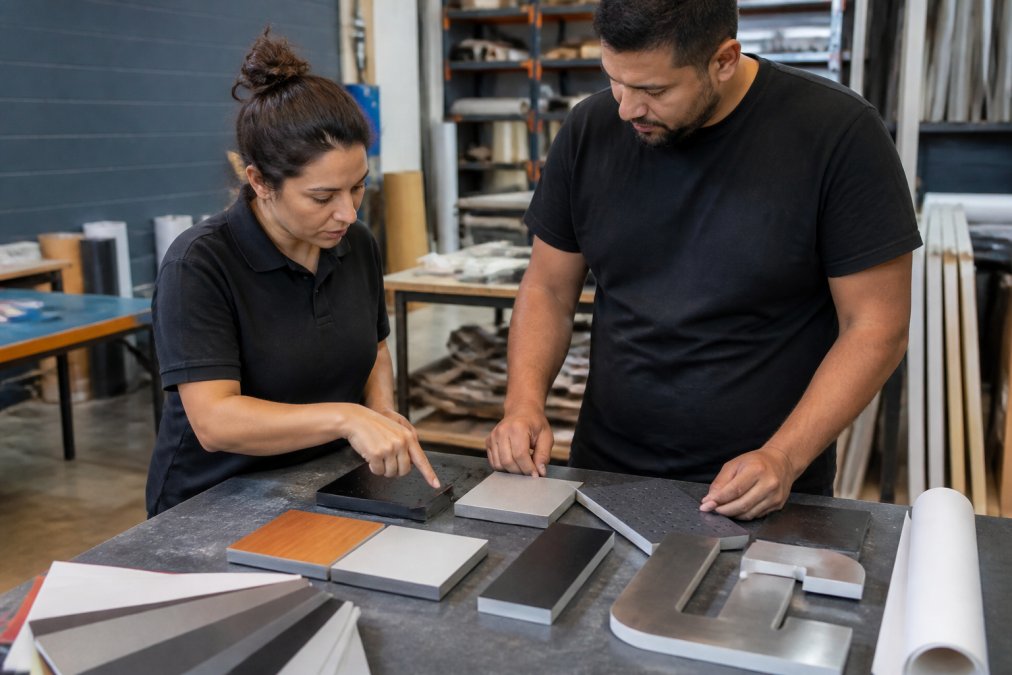
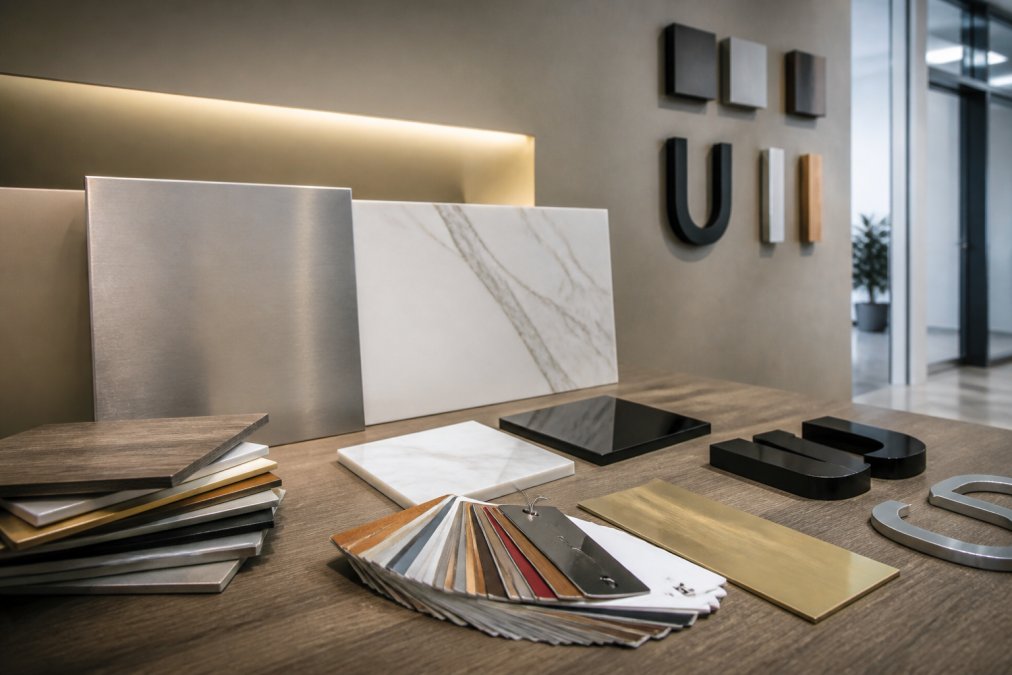
When comparing custom office lobby signs, the material choice drives both the look and the durability. The most common options for interior branding are dimensional lettering, acrylic panels, and brushed metal, each offering a distinct visual weight.
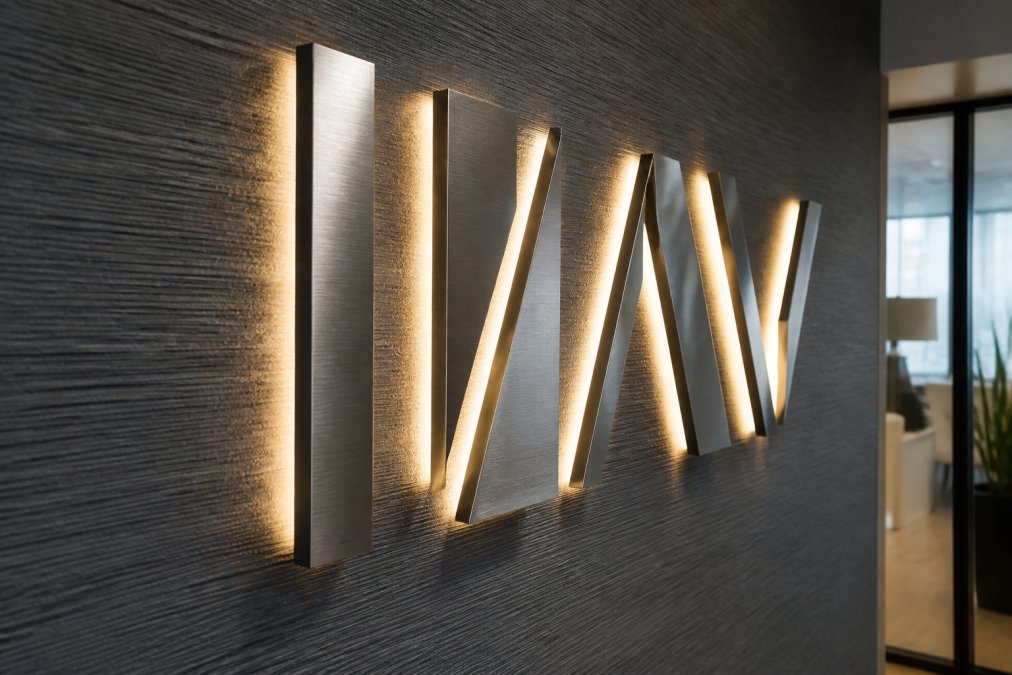
Dimensional lettering is the industry standard for a premium look. These letters are typically CNC-cut from materials like PVC board, Dibond, or metals, then mounted directly to the wall, casting a subtle shadow that adds depth and permanence that flat vinyl graphics cannot match.
Acrylic panels offer a sleek, modern alternative. A single piece of acrylic can be cut to your logo shape or used as a backing plate for mounted letters. Acrylic is versatile for color matching and can be paired with backlit LED for a high-impact glow.
Brushed metal finishes, such as stainless steel or aluminum, convey a corporate, high-end feel. They are durable and easy to clean, making them a practical choice for high-traffic areas.
| Material | Best For | Durability | Maintenance |
|---|---|---|---|
| Dimensional Lettering | Premium, established brands | High | Low |
| Acrylic Panels | Modern, colorful logos | Medium-High | Medium |
| Brushed Metal | Corporate, industrial looks | High | Low |
| PVC Board | Budget-friendly, interior use | Medium | Medium |
Your choice should align with your brand's personality. A law firm might prefer the gravitas of brushed metal, while a creative agency could opt for vibrant acrylic panels.
Reception Area Signage Design Best Practices
Good design is about legibility and brand consistency, not just aesthetics. The primary goal is to ensure your logo is reproduced with high-resolution printing and accurate color matching to maintain your visual identity.
First, prioritize font legibility. Your company name should be readable from a distance. Avoid overly scripted fonts that look elegant on a screen but become difficult to read in large format. Your designer should test the letterforms at full scale to ensure they are crisp.
Second, consider the wall surface and background. A busy, textured wall can clash with your sign. Often, a clean backdrop or a contrasting "feature wall" is the best stage for your logo. The contrast between the sign material and the wall color determines how well your brand pops.
Third, think about proportion and scale. A common mistake is ordering a sign that is too small for the wall, making it look lost and insignificant. Your sign should occupy a confident amount of visual space; consider the viewing distance, as the further away people will be, the larger the lettering needs to be.
Custom Office Lobby Signs: Size, Lighting, and Backlit LED
Choosing the right size for your space is a balance between visibility and proportion. A custom office lobby sign should fill the wall without overwhelming it. Measure your wall and consider the ceiling height; a 10-foot ceiling can handle a taller sign than a standard 8-foot office ceiling.
The most impactful upgrade in modern lobby design is illuminated signage. While standard wall-mounted signs are visible during the day, a backlit LED option ensures your brand is visible and vibrant in the evening or in dimly lit corridors.
There are two main types of illumination to consider:
- Halo-lit (reverse-lit) letters: The light glows from behind the letters, creating a crisp halo effect on the wall. This is a premium, subtle look.
- Face-lit letters: The light shines through the front face of the letter, making the logo itself luminous and bright.
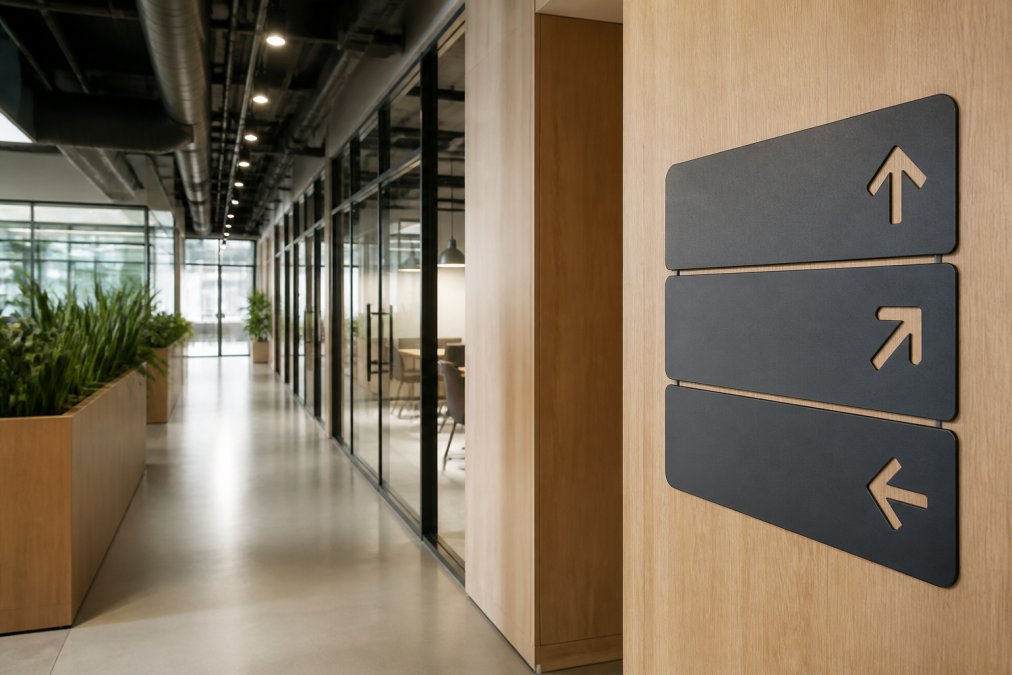
Lighting also impacts your wayfinding efforts. A well-lit sign helps visitors identify your reception area immediately, reducing confusion in multi-tenant buildings. Remember that illuminated signage requires electrical work, which adds to production lead time and installation complexity.
ADA Compliant Office Signs: Legal Requirements
Beyond aesthetics, your signage may need to meet specific legal standards. ADA compliant office signs are required for permanent rooms and spaces, including restrooms, exits, and room numbers, to ensure accessibility for all visitors.
The Americans with Disabilities Act (ADA) sets strict guidelines for tactile and visual characters (ada.gov). These standards are a legal requirement for many businesses, not just a design preference. Key requirements include:
- Tactile characters: Letters must be raised and accompanied by Grade 2 Braille.
- Contrast: Visual characters must have a specific contrast ratio against their background.
- Placement: Signs must be mounted at a specific height range and located adjacent to the door.
It is critical to distinguish between your architectural signage (which must be ADA compliant) and your branding signage (your logo). Your logo sign is typically considered "informational" and does not require tactile elements, but your room identification signs do. A reputable provider will guide you through these regulations to ensure your space is compliant and avoids potential legal issues. For detailed specifications on mounting height and character proportions, consult the official ADA Standards for Accessible Design.
DIY vs. Professional Installation Services
The decision to install your custom office lobby sign yourself or hire a professional is a classic cost-versus-risk trade-off. The labor savings of a DIY install can be significant, but a botched mounting job on a heavy dimensional letter can cost far more in materials and reputation than the installation fee you avoided.
When DIY Installation Is a Realistic Option
DIY installation is only viable for lightweight, non-illuminated signs mounted on standard, flat surfaces like drywall or smooth concrete. A good candidate is a single acrylic panel or a set of lightweight PVC letters weighing under 15 pounds total, with a materials cost of roughly $25 to $60 for a stud finder, a level, painter's tape, and heavy-duty wall anchors.
The critical rule for any DIY mounting is to locate the wall studs. If you cannot anchor at least two points of the sign directly into a stud, you must use toggle bolts or molly bolts rated for the total weight. A sign that pulls out of drywall is a safety hazard. If your wall is plaster, tile, glass, or exposed brick, stop right there, these surfaces require specialty drill bits and anchors, and the risk of cracking is high. That is a job for a professional.
When to Budget for Professional Installation
Professional installation becomes the clear choice when your sign involves any of the following factors:
- Illuminated signage: Backlit LED or halo-lit letters require an electrical connection. This is not a plug-and-play task. A licensed electrician must run a low-voltage line from a power source to the sign's transformer, and the work must comply with local building and electrical codes. Attempting this yourself can void your sign's warranty, fail an inspection, and create a fire risk.
- Heavy materials: Solid metal letters, brushed aluminum panels, or any sign exceeding 25 pounds demands precise mounting hardware and often two-person installation. A professional crew brings the correct anchors for the substrate and the experience to manage the weight safely.
- Complex layouts: If your sign includes multiple pieces, a logo with intricate cutouts, or a specific spacing pattern, a professional will use a custom drill template to ensure perfect alignment. Freehand measuring for a multi-letter logo is a recipe for a noticeably crooked result.
The Real Cost of a Mistake
Consider the full cost of a failed DIY attempt: replacement materials if the sign is damaged, patching and repainting the wall, and then still paying for a professional to do the job correctly. In most cases, this total exceeds the original professional installation quote. A crooked or falling sign is also a visible signal of disorganization to every client who walks through your door.
A practical middle ground is to hire a professional for the mounting and electrical work while you handle the pre-installation preparation, painting the accent wall, cleaning the lobby, and identifying the power source. This saves money on prep time while ensuring the high-risk parts are done right.
Maintenance and Cleaning Protocols for Lobby Signs
A custom office lobby sign is a capital investment that requires a systematic maintenance schedule. The correct cleaning protocol depends entirely on your sign's material and finish. Using the wrong cleaner or technique can cause irreversible damage, clouding acrylic, stripping painted finishes, or scratching brushed metal.
Acrylic and PVC Lettering
Acrylic is prone to micro-scratches and chemical clouding. Never use glass cleaners containing ammonia, such as Windex, or any abrasive pad, these will dull the surface and create a hazy film that cannot be removed.
- Weekly dusting: Use a dry, anti-static microfiber cloth. Standard dusters can leave fibers that scratch the surface when wiped.
- Monthly deep clean: Mix a few drops of mild dish soap (like Dawn) into a spray bottle of distilled water. Spray the cloth, not the sign, and wipe gently. Immediately dry with a second clean microfiber cloth to prevent water spots.
- Stubborn residue: For adhesive residue or fingerprints, use a dedicated plastic cleaner like Novus #1 or isopropyl alcohol diluted to 50% with water. Test on an inconspicuous corner first.
Brushed Metal and Stainless Steel
Metal signs are durable but show smudges and fingerprints easily. The finish is directional, so always wipe in the direction of the brush grain, never in circles.
- Weekly dusting: Use a dry microfiber cloth.
- Monthly cleaning: Use a mild stainless steel cleaner or a solution of warm water and a drop of dish soap. For brushed aluminum, avoid acidic cleaners that can etch the surface.
- Fingerprint removal: A specialized stainless steel polish like Weiman will remove smudges and leave a protective barrier. Apply sparingly and buff along the grain.
Illuminated and Backlit Signs
For backlit LED signs, the exterior surface requires the same cleaning as the face material, but you must also manage the lighting system.
- Monthly visual check: Look for uneven illumination or dark spots. LED modules have a lifespan of roughly 50,000 hours, but individual diodes can fail earlier (energy.gov).
- Annual electrical inspection: Have a professional check the transformer and wiring connections. Loose connections are the leading cause of flickering or premature LED failure.
- Dust on internal components: Over time, dust can accumulate inside the sign cavity, reducing light output. If the sign is serviceable, have it professionally cleaned every two to three years.
A Practical Maintenance Schedule for Small Business Owners
| Frequency | Task | Materials Needed |
|---|---|---|
| Weekly | Dust entire sign surface | Anti-static microfiber cloth |
| Monthly | Deep clean face material | Mild soap, distilled water, microfiber cloth |
| Monthly | Visual inspection of lighting | None |
| Quarterly | Check mounting hardware for tightness | Screwdriver, hex key |
| Annually | Professional electrical inspection | Licensed electrician |
When to Call a Professional for Maintenance
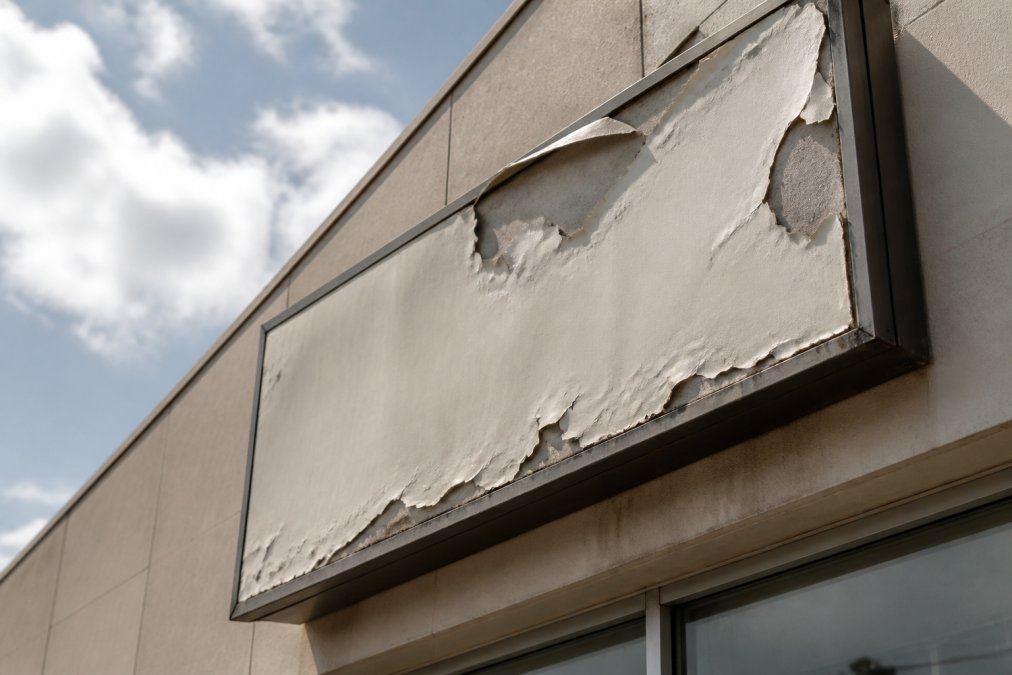
If you notice yellowing of acrylic (a sign of UV damage), peeling of vinyl lettering, or corrosion on metal surfaces, these are signs of material degradation, not cleaning issues. Attempting to fix these yourself can void any warranty. Contact your original fabricator for repair or replacement options. A proactive maintenance log also provides useful documentation for warranty claims.
Ready to Build Your Custom Lobby Sign?
Choosing the right lobby sign involves balancing material durability, design aesthetics, lighting options, and compliance requirements. Working with a partner who understands the nuances of custom fabrication is essential.
At GBCJ Los Angeles, we bring over 15 years of experience, specializing in storefront signs and professional displays that reinforce your brand identity. We are an American-owned small business in North Hollywood, and we pride ourselves on a customer-centric approach. We listen closely to your vague ideas and turn them into a professional, bespoke design that maximizes your visibility and impact.
Choosing the right custom office lobby sign for your small business blends design, materials, and practicality. We help you navigate everything from the initial design concept to installation, ensuring a smooth process. Contact GBCJ Los Angeles today to get a quote and start making a memorable first impression.
Frequently Asked Questions
What materials are best for custom office lobby signs?
Acrylic panels, brushed metal, PVC board, and Dibond are popular choices for lobby signs. Acrylic offers a sleek, modern look and works well with backlit LED lighting. Brushed metal, like aluminum, adds a professional aesthetic and durability. PVC board is a cost-effective option for dimensional lettering. The best material depends on your brand identity, wall type, and budget. Discuss your space with a signage provider to get a recommendation that balances visual impact with longevity.
How do I choose the right size for a reception area sign?
First, measure your wall and step back to the distance where clients first see the sign. A common rule is that for every 10 feet of viewing distance, letter height should increase by 1 inch for legibility. Your sign should feel balanced with the wall, not lost or overwhelming. Consider the scale of your furniture and ceiling height. A professional signage designer can help you visualize the size with a digital mockup before fabrication.
Do lobby signs need to be ADA compliant?
Yes, ADA compliant office signs are required under certain conditions. The Americans with Disabilities Act (ADA) mandates that signs identifying permanent rooms and spaces must have non-glare finishes, high contrast between characters and background, and tactile characters. Braille is also required. Signs that are purely decorative or provide building directories may be exempt. Since regulations can be specific, work with a sign maker experienced in ADA standards to avoid costly rework.
What are the benefits of backlit lobby signs for small business?
Backlit LED signs create a polished, high-end look that reinforces brand recognition. The even glow draws the eye, making your logo the focal point of the reception area and improving visibility in dimmer lobbies. LED lighting is energy-efficient and has a long lifespan, reducing maintenance costs. This style of illuminated signage projects a modern, established image, helping create a memorable experience for visitors and reinforcing your corporate identity.
How long does it take to manufacture a custom lobby sign?
Production lead time varies based on complexity and materials. A simple dimensional letter sign might take 1-2 weeks, while a sign with custom fabrication, backlit LED, or intricate logo reproduction could take 3-4 weeks or more. This timeline does not include design revisions or permit approvals, which can add time. If you have a deadline, tell your provider upfront. They can often adjust the workflow to meet your opening date.