 how-to
How to Calculate Signage Total Cost of Ownership
Table of Contents
- Why Signage Total Cost of Ownership Beats the Sticker Price
- The Signage Total Cost of Ownership Formula
- Breaking Down Business Sign Installation Cost
- Sign Maintenance Costs and Downtime You Should Budget For
- Sign Lifespan by Material and Replacement Planning
- Digital vs. Static Signage: Energy, Connectivity, and Content Labor
- A Worked Example: Annual Cost of Owning a Storefront Sign
- Conclusion
- Frequently Asked Questions
Last Updated: October 21, 2026
Why Signage Total Cost of Ownership Beats the Sticker Price
The quote you get for a storefront sign is not what that sign will cost you. Not even close.
Signage total cost of ownership is the full, lifetime cost of a sign from purchase through disposal, including installation, power, upkeep, repairs, and replacement. At GBCJ Los Angeles, we have spent more than 15 years in the industry, watching business owners budget for the sign and forget everything after it.
The sticker price covers a panel and a frame. It does not cover the electrician, the permit runner, the lift rental, the burned-out modules, or the day your channel letters go dark during your best sales week.
Most guides treat TCO as a generic finance formula. We treat it as a signage formula, because signs carry cost lines that laptops and delivery vans do not.
The Signage Total Cost of Ownership Formula
The signage total cost of ownership formula is simple: add every cost you will pay across the ownership period, subtract what the sign is worth at the end, then divide by the number of years you keep it.
TCO = (Purchase + Installation + Operating + Maintenance + Downtime + Replacement − Residual Value) ÷ Ownership Years
That is the whole model. The hard part is not the math. It is catching every cost that belongs in the brackets. Here is how to build it.
Step 1: List Every Direct and Indirect Cost
Start with a full inventory before you touch a calculator.
- Direct costs: fabrication, design, permits, installation, electricity, service calls
- Indirect costs: staff time managing the project, lost sales while the sign is down, financing charges
- One-time costs: the sign itself, the install, the lift rental
A common mistake is listing only the invoice items. The indirect costs are the ones that surprise people.
Step 2: Spread Costs Across the Ownership Period
Set your ownership period first. Most businesses plan signage around a 7 to 10 year horizon, though that shifts with material and technology.
Then convert everything to an annual figure. A one-time install cost gets divided by the years. A monthly power bill stays as is, multiplied by 12. This gives you a true annual cost of ownership you can compare against alternatives.
Step 3: Subtract Residual Value
Residual value is what the sign is still worth at the end of the period. A well-built monument sign may hold scrap and resale value. A dated digital display often holds very little.
Be honest here. Overstating residual value makes an expensive option look cheap on paper and expensive in reality.
Breaking Down Business Sign Installation Cost
Business sign installation cost is the line item owners underestimate most, because it depends on the site, not the sign.
What drives it:
- Mounting height and access: a fascia sign at ground level is one job; channel letters three stories up need a lift and a crew
- Wall condition: brick, stucco, and metal each need different anchors and prep
- Electrical work: illuminated signs need a licensed electrician and a dedicated circuit
Because these vary so widely by site, we quote installation after a site review rather than guessing. Ask any provider to break installation out separately from fabrication so you can see what you are actually paying for.
Sign Maintenance Costs and Downtime You Should Budget For
Sign maintenance costs fall into two buckets: scheduled upkeep and unplanned repairs. Budget for both.
Scheduled upkeep includes cleaning, lamp or module checks, and tightening hardware.
Unplanned repairs are the budget killers. A failed power supply, water intrusion, or storm damage can take a sign offline with no warning.
Then there is downtime cost, the indirect line most spreadsheets miss.
Sign Lifespan by Material and Replacement Planning
Sign lifespan by material should drive your replacement schedule, not a guess.
| Sign Type | Typical Planning Lifespan | Main Wear Factors |
|---|---|---|
| Vinyl graphics | 3-5 years | Sun, weather, surface prep |
| Acrylic faced signs | 7-10 years | UV fading, impact |
| Illuminated channel letters | 10-15 years | LED module life, water ingress |
| Monument signs | 15+ years | Masonry wear, hardware |
| Digital displays | 5-8 years | Panel brightness decline, software |
These are planning ranges, not guarantees. Climate, sun exposure, and install quality move them in either direction.
Replacement planning is where TCO pays off. If you know a sign has a 10 year life, you set aside a replacement reserve now instead of scrambling later. A sign that fails early usually traces back to a cheap install or skipped maintenance, which is why we treat installation quality as part of lifespan.
Digital vs. Static Signage: Energy, Connectivity, and Content Labor
Digital signage changes the cost model, and not always in the direction buyers expect. Most TCO guides stop at "digital costs more to run." That is not useful. What you need is a way to estimate the three lines that separate digital from static over a full lifecycle: energy, connectivity, and content labor.
Energy: Continuous Draw vs. Intermittent Draw
A static illuminated sign draws power only when its illumination is on, typically evening hours for a storefront. A digital display draws power whenever it is operating, often 12 to 16 hours a day or more.
To estimate annual energy cost, multiply the display's wattage by daily operating hours, divide by 1,000 to get kilowatt-hours, then multiply by your local electricity rate and by 365.
Connectivity: The Recurring Line Static Signs Never Have
A networked digital screen needs a reliable internet connection and, in most deployments, a content management subscription. Budget for both as recurring annual costs. A single-screen deployment may use an existing business connection, but multi-screen or multi-location setups often require dedicated service or upgraded bandwidth. Static signs have zero connectivity cost, a line that is easy to overlook when comparing quotes.
Content Labor: The Hidden Recurring Cost
Every message on a digital screen has to be designed, scheduled, approved, and refreshed. That is ongoing staff time or an outside design retainer, and it is the line generic TCO formulas miss entirely. Estimate it honestly: how many hours per week does someone spend creating or updating content, and what is that hour worth?
Static signs invert this: the design cost is front-loaded at fabrication, and after installation the sign quietly does its job with no content labor.
A Side-by-Side Lifecycle View
| Cost Line | Static Illuminated Sign | Digital Display |
|---|---|---|
| Upfront fabrication and install | Moderate | Higher |
| Annual energy | Low, intermittent | Higher, continuous |
| Connectivity and subscriptions | None | Recurring |
| Content labor | Near zero after install | Ongoing |
| Maintenance | Lamp/module service | Panel, software, hardware |
| Planning life | 10-15 years | 5-8 years |
Digital wins when you change messaging often, operate multiple locations that need centralized updates, or sell time-sensitive offers, and when you can staff the content. Static wins when your message is stable, your budget is tight, and you want near-zero operating cost. Neither is automatically cheaper over the full lifecycle; the answer depends on how much you will actually use the flexibility you pay for.
A Worked Example: Annual Cost of Owning a Storefront Sign
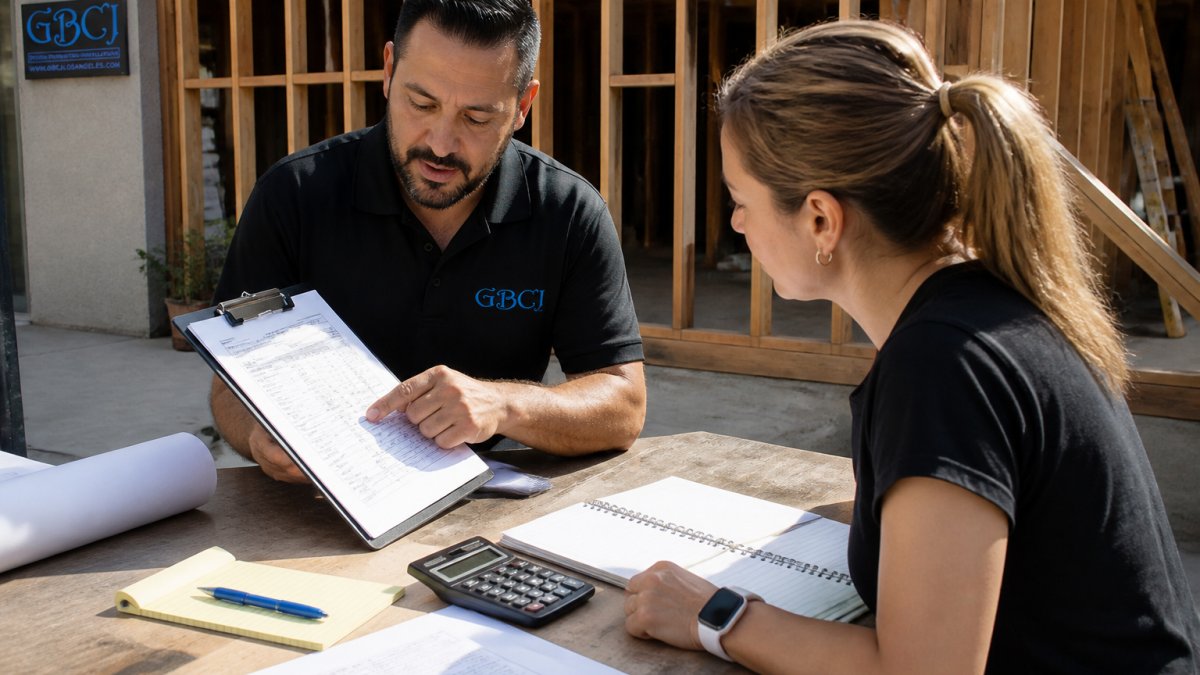
A worked example is the fastest way to see why the sticker price misleads. The figures below are illustrative placeholders, not quotes, swap in your own vendor numbers and the method still holds.
Scenario A: Illuminated Channel Letters, 10-Year Ownership
Assume a retail storefront installing illuminated channel letters with a planned 10-year service life.
One-time costs (Year 0):
- Fabrication and design: $6,500
- Installation, lift rental, and electrical: $2,800
- Permits and inspection fees: $600
- Removal and disposal of the old sign: $400
Recurring annual costs:
- Electricity for LED illumination: $180 per year
- Scheduled maintenance contract (two visits): $350 per year
- Repair reserve (modules, power supply, water intrusion): $250 per year
- Recurring subtotal: $780 per year
Downtime allowance: Assume one unplanned outage of three days over the ownership period, at an estimated $400 per day in lost walk-in sales.
Residual value at Year 10: A well-maintained channel letter set may retain scrap and salvage value of roughly $300. Subtract it.
The math:
That $1,900 is the number to compare against alternatives, not the $6,500 fabrication quote.
Scenario B: A Cheaper Quote With a Shorter Life
Now run the same method on a lower-cost option: a vinyl-and-acrylic sign at $3,200 fabricated, $1,400 installed, $300 in permits, with a 5-year planning life and no illumination.
One-time subtotal: $4,900. Recurring costs are minimal, say $100 per year for cleaning and touch-ups.
Over a 10-year horizon you buy two cycles: roughly $9,800 in one-time costs, plus $1,000 in recurring upkeep, minus minimal residual value.
What the Comparison Teaches
The cheaper sign can win on annual cost, but only if a fixed message fits your business. If you need illumination, frequent message changes, or a premium storefront presence, the channel letter option's higher annual cost buys capability the vinyl sign cannot deliver. The method does not pick the winner; it makes the trade-off visible.
Conclusion
Signage budgets fail when owners plan for the purchase and forget the years after it. Building a full lifecycle cost model takes an afternoon, and it changes which sign you choose.
If you want that model built for your storefront, lobby, or fleet, GBCJ Los Angeles can help. We bring more than 15 years of signage experience, a customer-centric process that starts with your budget, and custom fabrication for storefront signs, lobby signs, illuminated signs, and vinyl graphics.
Frequently Asked Questions
What costs should be included in signage total cost of ownership?
Include every cost from purchase to disposal: the initial acquisition cost (design, fabrication, permits), installation cost, annual operating expenses like energy and connectivity for digital signs, sign maintenance costs, repair costs, upgrade and replacement costs, downtime and lost productivity, and any support or service contracts. Subtract residual or resale value at the end of the ownership period. Leaving out indirect costs like downtime is the most common reason a signage total cost estimate comes in too low.
How do you calculate the annual cost of owning a sign?
Add all direct and indirect costs over the ownership period, subtract residual value, then divide by the number of years. For example, if total lifecycle cost is $18,000 over a 10-year useful life, the annual cost is $1,800. Compare that annual figure, not the purchase price, when weighing alternative options. A higher initial investment can still win on annual cost if maintenance and replacement costs stay low.
Is a more expensive sign cheaper over its lifetime?
Sometimes. A sign built from durable materials with a long useful life and low sign maintenance costs can have a lower annual cost than a cheap sign that needs repair or replacement every few years. Run the numbers using the TCO formula rather than assuming. Factor in sign lifespan by material, warranty coverage, and downtime cost. The cheaper purchase decision is only cheaper if the total expenditure over the ownership period is lower.
How long should a business sign last?
Useful life varies widely by material and environment. Vinyl graphics typically need replacement sooner than rigid substrates, and illuminated signs carry additional component and service costs over their life. Rather than guessing, ask your fabricator for a realistic lifespan estimate and warranty terms for the specific materials quoted. Build replacement cost into your budget planning at the end of that useful life so the expense does not arrive as a surprise.