 how-to
Best Cleaning Products for Vinyl Car Wraps
Table of Contents
- Why Cleaning Products Matter for Vinyl Wraps
- How to Wash a Wrapped Car Safely
- Choosing the Right Vinyl Wrap Cleaner
- How to Remove Stains from a Car Wrap
- Car Wrap Ceramic Coating for Long-Term Protection
- What to Avoid When Cleaning Vinyl Wraps
- Maintaining Your Wrap's Finish and Durability
- Frequently Asked Questions
Last Updated: October 18, 2026
Why Cleaning Products Matter for Vinyl Wraps
Vinyl wraps are a significant investment, lasting three to five years with proper care, but the wrong cleaning product can degrade the film, fade colors, and cause premature peeling.
Standard car wash soap, pressure washers, and harsh chemicals can damage vinyl irreversibly; the right approach is gentle, pH-balanced care that removes contaminants without breaking down the film's protective layers.
The best cleaning products for vinyl car wraps fall into three categories: pH-balanced automotive soaps as your foundation, specialized vinyl wrap cleaners for extra protection, and targeted spot-cleaning solutions for stubborn stains.
How to Wash a Wrapped Car Safely
Washing your wrapped vehicle correctly prevents damage and extends its lifespan. The process is straightforward, but the details matter.
What You'll Need Before You Start
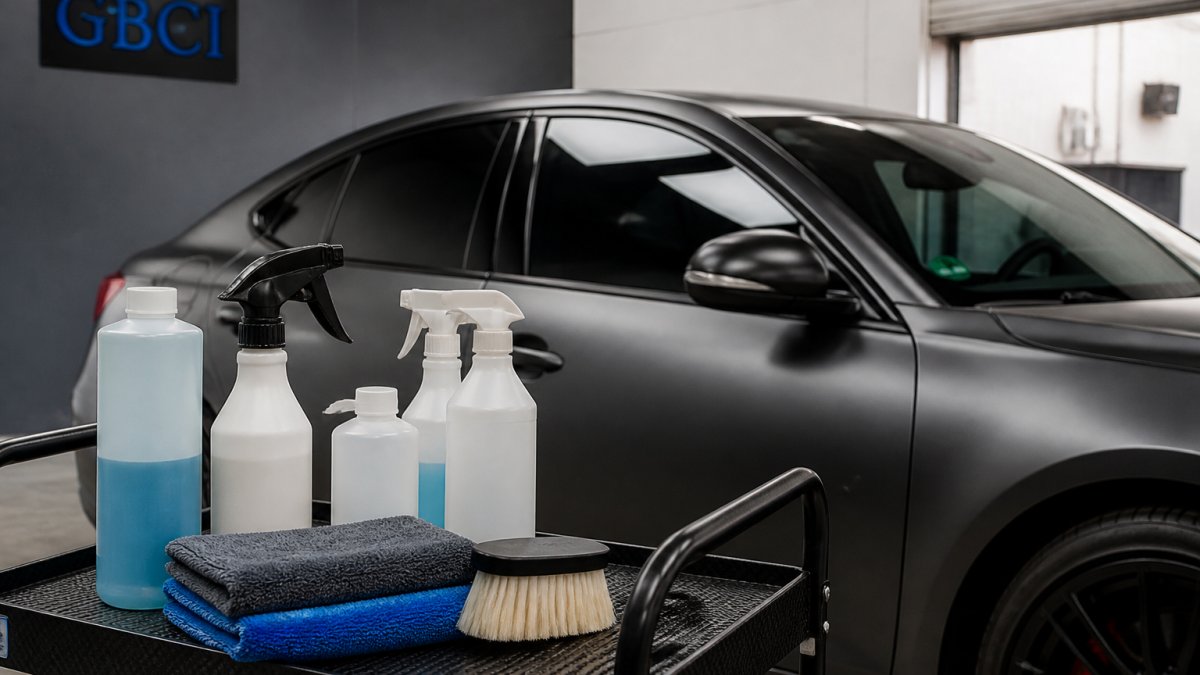
Gather these supplies before you begin:
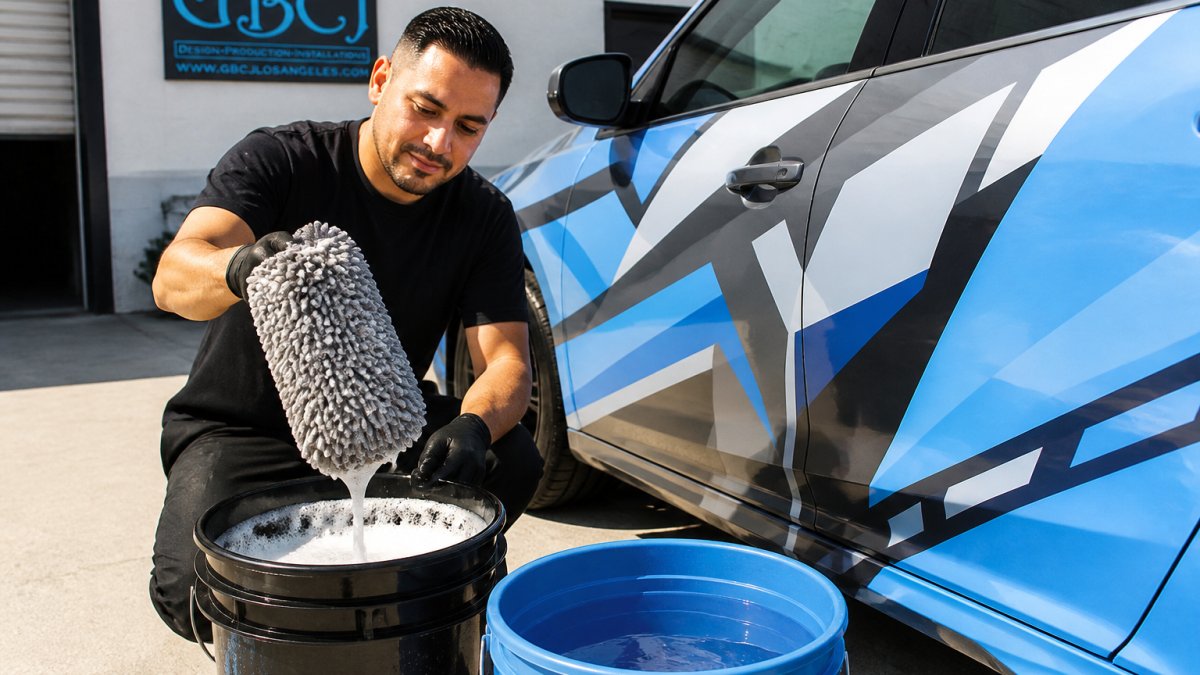
- Two buckets (one for soapy water, one for rinsing your wash mitt)
- pH-balanced car wash soap or wrap-safe cleaner
- Soft microfiber wash mitt (never use brushes or sponges)
- Microfiber drying towels
- Cool water (avoid hot water, which can soften vinyl adhesive)
- Optional: spray bottle for spot-cleaning
Step-by-Step Washing Process
Step 3: Wash with a soft touch. Dip your microfiber mitt in soapy water and work in straight lines, not circles, which create swirl marks.
Step 4: Rinse thoroughly. Use cool water to remove all soap residue, which can leave streaks and dull the finish over time.
Step 5: Dry immediately. Use clean microfiber towels and pat rather than rub to prevent micro-scratches.
Wash every two weeks if you park outdoors; monthly is usually sufficient in a garage.
Choosing the Right Vinyl Wrap Cleaner
Not all car wash products are safe for vinyl wraps. The wrong cleaner can strip the protective layer, fade colors, or degrade the adhesive. Compare cleaner types by use case, check finish compatibility, and follow dilution and dwell guidance.
Product-by-Product Comparison by Use Case
| Cleaner Type | Best For | Typical Dilution | Dwell Time | Gloss | Matte / Satin | Textured | Color-Shift |
|---|---|---|---|---|---|---|---|
| pH-balanced wrap-safe car soap | Routine washing | Per label (often 1 oz per gallon) | Immediate wash, rinse promptly | Safe | Safe | Safe | Safe |
| Wrap-safe spray cleaner / detailer | Light dust, fingerprints, spot cleaning | Ready-to-use | 30-60 seconds | Safe | Safe | Safe | Safe |
| Diluted isopropyl alcohol (70%) | Bird droppings, adhesive residue | 1 part alcohol to 4 parts water | 30 seconds | Safe | Test first | Test first | Test first |
| Diluted white vinegar | Hard-water spots, light mineral deposits | 1 part vinegar to 3 parts water | About 1 minute | Safe | Test first; rinse promptly | Test first | Test first |
| Wrap-safe bug and tar remover | Insects, tar, road grime | Per label | 1-3 minutes | Safe | Test first | Test first | Test first |
| Ceramic coating for vinyl | Long-term protection | Per label | Per label cure time | Safe | Use matte-specific formula | Use textured-specific formula | Use color-shift-specific formula |
pH-Balanced vs. Harsh Cleaners
pH-balanced cleaners clean effectively without damaging vinyl film. A neutral pH (around 7) won't strip protective coatings or soften the adhesive, making them the safest choice for routine washing.
Harsh cleaners, including many household cleaners and degreasers, cause real damage: acidic cleaners etch the vinyl, alkaline cleaners strip protective coatings, petroleum-based degreasers soften adhesive and cause edge peeling, and abrasives scratch and dull the finish.
Look for labels that explicitly state "vinyl-safe," "wrap-safe," or "pH-balanced." If the label doesn't specify, it's not worth the risk.
Reading the Label: What Actually Matters
Four label details separate a wrap-safe product from a risky one:
- pH statement. Neutral or near-neutral is the safest baseline for routine use.
- Solvent content. Products listing petroleum distillates, acetone, or paint thinner should be avoided on vinyl.
- Abrasive content. Polishes and compounds designed for paint can dull or scratch vinyl.
- Finish compatibility. Matte, satin, textured, and color-shift films often require finish-specific formulas; a gloss-safe product is not automatically matte-safe.
Testing Products Before Full Application
Before using any new cleaner on your entire wrap, test it on a hidden section (underside of a bumper or inside a wheel well). Apply, let it dwell for the recommended time, rinse, and inspect for discoloration, dullness, or texture change. Check again after 24 hours; if the area looks fine, the product is safe.
This prevents costly mistakes, since some products that seem safe cause issues after hours or days of exposure, particularly on matte and color-shift films.
How to Remove Stains from a Car Wrap
Bird droppings, tree sap, fuel drips, insect remains, hard-water deposits, and adhesive residue all appear despite your best efforts. Match the removal method to both the stain and your wrap's finish, because a technique safe on gloss film can dull matte or satin film.
Stain-by-Stain Removal Guide
Bird droppings. These are acidic and can etch vinyl within a day or two, especially in warm weather.
Tree sap. Sap bonds tightly and hardens as it cures.
Fuel drips. Gasoline and diesel can soften vinyl adhesive and stain the film. Rinse immediately with cool water, then wash with pH-balanced wrap-safe soap. Do not scrub.
Insect remains. Bug splatter is acidic and bonds quickly, especially on the front bumper and mirror caps.
Hard-water deposits. Mineral spots from sprinklers or rain leave chalky rings ordinary washing won't remove.
Adhesive residue. Leftover adhesive from decals or temporary signage should be softened rather than scraped.
Finish Compatibility for Stain Removal
| Finish | Safe Approach | Avoid |
|---|---|---|
| Gloss | Diluted isopropyl alcohol, wrap-safe spot cleaner, diluted vinegar | Abrasive pads, scraping tools |
| Matte / Satin | Wrap-safe cleaner, cool water soak, soft microfiber in straight lines | Vinegar left to dwell, circular rubbing, gloss-enhancing products |
| Textured | Soft detailing brush plus wrap-safe cleaner | Cloth-only rubbing that leaves residue in the grain |
| Color-shift | Short-dwell wrap-safe cleaner, prompt rinse | Solvent-heavy cleaners, prolonged dwell times |
Dwell Times and Rinse Discipline
Dwell time matters as much as product choice: about 30 seconds for alcohol-based spot cleaners, one to three minutes for wrap-safe bug and tar removers, and about one minute for diluted vinegar. Never let a cleaner dry on the wrap. Rinse until the surface runs clear, then dry immediately with a clean microfiber towel. If a stain doesn't release after two attempts, consult a professional detailer rather than escalating to a stronger chemical.
Car Wrap Ceramic Coating for Long-Term Protection
Ceramic coatings add a hydrophobic barrier to vinyl wraps that repels water, reduces UV exposure, and makes cleaning easier.
A ceramic coating designed for vinyl wraps bonds to the film for six to twelve months of additional protection. Water beads off, reducing spotting, and contaminants like bird droppings and tree sap adhere less, making spot-cleaning easier.
Apply ceramic coating after a thorough wash and dry; most products require a 24-hour cure before water or weather exposure. For a business vehicle wrap, it extends lifespan and keeps the wrap looking newer longer.
What to Avoid When Cleaning Vinyl Wraps
Knowing what not to do matters as much as knowing the right techniques.
Pressure Washers and Automatic Car Washes
Pressure washers clean quickly but are dangerous for vinyl wraps. Pressurized water can force under the wrap's edges, breaking the adhesive seal and causing peeling, or lift the film and create bubbles.
Automatic car washes with rotating brushes create micro-scratches and can catch the wrap's edges, tearing or peeling them. Touchless washes are slightly safer, but hand washing remains safest.
Stick to hand washing with a soft microfiber mitt and cool water. It takes a few extra minutes but protects your investment.
Harmful Chemicals and Abrasive Tools
Never use these on your vinyl wrap:
- Acetone or paint thinner (dissolves vinyl adhesive)
- Bleach or harsh degreasers (damages the film and protective coatings)
- Tire dressing or silicone spray (leaves residue and can cause peeling)
- Steel wool, scrub brushes, or scouring pads (creates scratches)
- Wax or polish designed for painted surfaces (can dull vinyl finish or leave buildup)
- Hot water (softens adhesive and can cause bubbling)
When in doubt, test any product on a hidden area first. If it's not explicitly labeled as vinyl-safe or wrap-safe, assume it's not safe.
Maintaining Your Wrap's Finish and Durability
Long-term wrap maintenance goes beyond washing. A few additional steps keep your wrap looking professional for years.
Park in shade when possible. UV exposure fades vinyl over time, even with protective coatings, and covered parking significantly extends lifespan.
Avoid prolonged extreme heat, which can soften vinyl and cause it to lose adhesion.
Check wrap edges monthly for lifting or peeling. Caught early, edge peeling can often be re-sealed by a professional; ignored, it spreads and compromises the entire wrap.
For a fleet of wrapped vehicles, document your maintenance schedule. For businesses working on custom vinyl graphics, a monthly cleaning routine and professional inspections twice yearly are recommended.
Maintaining a vinyl wrap properly protects your investment in vehicle branding. Whether you manage a single wrapped vehicle or an entire fleet, consistent, gentle cleaning pays dividends. Contact us to discuss how professional vehicle graphics can strengthen your brand visibility on the road.
| Cleaning Task | Best Product Type | Frequency | Key Caution |
|---|---|---|---|
| Routine washing | pH-balanced wrap-safe soap | Every 2 weeks (outdoor parking) | Avoid pressure washers |
| Spot-cleaning bird droppings | Diluted isopropyl alcohol solution | As needed | Remove within 24 hours |
| Tree sap removal | Vinyl wrap-safe cleaner or diluted vinegar | As needed | Never scrape or use abrasive tools |
| Road grime buildup | Vinyl wrap-safe cleaner or diluted vinegar | Monthly or as visible | Test on hidden area first |
| UV protection | Ceramic coating for vinyl wraps | Every 6-12 months | Apply to clean, dry wrap only |
Frequently Asked Questions
What is the best cleaner to use on a vinyl car wrap?
Use a pH-balanced car wash soap formulated specifically for vinyl wraps. Standard automotive cleaners and household products can damage the film. Look for cleaners that are gentle enough for routine hand washing but effective against road grime and contaminants. Always dilute concentrated solutions according to product instructions, and test on a small, inconspicuous area before full application to ensure compatibility with your wrap's finish.
Can you use a pressure washer on a vinyl-wrapped car?
No. High-pressure water can force itself under the edges of vinyl wraps and cause lifting, peeling, and premature failure. Hand washing with cool water and a soft microfiber towel is the safest method. If you must use mechanical equipment, keep pressure below 1500 PSI and maintain a distance of at least 12 inches from the wrap surface. Avoid automatic car washes entirely, as the brushes and harsh chemicals damage vinyl film.
How do you remove bird droppings and tree sap from a vinyl wrap?
Act quickly to prevent permanent staining. Rinse the affected area with cool water first. Apply a wrap-safe spot cleaner or diluted white vinegar solution to the stain and let it sit for 2-3 minutes without scrubbing. Use a soft cloth to gently wipe away the residue. For stubborn sap, isopropyl alcohol diluted 1:1 with water can help, but test it on a hidden area first. Rinse thoroughly with cool water and dry with a microfiber towel to prevent water spots.
Can you wax or ceramic-coat a vinyl car wrap?
Traditional wax is not recommended for vinyl wraps. However, ceramic coatings designed for vinyl film can provide UV protection and enhance gloss or matte finishes while reducing fading and discoloration. Ceramic coatings create a hydrophobic layer that makes routine washing easier and extends film lifespan. Always use products specifically labeled for vinyl wrap compatibility, as standard automotive ceramic coatings may damage the film or alter its appearance.