 how-to
How to Design Effective Storefront Signage in Los Angeles
Table of Contents
- Start With a Storefront Signage Design Workflow
- Retail Signage Best Practices That Actually Move Foot Traffic
- How to Size Storefront Sign Lettering for the Street
- Choosing Exterior Business Sign Materials for LA Conditions
- Window Decals for Retail Stores: Visibility Without Blocking Light
- Permits, Landlords, and Sign Codes: What to Sort Out First
- Frequently Asked Questions
Last Updated: October 17, 2026
Start With a Storefront Signage Design Workflow
Effective storefront signage starts with a simple rule: design for the person across the street, not the person at your counter. At GBCJ Los Angeles, we've spent over 15 years in the graphics and sign industry, and the projects that work best follow the same order of operations. You measure first, set priorities second, and pick colors last.
Below, we'll walk through the exact steps we use so you can plan a sign that reads clearly from the sidewalk and the road.
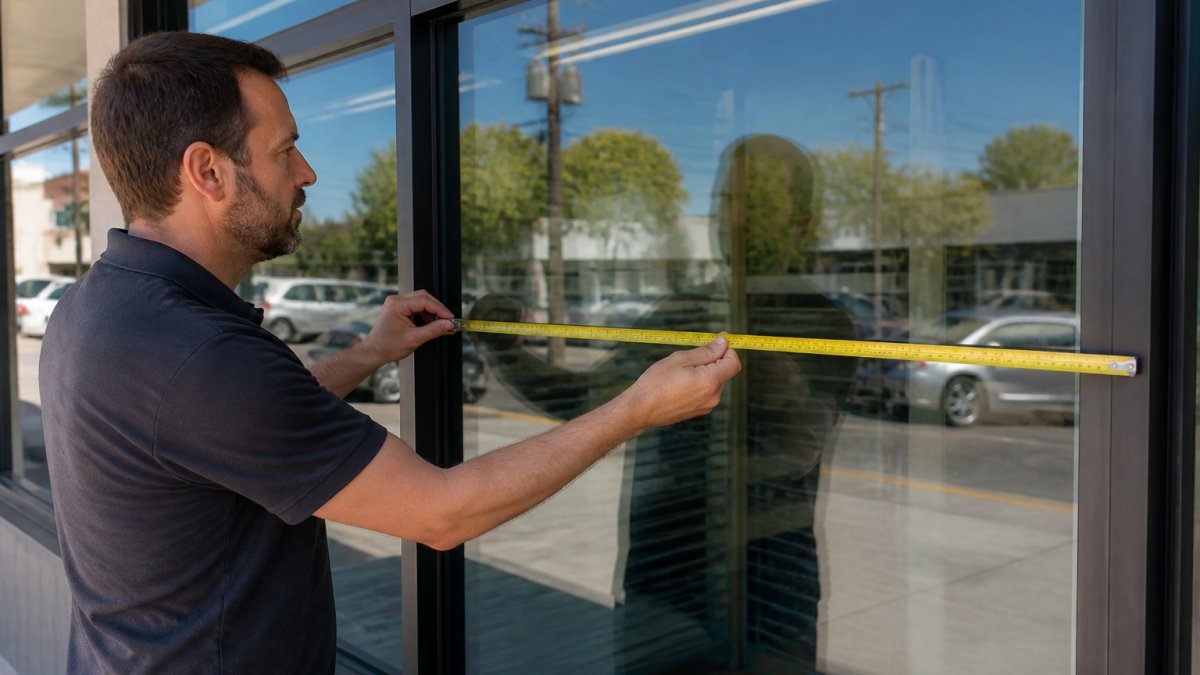
Step 1: Measure Your Sightlines and Viewing Distance
Walk across the street and stand where your customers actually pass. Note the distance in feet. Then check two more spots: the far lane of traffic and the sidewalk directly in front of your door.
Those three distances set your letter size. A sign that reads at 10 feet often disappears at 40.
Also look for what blocks the view. Awnings, trees, utility poles, and parked delivery trucks all cut sightlines. Fix the placement before you fix the design.
Step 2: Set Your Visual Hierarchy Before You Pick Colors
Decide what people must see in one second. Most signs try to say five things and end up saying nothing.
Rank your elements in this order:
- Business name, largest and boldest
- Category or service, so people know what you sell
- A short tagline or phone number, if space allows
- Logo and graphics, smallest
Keep the layout simple. White space helps the name stand out, and a cluttered sign reads as noise from a distance.
Retail Signage Best Practices That Actually Move Foot Traffic
Retail signage best practices come down to contrast, legibility, and restraint. A sign is not a brochure. Its job is to stop a passerby and make your business instantly clear.
Start with high-contrast colors. Dark letters on a light background, or the reverse, read best from a distance. Low-contrast pairings look stylish up close and vanish at 30 feet.
Font selection matters just as much. Use a clean, bold typeface for the business name. Script fonts work for a tagline but fail as the main element.
Keep messaging concise. A name, a category, and one supporting detail is plenty. Trim the rest.
Then check these basics:
- Letters at least 8 to 10 inches tall for street-facing signs
- No more than two fonts on the whole sign
- Graphics that support the message, not compete with it
- Brand colors that stay consistent across every sign you hang
Consistency builds recognition. When your storefront, window graphics, and vehicle wrap all match, customers start to notice you before they need you.
How to Size Storefront Sign Lettering for the Street
Storefront sign lettering size follows a simple rule of thumb: about one inch of letter height for every 10 feet of viewing distance. A sign read from 40 feet needs letters around 4 inches tall at minimum. For a busy street, go bigger.
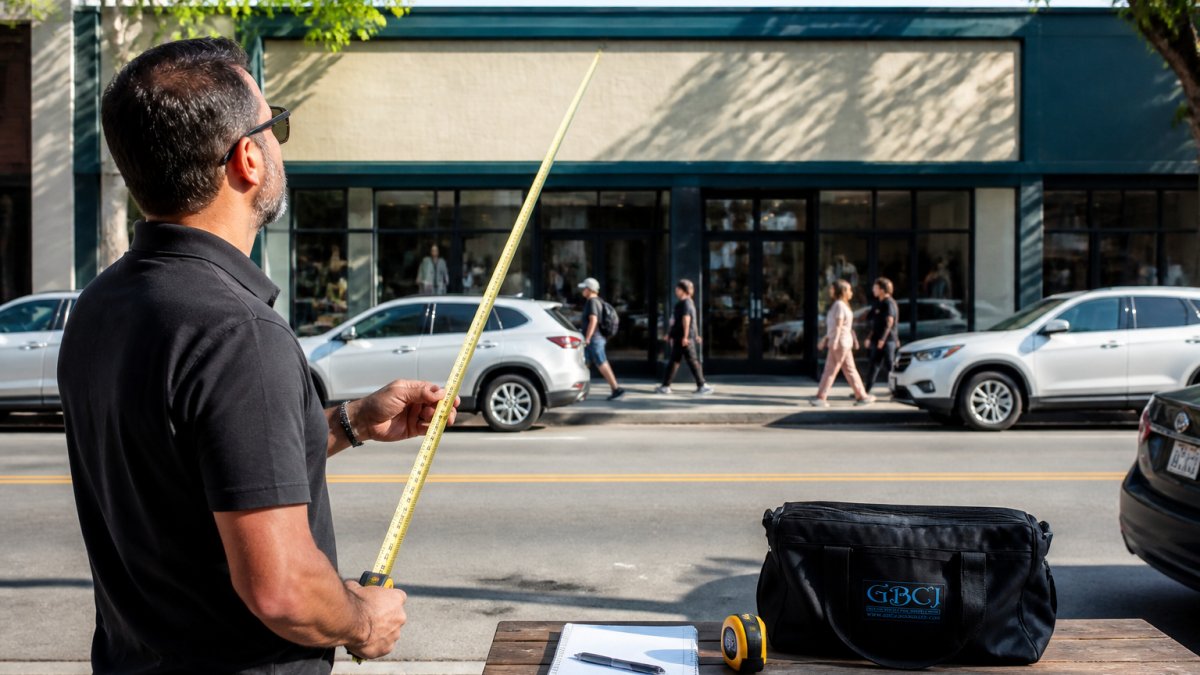
Use this quick reference:
| Viewing Distance | Minimum Letter Height | Best Use |
|---|---|---|
| 10-20 feet | 2-3 inches | Window decals, door signs |
| 20-40 feet | 4-6 inches | Sidewalk-facing storefronts |
| 40-80 feet | 8-12 inches | Street-facing signs |
| 80+ feet | 18-24 inches | Highway and corner locations |
Two adjustments matter here. First, add height for fast-moving traffic, since drivers have less time to read. Second, add height if your sign sits high on the building.
Mixed-case lettering reads faster than all caps. Save the all-caps treatment for short words.
Choosing Exterior Business Sign Materials for LA Conditions
Exterior business sign materials need to survive intense sun, dry heat, and the occasional coastal moisture. UV exposure is the main enemy here. Cheap vinyl fades and cracks within a couple of years, while better materials hold color far longer.
For durable exterior signs, most businesses choose from these options:
- Acrylic: clean look, holds color well, works for illuminated signs. It can crack under impact, so it is best used where it is protected from knocks.
- Aluminum composite: lightweight, rigid, and resistant to warping. It is a common choice for flat panel signs and works well as a backer for dimensional letters.
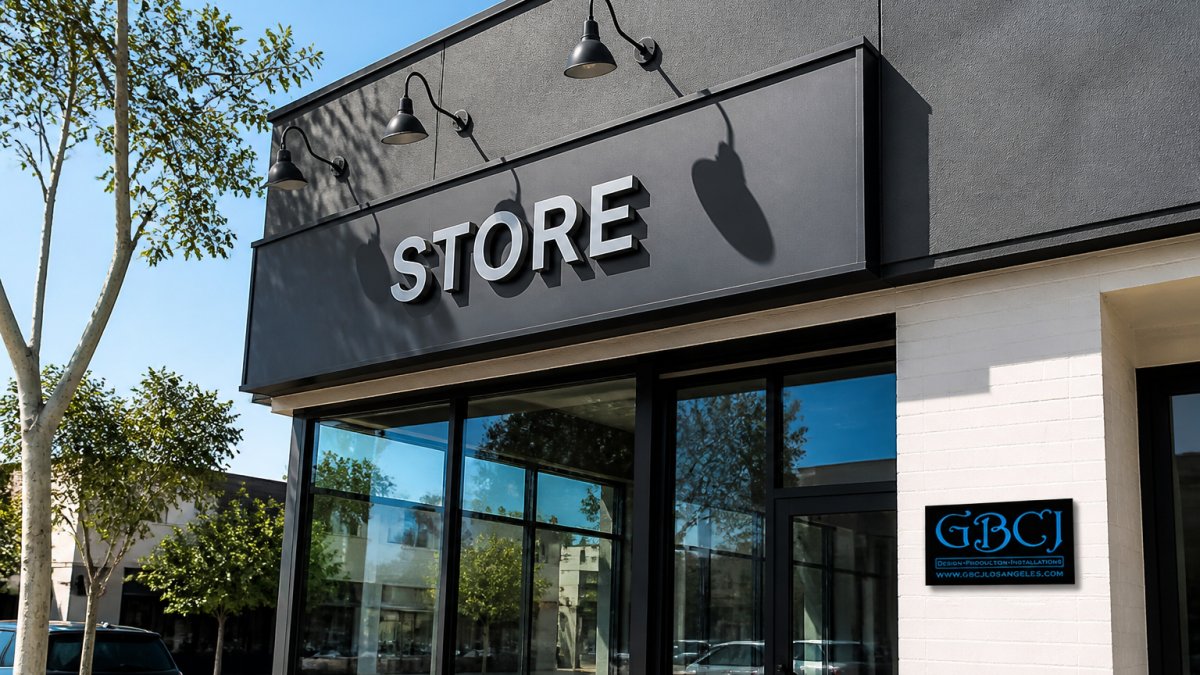
- Dimensional letters: metal or acrylic letters that stand off the wall and cast shadows. They read well from an angle and add depth, but they cost more to fabricate and install.
- Illuminated signs: channel letters or light boxes for nighttime visibility. Illumination adds electrical work and ongoing energy cost, so plan for both.
Illumination changes the math. A lit sign gets noticed after dark, when foot traffic shifts to evening diners and shoppers. For many retail locations, that is the highest-value hour of the day. Choose between front-lit channel letters, back-lit halo letters, and light boxes based on how much contrast you want against the building and how much maintenance you can tolerate.
Ask your fabricator how the material handles heat and sun before you commit. A slightly higher material cost often beats repainting in two years. Also ask about maintenance: painted metal may need touch-ups, acrylic can yellow over time, and illuminated signs need access for lamp or LED replacement. Build that access into the design rather than discovering it later.
Window Decals for Retail Stores: Visibility Without Blocking Light
Window decals for retail stores solve a specific problem: you want passing traffic to see your brand without turning your shop into a dark box. Perforated vinyl is the standard answer. It shows graphics from outside while letting daylight and outward views through from inside.
Use window graphics for:
- Hours, phone numbers, and website details
- Promotions that change seasonally
- Privacy bands at eye level
- A clean frame of brand color around the glass
Keep the coverage moderate. Covering most of the window kills your curb appeal and can conflict with lease terms.
Permits, Landlords, and Sign Codes: What to Sort Out First
Sign permits are the step most businesses rush, and the one that stalls opening day. Before anyone cuts material, confirm three things: what your lease allows, what the jurisdiction requires, and who submits the paperwork.
Start with your landlord. Get written approval for size, placement, and illumination. Many retail leases spell out exactly what tenants may install, and some require removal and restoration at your cost when you vacate. A verbal okay from a property manager is not enough, ask for the approval in writing and keep it with your project file.
Next, check the sign rules that apply to your property. Sign codes typically regulate total sign area, height, projection over the sidewalk, illumination type, and the number of signs allowed per frontage. Rules vary by zoning district, so two storefronts a block apart can face different limits. Historic districts and design review areas add another layer: they may require a review of the design itself before a permit is issued.
A practical way to sequence the work:
- Pull the property's zoning information and confirm which sign rules apply.
- Ask the landlord for written approval of size, placement, and illumination.
- Have your fabricator prepare scaled drawings and a site plan showing the sign in context.
- Submit the permit application with the drawings, and respond to any corrections promptly.
- Schedule fabrication only after the permit is issued.
Confirm current requirements with the Los Angeles Department of Building and Safety before you finalize dimensions, since rules vary by zone and property. If your building sits in a historic district or design review area, budget extra review time into the schedule.
Then plan the timeline. Permit review adds weeks, not days, so start early. A fabricator who handles drawings and submittals for you removes most of the back-and-forth.
Frequently Asked Questions
How large should storefront lettering be to read from the street?
A common rule of thumb is one inch of letter height for every 10 feet of viewing distance. If a driver first sees your sign from 60 feet away, aim for letters around 6 inches tall; for a sign read from 150 feet, plan on roughly 15 inches. Add height for script fonts, thin strokes, or busy backgrounds. Walk or drive your actual approach route before approving a proof, since trees, awnings, and parked vehicles can shorten the real viewing distance.
What are the most important retail signage best practices?
Keep the message to one line of identity plus one supporting line, use high-contrast colors, and give the sign breathing room so it does not compete with window displays. Match the sign to your brand identity so it looks like the same business inside and out. Prioritize legibility over decoration: a font that reads clearly at speed beats a stylish one that does not. Finally, check the sign at night, since a sign that works in daylight can disappear after dark without illumination.
Do I need a permit for a storefront sign in Los Angeles?
Most exterior business signs in Los Angeles require a sign permit, and the process usually runs through the Department of Building and Safety, with design review depending on your district or historic overlay. Shopping center tenants often need landlord approval on top of that. Rules vary by zoning and sign type, so confirm requirements before fabrication. A signage partner who handles permit paperwork can save weeks, especially if your lease start date is tight.
Which exterior business sign materials hold up best outdoors?
For most storefronts, aluminum composite panel with acrylic or vinyl lettering balances durability and cost, while acrylic faces suit illuminated cabinet signs and stainless or brushed metal works for a higher-end look. Vinyl graphics perform well on glass and flat panels. Ask about UV-resistant inks. Coastal sun and heat fade cheap materials fast, so the lowest quote often costs more over the sign's life.
Most signage problems trace back to planning, not design talent. If you'd rather hand the whole process to a team that does this daily, GBCJ Los Angeles can help. We bring over 15 years of experience, a customer-centric process that starts with listening to your goals, and affordable pricing on custom business signs, illuminated signs, and vinyl graphics. Get started with GBCJ Los Angeles and put a sign on your storefront that actually pulls people in.