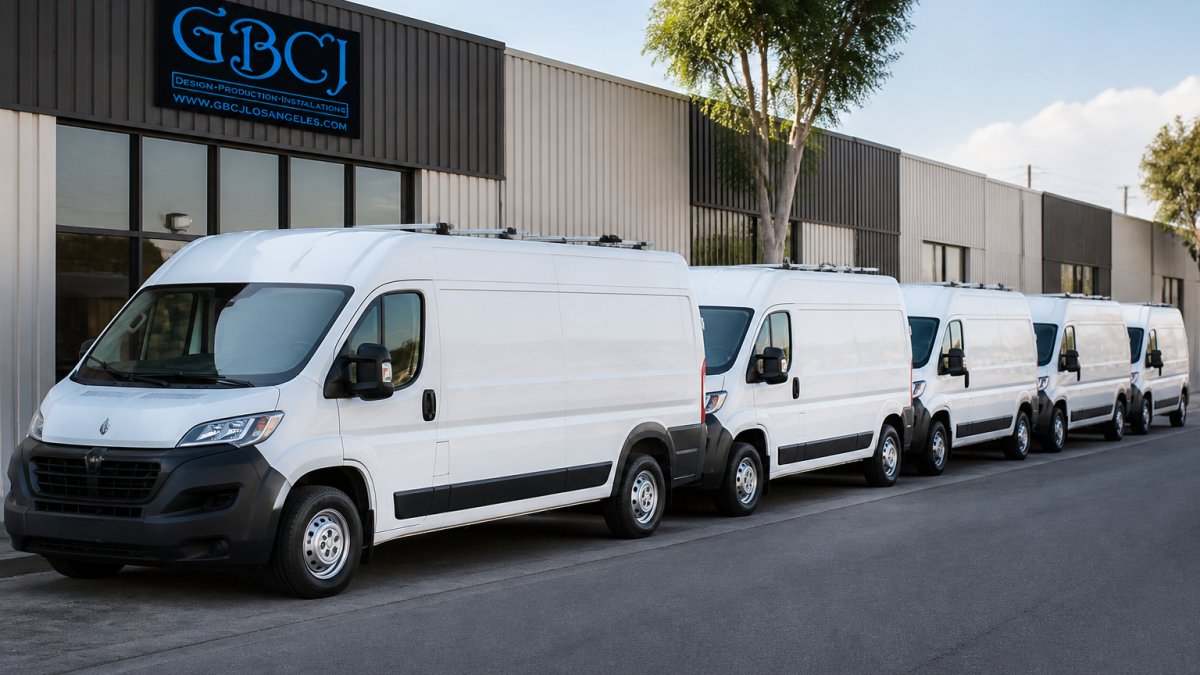
 how-to
Fleet Branding Consistency: Why It Matters for Your Business
Table of Contents
- What Fleet Branding Consistency Means
- Fleet Branding Benefits That Drive Real Results
- How Consistent Vehicle Branding Builds Recognition and Trust
- Fleet Branding Guidelines: Creating Your Visual Standards
- Vehicle Branding Examples and Best Practices in Action
- Fleet Branding Best Practices for Implementation
- Measuring the Business Impact of Fleet Branding
- Frequently Asked Questions
Last Updated: October 14, 2026
What Fleet Branding Consistency Means
Fleet branding consistency means maintaining a uniform visual identity across every vehicle in your fleet, the same logos, colors, fonts, and messaging in standardized placements.
Consistency is strategic: a mismatched fleet signals disorganization, while a unified one communicates professionalism and stability.
At GBCJ Los Angeles, we've worked with local service businesses for over 15 years, and we understand how fleet branding consistency transforms how a business appears to its market.
Fleet Branding Benefits That Drive Real Results
Consistent fleet branding delivers measurable advantages. Your vehicles become moving billboards working 24/7, reaching customers where traditional advertising can't compete.
Recognition and recall improve when your fleet looks unified. Repeated exposure builds familiarity, and familiarity builds trust.
Customer identification becomes effortless.
Professional credibility comes through visual consistency.
Lead generation happens passively.
Brand differentiation matters in competitive markets.
How Consistent Vehicle Branding Builds Recognition and Trust
Vehicle branding consistency creates a psychological effect: repeated, consistent exposure makes customers trust your brand.
Brand visibility grows with a unified fleet: one vehicle gets noticed, ten matching vehicles get remembered, and recognition becomes automatic.
Customer loyalty grows when people feel they know your brand.
Service territory identification becomes clear through consistent branding: customers in your area know which vehicles are yours and who to call.
Fleet Branding Guidelines: Creating Your Visual Standards
Effective fleet branding requires documented standards. Without guidelines, different employees, vendors, and decisions over time produce mismatched results. The goal is one specification document any installer, driver, or fleet manager can follow without interpretation.
Build your standards guide as a reusable checklist around the elements below, and keep a master PDF plus editable source files in one shared location so every vendor works from the same version.
Logo Clear Space and Minimum Size
Clear space is the empty margin around your logo that keeps it from being crowded. A common standard defines it as a fixed fraction of the logo's height, for example, the height of the letter in your wordmark on all four sides, which scales across vehicle classes.
Set minimum size by viewing distance, not preference:
- Primary logo on a van or truck side panel: large enough to be read from roughly 20-30 feet, which typically means a logo height of several inches.
- Rear or rear-quarter placement: sized for reading distance in stopped or slow traffic, since drivers behind you have more time to read.
- Door or cab placement: sized for pedestrians and adjacent vehicles at close range.
Set both a minimum and a maximum: a logo filling an entire panel looks unbalanced, while one that's too small disappears at speed.
Color Values
Specify exact color values so print, vinyl, and paint match. Include:
- Primary brand color with a hex code for digital files, a Pantone number for spot color, and a CMYK equivalent for printed proofs.
- Secondary and accent colors with the same three values.
- Approved background colors for the vehicle surface itself, since vinyl color and paint color can read differently under different lighting.
Typography
Typography standards should name exact fonts and fallbacks:
- Primary typeface for the company name and headline elements.
- Secondary typeface for supporting text such as services or taglines.
- Minimum type size for any text that must be read from a moving vehicle, contact details and the company name should be the largest text on the vehicle.
Avoid more than two typefaces: a third rarely adds clarity and usually signals an unmanaged brand.
Placement and Approved Layouts by Vehicle Class
Different vehicle classes need different layouts, not one stretched design. Define an approved layout for each class:
- Cargo vans and box trucks: side panels carry the primary logo, company name, phone number, and website; rear doors carry a secondary logo and contact details.
- Pickup trucks and service bodies: cab doors and bed sides carry the primary identity; toolboxes or bed caps may carry a secondary mark.
- Sedans and small SUVs: doors and rear quarter panels carry a compact version of the identity.
For each layout, record every element's position as a measurement from a fixed reference point, such as the front edge of the door. Measurements beat "centered on the panel" because they remove installer judgment.
Contact Details and Calls to Action
Standardize how contact information appears:
- One approved phone number format, including area code.
- One approved website format, without "https://" or trailing slashes.
- One approved call to action, such as "Call for a free estimate," used consistently across the fleet.
If you run multiple locations, decide whether vehicles show a local or central number, and document the rule so new vehicles aren't branded by habit.
Materials and Installation Quality Standards
Specify material grade and installation expectations so quality doesn't vary by vendor:
- Approved vinyl type and expected outdoor durability rating.
- Surface preparation requirements, including cleaning and any primer use.
- Whether graphics are cut vinyl, printed vinyl, or a full wrap.
- Lamination requirements for printed graphics to protect against fading and abrasion.
Version Control and Approval
Give the standards document a version number and date, require written approval before any new layout is produced, and log which vehicles carry which version so you can tell at a glance whether one is current or overdue.
Guidelines prevent costly mistakes: when a new vehicle joins your fleet, the driver or manager knows exactly what to do, no guessing, no surprises.
Vehicle Branding Examples and Best Practices in Action
Real-world examples show what consistency achieves: service businesses with unified fleets outperform those with mixed branding.
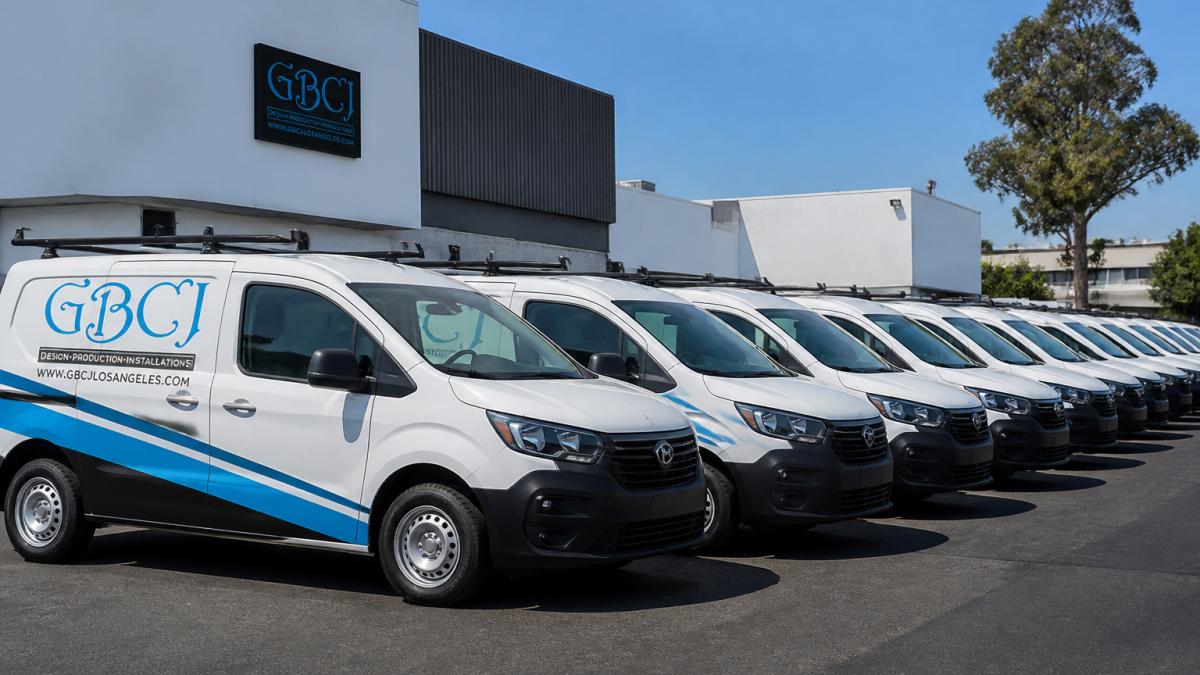
Best practice one: Keep design simple.
Best practice three: Include your phone number prominently, where customers can see it clearly when they want to call.
Best practice four: Maintain consistent branding across all vehicle sizes.
Best practice five: Update graphics regularly.
Fleet Branding Best Practices for Implementation
Implementation determines success. A great design executed poorly looks worse than a simple design executed well.
Create detailed specifications. Write down every rule.
Phase your rollout strategically. Start with your most visible vehicles and add graphics as vehicles are serviced or replaced.
Choose quality materials. Cheap vinyl fades quickly; professional-grade materials last longer and look better. When working with an experienced installer, Vinyl Graphics and Custom Business Signs ensure your specifications are executed to standard and your materials meet durability expectations.
Establish maintenance schedules. Graphics need cleaning, faded sections need touch-ups, and damaged areas need repair.
Measuring the Business Impact of Fleet Branding
Measurement proves value: showing that fleet branding consistency drives results justifies the investment and reveals areas to improve. Since fleet branding rarely produces clean, single-source attribution, track several fleet-specific indicators together and look for patterns rather than one perfect number.
Recognition and Recall
Recognition is consistency's most direct effect. Useful measures include:
- Aided and unaided recall surveys. Ask a sample of customers whether they recognize your brand and, without prompting, what they associate with it. Repeat the survey on a regular cadence so you can see movement over time.
- Branded search lift. Track searches for your company name and branded terms in your analytics and search console. A sustained rise after a fleet rollout is a reasonable signal, though it can be influenced by other marketing.
- Share of voice in your service area. Note how often customers mention seeing your vehicles when they call.
Campaign and Response Tracking
Give the fleet a way to be measured directly:
- Dedicated phone numbers. Assign a tracking number to vehicle graphics, separate from your main line, so calls that come from the fleet are identifiable.
- QR codes. Place a QR code on the vehicle that leads to a landing page built for fleet traffic. Use a unique URL so visits are attributable.
- Promotional codes. If you run seasonal offers, use a code that appears only on vehicles.
Lead Attribution
Ask every new customer how they found you, with "saw your vehicle" as a standard intake option, and log responses in your CRM to report fleet-sourced leads alongside other channels. Self-reported data is imperfect but consistent and comparable over time.
Installation Compliance
Consistency only holds if graphics are installed to spec. Track compliance with a simple audit:
- Percentage of fleet vehicles carrying current graphics.
- Percentage of vehicles meeting the placement and size standards.
- Number of vehicles with damaged, faded, or outdated graphics awaiting correction.
A periodic photo audit, one photo per vehicle side on a set schedule, gives you a record and makes drift visible before it spreads.
Cost per Vehicle and Cost per Impression
Fleet branding is a capital and maintenance expense, so evaluate it like one:
- Cost per vehicle for the initial installation, and again for replacement when graphics reach end of life.
- Cost per impression by dividing total fleet branding cost by estimated impressions over the life of the graphics. Impressions can be estimated from route data, miles driven, and traffic exposure, even if the estimate is rough.
- Cost per fleet-sourced lead using the tracking methods above.
Compare these figures to your other marketing channels. If fleet branding produces leads at a lower cost per acquisition than paid search or direct mail, expanding the program is a straightforward case.
Lifecycle and Replacement Planning
Graphics have a useful life, and its end is a brand risk. Track:
- Installation date for every vehicle.
- Expected service life based on the material and sun exposure.
- Condition score from your periodic photo audit.
Use this data to build a replacement schedule rather than reacting to peeling graphics. A planned cycle keeps the fleet current and spreads cost across budget periods.
Service Territory and Growth Signals
A consistent, visible fleet supports expansion into new areas. Track whether your service area grows after a rollout and whether new customers there cite vehicle sightings as their reason for calling. Geographic expansion plus rising fleet-sourced leads reasonably indicates visibility is translating into awareness.
Employee and Operational Effects
Employees at a branded business often feel more professional, which can affect service quality. It's hard to quantify, but track it indirectly through customer satisfaction scores, review sentiment, and referral rates before and after a rollout. Treat these as supporting signals, not primary proof.
Competitive Positioning
If competitors run mixed fleets and you run a unified one, you hold a visual advantage. Monitor how customers describe your brand versus competitors, and whether fleet-sourced lead share grows in markets where you have the most vehicles on the road.
Measurement doesn't need to be perfect to be useful. Pick two or three indicators, track them consistently, and let the trend, not a single data point, guide your decisions.
Frequently Asked Questions
Why is consistency important in fleet branding?
Consistency in fleet branding ensures that every vehicle represents your business the same way, building recognition and trust. When customers see your vehicles repeatedly with the same colors, logos, and messaging, they begin to associate those visual elements with your brand. This repeated exposure strengthens brand recall and makes your business appear organized and professional, which directly influences customer confidence in your services.
What should a fleet vehicle branding guide include?
A comprehensive fleet branding guide covers logo placement and minimum sizes for different vehicle types, approved color palettes with specific codes, typography rules for text and contact information, spacing and margin requirements around design elements, and guidelines for handling your branding across doors, sides, and rear panels. It should also specify materials and finishes to ensure durability and address how branding adapts to different vehicle sizes so smaller vehicles maintain visual consistency with larger ones.
How can businesses measure the effectiveness of fleet branding?
Track metrics like brand recall by surveying customers about where they heard of your business, monitor phone inquiries or website visits that reference seeing your vehicles, and measure customer acquisition costs before and after implementing consistent fleet branding. You can also conduct periodic brand awareness studies in your service territory and compare lead generation rates across months or quarters. Customer feedback about recognizing your vehicles in the field provides qualitative evidence of branding impact.
What are common fleet branding mistakes to avoid?
Common mistakes include inconsistent logo sizes and placement across vehicles, using different color variations instead of standardized palettes, overcrowding design elements so vehicles look cluttered, failing to update graphics as your brand evolves, and not accounting for how designs appear from different distances and angles. Many businesses also neglect maintenance, allowing faded or peeling graphics to undermine professionalism, and skip creating written guidelines, which leads teams to make inconsistent decisions when adding new vehicles.