 how-to
How to Create a Fleet Vehicle Branding Strategy
Table of Contents
- What Fleet Vehicle Branding Strategy Includes
- Step 1: Define Your Brand Identity and Core Message
- Step 2: Establish Fleet Branding Guidelines
- Step 3: Review Fleet Vehicle Branding Examples
- Step 4: Plan Your Fleet Graphics Rollout
- Step 5: Set Up Fleet Vehicle Branding Maintenance
- Measuring the Business Impact of Fleet Branding
- Common Mistakes to Avoid When Branding Your Fleet
- Frequently Asked Questions
Last Updated: October 15, 2026
What Fleet Vehicle Branding Strategy Includes
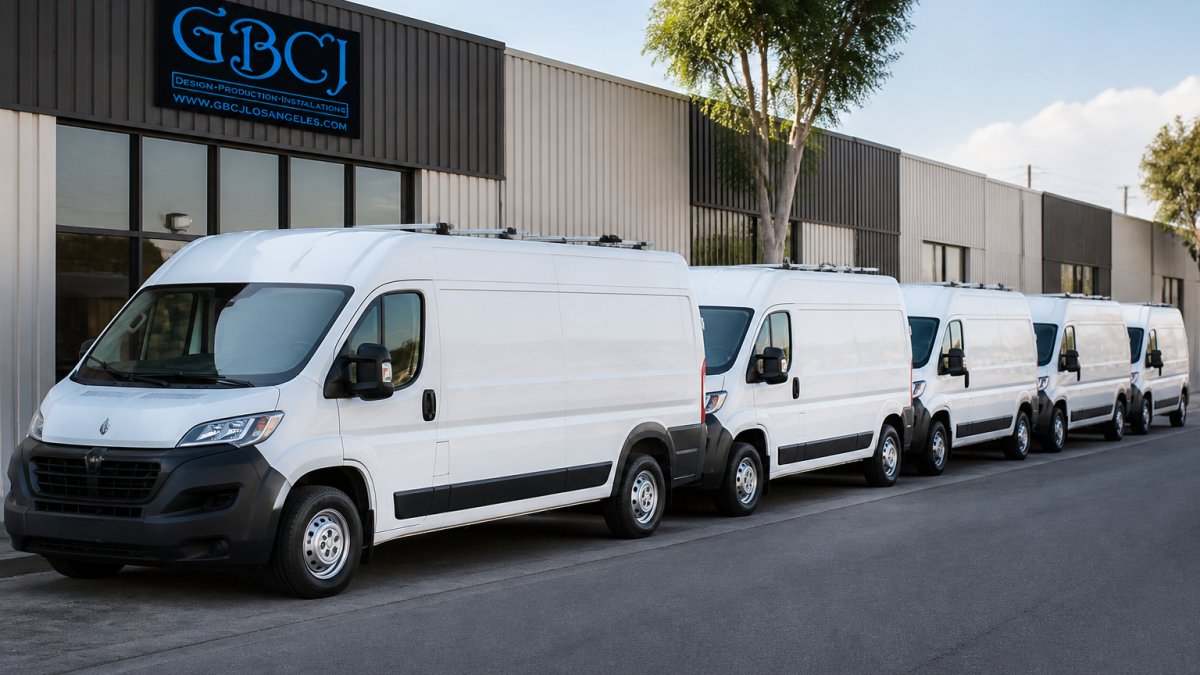
A fleet vehicle branding strategy is your plan to make all your service vehicles look, feel, and communicate your brand consistently. It covers everything from logo placement to color choices to how your contact information appears on each vehicle.
Your fleet is mobile advertising. Every vehicle your team drives is a moving billboard that reaches potential customers throughout the day. When your vehicles look professional and unified, people notice. They remember your brand. They trust you more.
A complete fleet branding strategy includes:
- Logo design and placement standards
- Color palette and typography guidelines
- Vehicle wrap specifications and materials
- Contact information layout and sizing
- Rollout timeline and vendor management
- Maintenance and refresh schedules
- Brand governance rules for consistency
The businesses that succeed with fleet branding treat it like a serious marketing investment, not an afterthought. They document their standards. They stick to them. They measure results.
Step 1: Define Your Brand Identity and Core Message
Start here. Before you design anything, know exactly what your brand stands for.
Your core message is the one thing you want customers to think when they see your fleet. Is it reliability? Speed? Professionalism? Affordability? Quality craftsmanship?
Define your brand identity by answering these questions:
- What problem do you solve for customers?
- What makes you different from competitors?
- What emotion do you want people to feel when they see your vehicles?
- What's your brand personality: formal, friendly, bold, sophisticated, approachable?
- Who is your ideal customer, and what matters most to them?
Write these down. Be specific. "We're professional" is too vague. "We show up on time, every time, and we clean up after ourselves" is specific.
Your core message drives every design choice that follows. Colors, fonts, imagery, and layout all reinforce this message. If your message is "fast and reliable," your design should feel energetic and organized.
Document this in a one-page brand brief. Share it with everyone involved in the project. This becomes your north star when decisions get tough.
Step 2: Establish Fleet Branding Guidelines
Fleet branding guidelines are your rulebook. They ensure every vehicle looks intentional and consistent, whether it's wrapped next week or five years from now.
Good guidelines answer the hard questions upfront so there's no guessing later. They prevent costly mistakes and rework.
Logo Placement and Size Standards
Your logo is the most important element on your vehicle. It needs to be visible from a distance and instantly recognizable.
Standard placement rules:
- Primary location: Driver's side door, centered horizontally, positioned in the middle third of the door vertically
- Secondary location: Rear panel, centered
- Minimum size: Logo should be at least 8-10 inches wide on a vehicle door (larger on bigger vehicles like box trucks)
- Clear space: Leave at least 0.5 inches of empty space around all sides of the logo
- Distance from edges: Position logo at least 1 inch from door edges to avoid being cut off
Why these standards matter: A logo that's too small disappears when someone drives past. A logo crammed into a corner looks unprofessional. Consistent placement across your entire fleet creates visual rhythm that builds brand recognition.
Color, Typography, and Design Elements
Your color palette should include 2-4 primary colors maximum. Too many colors create visual chaos and weaken brand recognition.
Choose colors that:
- Contrast with each other for readability
- Reflect your brand personality
- Work on vehicles (avoid colors that fade quickly in sunlight)
- Remain visible at night and in poor weather
Typography guidelines:
- Select 1-2 fonts for the entire fleet (one for headlines, one for body text)
- Use sans-serif fonts for better readability from a distance
- Maintain consistent font sizes across vehicles
- Ensure text is readable from at least 100 feet away
Design elements to standardize:
- Border treatments or decorative lines
- Imagery style (photography, illustration, or graphic patterns)
- Pattern or texture backgrounds
- Positioning of service areas or product categories
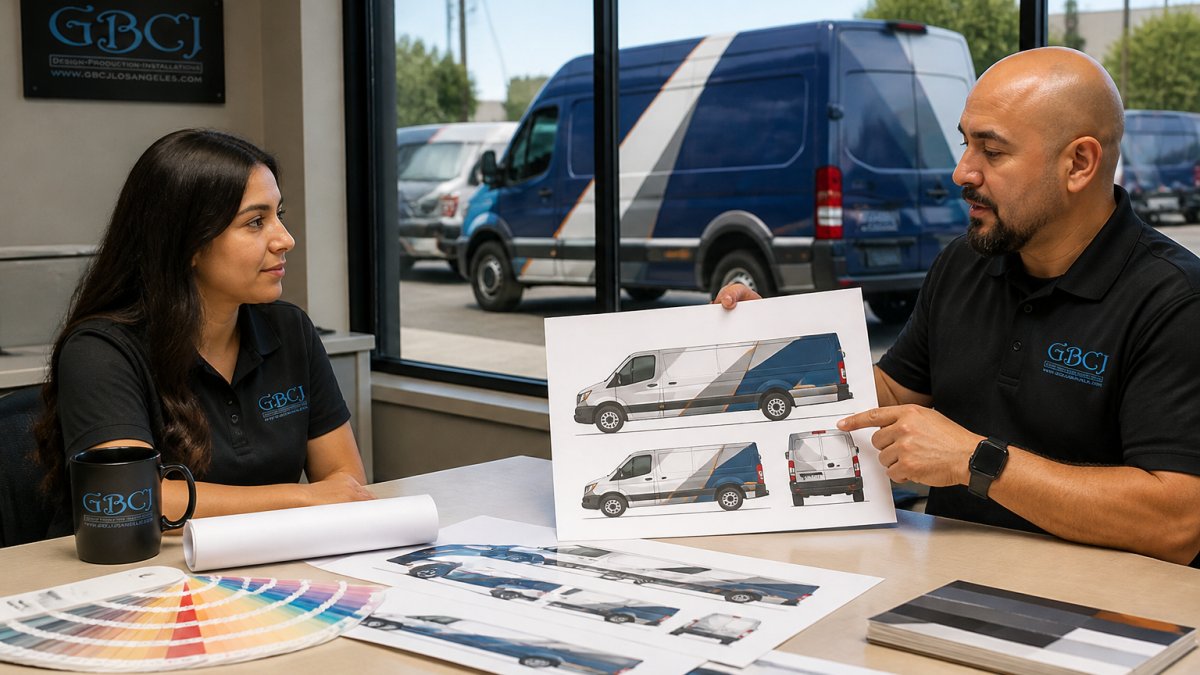
Document these in a visual brand guide with color codes (Pantone, CMYK, RGB, and hex values), font names, and actual design mockups showing correct and incorrect applications.
Step 3: Review Fleet Vehicle Branding Examples
Looking at real examples helps you see what works and what doesn't before committing to your own design.
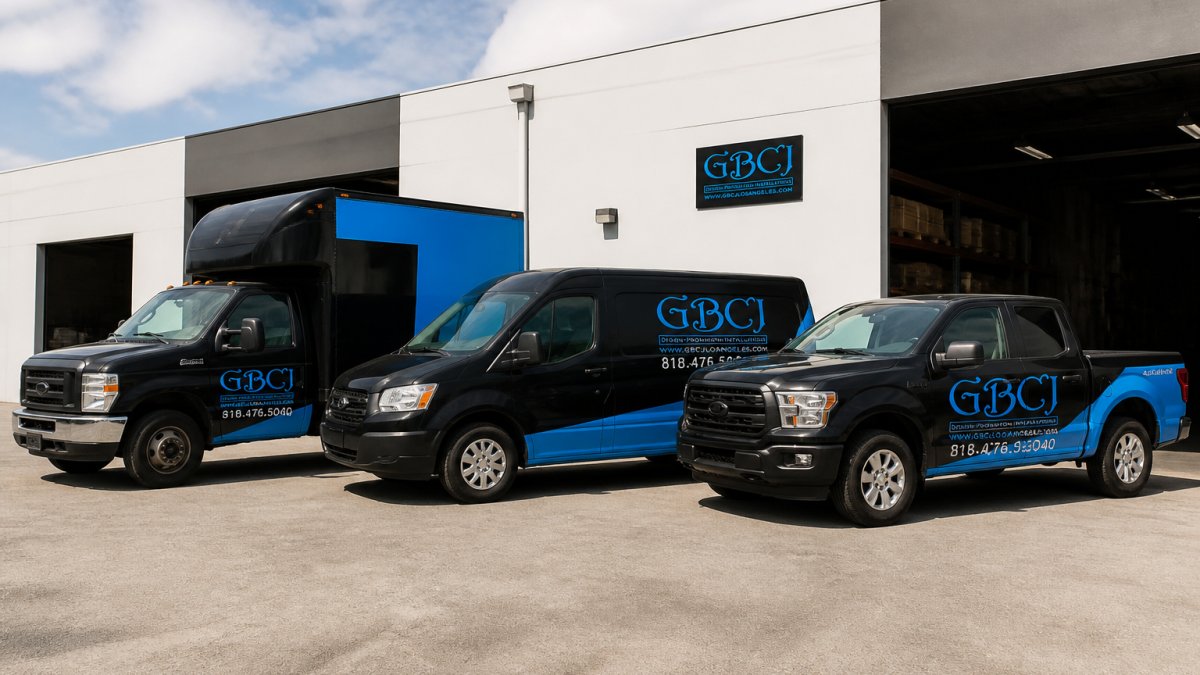
Strong fleet branding examples share common traits:
- Instant recognition: You know the brand within one second of seeing the vehicle
- Consistent messaging: Every vehicle reinforces the same brand story
- Readable information: Phone numbers and website URLs are easy to read while driving
- Professional execution: Graphics are clean, colors are vibrant, text is straight
- Practical design: Branding works across different vehicle sizes and shapes
Weak fleet branding often shows:
- Mixed colors and fonts across vehicles
- Logos that are too small to read from the road
- Outdated or faded graphics
- Contact information that's hard to find
- Overcrowded designs with too many elements
When reviewing examples, ask yourself: Would I call this business if I saw it driving past? Would I remember it five minutes later? Does it look trustworthy?
The best examples come from your own industry. Look at successful competitors, local service businesses, and regional chains. Notice what catches your eye and why.
Step 4: Plan Your Fleet Graphics Rollout
A rollout plan prevents chaos and keeps your budget under control.
Trying to rebrand your entire fleet at once is expensive and risky. If the design doesn't work, you've already committed to every vehicle. A phased approach lets you test, adjust, and scale.
Phased Implementation and Governance
Start with a pilot group of 2-3 vehicles. These are your test vehicles. Live with them for 4-6 weeks. Get feedback from your team and customers. Notice what works and what needs adjustment.
Common adjustments after the pilot phase:
- Logo size (usually needs to be larger than expected)
- Text contrast (colors that looked good on screen may be hard to read on the road)
- Placement balance (graphics may need to shift higher or lower)
- Contact information clarity (phone numbers may need larger fonts)
After adjustments, expand to the next 25-30% of your fleet. Monitor these vehicles for another 4-6 weeks. Then roll out to the remaining fleet.
Governance rules prevent inconsistency as your fleet grows:
- Require approval from one person (usually the owner or marketing lead) before any vehicle gets wrapped
- Use a checklist to verify each vehicle meets brand guidelines
- Document which vendor wrapped each vehicle and when
- Schedule refresh dates for faded or damaged graphics
- Track which vehicles still need updating
Vendor Selection and Project Management
Choosing the right vendor makes the difference between a professional result and a disappointing one.
Evaluate vendors on:
- Portfolio of fleet work (not just single wraps)
- Experience with your vehicle types
- Turnaround time and scheduling flexibility
- Warranty on materials and installation
- Willingness to follow your brand guidelines exactly
- References from similar businesses
Get quotes from at least three vendors. The lowest price rarely delivers the best result. Compare what's included: design consultation, revisions, installation quality, and warranty coverage.
GBCJ Los Angeles specializes in fleet graphics and vehicle wraps. Our team brings over 15 years of experience creating branded fleets that turn heads and drive business. We work closely with your vision and ensure every vehicle meets your exact specifications.
Create a project timeline with clear milestones: design approval, material ordering, installation start, and completion date. Build in a 2-week buffer for unexpected delays.
Step 5: Set Up Fleet Vehicle Branding Maintenance
Your fleet branding investment only works if you maintain it.
Vinyl graphics fade, peel, and get damaged. Regular maintenance keeps your fleet looking professional and extends the life of your investment.
Maintenance checklist:
- Monthly: Inspect all vehicles for peeling edges, fading, or damage
- Quarterly: Wash vehicles with appropriate cleaners (avoid high-pressure washers that damage graphics)
- Annually: Touch up damaged areas or refresh faded graphics
- Every 3-5 years: Plan for full replacement as graphics age
Assign one person responsibility for fleet maintenance. This person checks vehicles regularly and schedules repairs before small problems become big ones.
Document maintenance in a simple spreadsheet: vehicle number, date of wrap, condition notes, and maintenance history. This helps you predict when each vehicle will need refresh work.
Weather, sun exposure, and vehicle use all affect how long graphics last. Vehicles that sit in direct sun fade faster than those parked in shade. Vehicles that get washed frequently last longer than those left dirty.
Measuring the Business Impact of Fleet Branding
You invested in fleet branding to drive results. Track what matters.
Measure these metrics:
- Brand awareness: Ask new customers "How did you hear about us?" Track how many mention seeing your vehicle
- Inquiry volume: Monitor calls and website visits. Note any increase after fleet launch
- Service area coverage: Map where your vehicles travel. This is your actual advertising reach
- Customer retention: Do existing customers feel more confident in your brand after seeing updated vehicles?
- Lead quality: Are leads from fleet visibility converting to sales? Track this separately from other channels
Set up a simple system to capture this data. When customers call, ask them directly. Add a survey question to your website asking "Where did you first hear about us?" Include "saw your vehicle" as an option.
Compare results before and after your fleet branding launch. Most businesses see increased inquiry volume within 30-60 days of launching branded vehicles.
Common Mistakes to Avoid When Branding Your Fleet
Learning from others' mistakes saves time and money.
Mistake 1: Overcrowded design. Too many colors, fonts, and graphics confuse viewers.
Mistake 2: Text too small. Drivers passing your vehicle have 2-3 seconds to read it.
Mistake 3: Inconsistent rollout. Mixing old and new vehicles undermines your brand.
Mistake 4: Ignoring maintenance. A faded wrap looks worse than no wrap. It signals neglect.
Mistake 5: Skipping the pilot phase. Committing to a full fleet wrap without testing is risky.
Mistake 6: Choosing vendors by price alone. The cheapest wrap often looks cheap.
Mistake 8: Outdated contact information. Update phone numbers, website URLs, and service offerings before wrapping.
Building a fleet vehicle branding strategy takes planning, but the payoff is real. Your vehicles become your most visible marketing asset. They work 24/7, reaching customers you'd never reach through digital ads alone.
Start with your brand identity. Document your guidelines. Pilot your design. Roll out thoughtfully. Maintain consistently.
Ready to create your fleet vehicle branding strategy? We ensure every vehicle meets your exact brand standards. Contact us for a consultation and quote on your fleet graphics project.
Frequently Asked Questions
What should a fleet vehicle branding strategy include?
A solid fleet vehicle branding strategy includes brand identity definition, design guidelines for logos and colors, standardized placement rules across all vehicles, a phased rollout plan with timelines, governance procedures for maintaining consistency, and a maintenance schedule for inspections and repairs. It should also establish how you'll measure visibility and lead generation impact, and identify which vehicles get branded first based on customer-facing priority.
How do you keep vehicle graphics consistent across a fleet?
Create detailed fleet branding guidelines that specify exact logo sizes, color codes (Pantone or RGB values), typography, and placement on different vehicle types. Require all vendors to follow these standards before production. Conduct quality inspections before installation and document approved designs. Assign one internal owner to approve all new graphics and maintain a digital asset library. Regular audits of your fleet ensure existing vehicles stay consistent as they age.
How can a company measure the effectiveness of fleet branding?
Track metrics like customer recognition (survey customers about recall), lead source attribution (ask new customers how they found you), and service territory visibility (count impressions or inquiries by vehicle location). Monitor social media mentions tied to your vehicles, measure response rates on branded vehicles versus unbranded ones, and track customer inquiries that reference seeing your fleet. Compare sales or service calls before and after your rollout to establish ROI.
How often should fleet vehicle graphics be inspected or updated?
Inspect vehicle graphics every 6 months for fading, peeling, or damage, especially in high-sun or coastal areas. Plan full replacement every 5-7 years depending on material quality and environmental exposure. Update graphics immediately if your brand identity changes, and refresh any vehicles showing visible wear before they meet customers or prospects. Establish a maintenance log to track inspection dates and repairs for each vehicle.