 how-to
5 Key Benefits of Ceramic Coating for Vinyl Wraps
Last Updated: October 24, 2026
Quick Summary
The benefits of ceramic coating for vinyl wraps include extending wrap lifespan, providing UV protection to prevent color fading, creating a hydrophobic surface that reduces water spotting and makes cleaning easier, and guarding against contaminants like bird droppings and tree sap.
- Ceramic coating typically lasts two to five years on vinyl wraps with proper maintenance and professional application.
- Hydrophobic protection reduces washing frequency from every two weeks to every three or four weeks depending on environment.
- UV protection can extend wrap life by two to three years in sunny regions by slowing color fading.
- Ceramic coating requires 24-48 hours curing time before washing and must be applied with pH-neutral soap and gentle hand washing afterward.
- Matte and textured vinyl wraps need matte-safe coatings to avoid unwanted gloss changes to the wrap finish.
Table of Contents
- What Ceramic Coating Does for a Vinyl Wrap
- Ceramic Coating on Car Wrap Pros and Cons
- Hydrophobic Protection and Easier Cleaning
- UV Protection and Color Fading Prevention
- How Long Does Ceramic Coating Last on a Wrap
- How to Protect a Vinyl Wrap and Washing a Ceramic-Coated Wrapped Car
- Applying Ceramic Coating to Your Wrapped Vehicle
- Frequently Asked Questions
What Ceramic Coating Does for a Vinyl Wrap
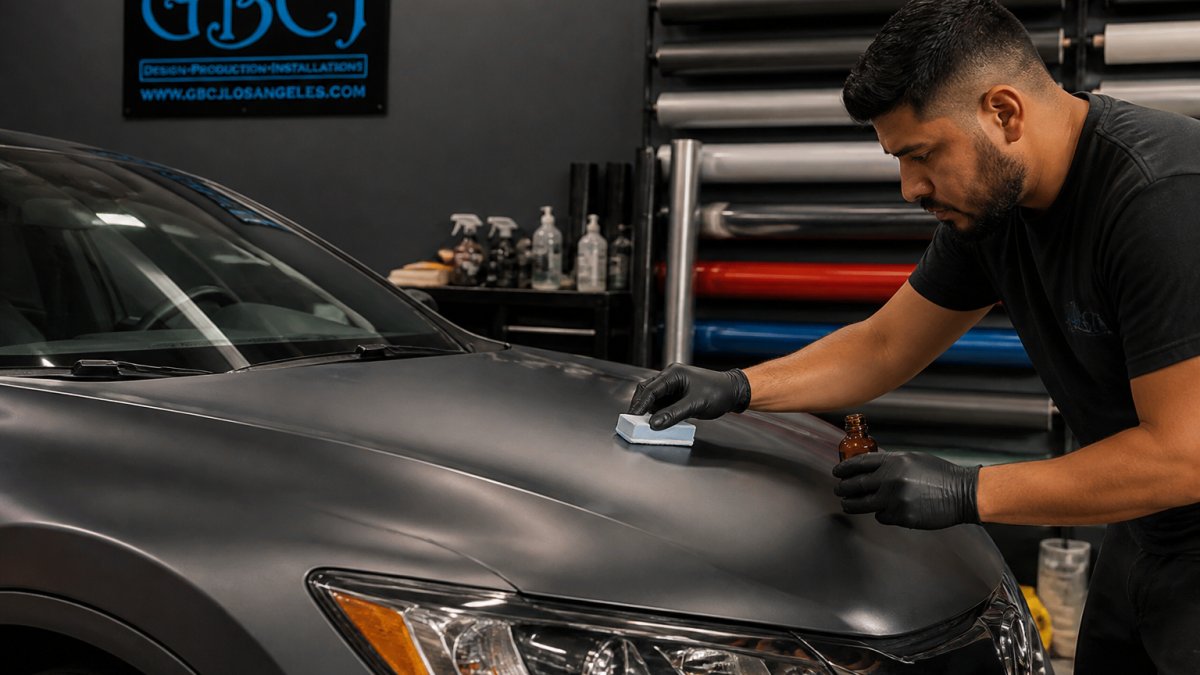
Ceramic coating is a liquid polymer that bonds to a vinyl wrap, creating a protective layer against dirt, UV rays, and contaminants that would otherwise damage the wrap directly. The quality of your vinyl wrap material affects how well ceramic coating protects your investment.
You're not changing the wrap itself, just adding a hard, transparent layer on top. It cures and hardens over time, forming a barrier more resistant to scratches and chemical damage than vinyl alone.
The coating fills microscopic imperfections, creating a smoother, more uniform finish. That smoothness produces the hydrophobic effect: water and contaminants can't grip as easily.
The benefits of ceramic coating for vinyl wraps include extending the life of your investment, reducing washing and detailing frequency, and helping maintain color and gloss, which matters if your branding depends on a specific look.
At GBCJ Los Angeles, we work with businesses that invest in vehicle wraps for mobile advertising. Whether you're protecting vinyl graphics on a fleet or maintaining custom signage, ceramic coating extends the life of your visual investment.
Ceramic Coating on Car Wrap Pros and Cons
Ceramic coating offers real benefits, but it's not right for every wrapped vehicle. Understanding both sides helps you choose.
Pros of ceramic coating for vinyl wraps:
- Hydrophobic surface reduces water spotting and makes cleaning easier
- Protects against UV damage that causes color fading
- Guards against bird droppings, tree sap, and bug splatter
Cons of ceramic coating for vinyl wraps:
- Initial application cost adds to your total wrap investment
- Requires professional application for best results
- Needs proper curing time before the vehicle can be washed
Match the coating to your wrap type and maintenance expectations. Matte wraps behave differently than gloss, and if you plan to change your wrap design in two years, removal becomes more complicated.
Hydrophobic Protection and Easier Cleaning
Ceramic coating makes your wrapped vehicle easier to clean.
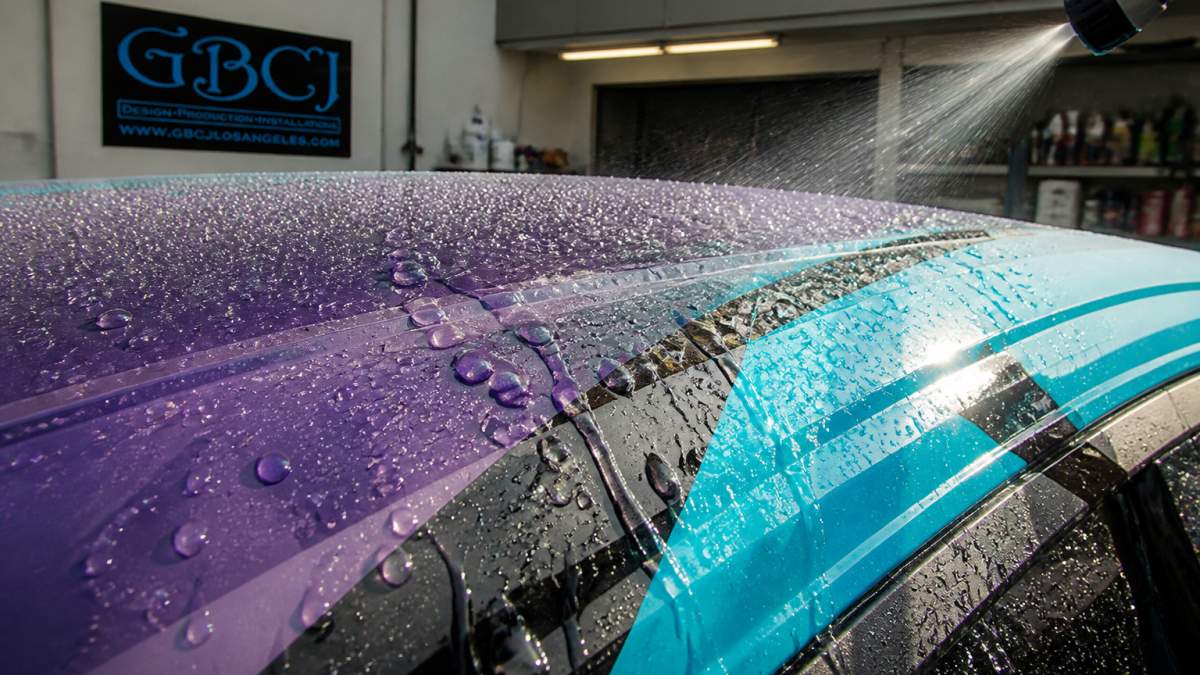
Vinyl wraps are porous, so without protection water and dirt settle into the texture and trapped moisture can deteriorate the wrap over time.
When you wash a ceramic-coated wrapped car, dirt comes off faster with less water pressure, which is gentler on the wrap.
The practical benefit is time: a fleet of wrapped vehicles saves hours per month on maintenance your team can spend elsewhere.
Hydrophobic protection has limits.
For ceramic-coated wrapped vehicles, washing frequency typically drops from every two weeks to every three or four weeks, depending on your environment. In dusty or high-pollen areas, you'll still need regular cleaning, but the process takes less time.
UV Protection and Color Fading Prevention
Vinyl wraps fade when exposed to sunlight, as UV rays break down the inks and dyes that give your wrap its color. Learn why vehicle wraps peel and fade to understand the full range of factors affecting wrap durability.
The coating reflects and absorbs some UV energy before it reaches the vinyl, significantly slowing fading.
This matters most for vehicles in direct sunlight daily, a delivery truck parked in a lot or a service vehicle in the sun. The same principle applies to stationary signage; whether you're protecting illuminated signs or vehicle graphics, UV protection preserves the visual impact of your investment.
The protection isn't absolute; some UV damage still reaches the wrap over years.
Matte wraps are particularly vulnerable to UV damage because the finish diffuses light rather than reflecting it.
For businesses in sunny regions, UV protection can extend wrap life by two to three years, improving the return on your wrap investment.
How Long Does Ceramic Coating Last on a Wrap
Ceramic coating durability on a vinyl wrap typically ranges from two to five years, but several variables move that range in opposite directions. Understanding what drives lifespan helps you set realistic expectations and budget for recoating.
What shortens coating life on a wrap:
- Intense UV exposure. Vehicles parked outdoors in high-sun regions degrade coating faster than garaged vehicles. The coating sacrifices itself to UV before the vinyl does, so its hydrophobic layer thins over time.
- Improper washing. High-pressure washers aimed at edges, brush-style automated washes, and alkaline soaps strip or abrade the coating. A coated wrap washed incorrectly can lose its beading behavior in under two years.
- Wrap texture. Textured and matte vinyl have microscopic surface variation that prevents a perfectly uniform coating layer. Coating on these finishes tends to thin unevenly, so the effective lifespan is often at the lower end of the range.
- Product tier. Consumer-grade spray coatings may last months, not years. Professional-grade coatings applied by trained installers are the ones that reach the two-to-five-year window.
What extends it:
- A pH-neutral wash regimen every three to four weeks
- A ceramic-infused maintenance spray applied every few washes
- Parking under cover when possible
- Prompt removal of bird droppings, bug splatter, and tree sap
A practical maintenance cadence looks like this: a full hand wash every three to four weeks, a maintenance spray every second wash, and a professional inspection once a year to check beading and edge condition. When water stops beading and starts sheeting, the hydrophobic layer is spent even if the coating is still physically present.
Recoating versus initial application. Recoating is faster and less expensive than the first application because the surface is already prepped and the coating layer is being refreshed rather than built from bare vinyl.
Durability also depends on the wrap. A wrap already two years old when coated has less remaining life than a fresh install, so coating a worn wrap rarely delivers the full lifespan window. Coating is most cost-effective soon after wrap installation.
Ceramic coating durability on vinyl wraps varies based on application quality, maintenance, and environmental factors.
| Factor | Duration Impact | Details |
|---|---|---|
| Professional-grade coating | 2-5 years | Standard lifespan with proper maintenance |
| Consumer-grade spray coating | Months, not years | Significantly shorter durability |
| Intense UV exposure | Shortens lifespan | Vehicles parked outdoors degrade faster |
| Improper washing | Under 2 years | High-pressure washers strip coating quickly |
| pH-neutral washing every 3-4 weeks | Extends lifespan | Recommended maintenance cadence |
| Maintenance spray every second wash | Extends lifespan | Refreshes hydrophobic effect |
| Parking under cover | Extends lifespan | Reduces UV and environmental damage |
| Recoating cost | Fraction of initial | Faster and cheaper than first application |
How to Protect a Vinyl Wrap and Washing a Ceramic-Coated Wrapped Car
Protecting your ceramic-coated vinyl wrap starts before application. Proper surface preparation ensures the coating bonds correctly and lasts longer.
Before ceramic coating application:
- Ensure the wrap has cured for at least 48-72 hours after installation
- Clean the wrap thoroughly to remove dust and residue
- Use a clay bar to remove embedded contaminants
- Avoid waxes or sealants that could interfere with coating adhesion
- Let the wrap dry completely before coating application
After ceramic coating application:
Curing is critical. Most ceramic coatings need 24-48 hours to fully cure before washing.
Once cured, washing a ceramic-coated wrapped car follows a gentler process than washing uncoated wraps:
- Use a two-bucket wash method (one for soapy water, one for rinsing your wash mitt)
- Use a pH-neutral car wash soap designed for vinyl
- Avoid high-pressure washers that can damage wrap edges
- Wash in straight lines rather than circular motions
Check with your wrap installer about specific maintenance guidelines.
For best cleaning products for vinyl car wraps, you'll find detailed guidance on what to use and what to avoid.
Applying Ceramic Coating to Your Wrapped Vehicle
Match the coating to the wrap finish.
- Gloss vinyl. The most forgiving surface. Standard ceramic coatings bond well and enhance gloss. The main risk is over-buffing, which can leave haze on dark colors.
- Matte and satin vinyl. These finishes are designed to diffuse light. Many standard coatings add gloss, which permanently changes the look. Use coatings explicitly labeled matte-safe, and apply thinner layers. Test on a small hidden panel first.
- Textured vinyl. The surface traps coating in low spots, causing uneven coverage and blotchy curing. Textured wraps often need a spray-type coating rather than a wipe-on coating, and some installers decline to coat them at all.
- Color-shift and specialty vinyl. These films are sensitive to solvent carriers in some coatings. Confirm compatibility with the film manufacturer before application.
Timing after wrap installation. Wait for the wrap to fully outgas and settle before coating.
Surface preparation that actually matters.
- Hand wash with a pH-neutral soap and dry with microfiber.
- Decontaminate with a clay bar or a chemical decontamination step if the wrap has been driven.
- Wipe down with an IPA-based panel wipe to remove oils and residue.
- Inspect every edge and seam. Any lifted edge should be repaired before coating, because coating over a lifted edge makes the lift worse and harder to fix.
- Mask trim, glass, and any non-vinyl surfaces.
Application and curing. Apply in thin, even passes in a controlled environment out of direct sun. Most professional coatings need 24 to 48 hours of cure before washing, and some require longer.
Removal and reversibility. Ceramic coating on vinyl is harder to remove than coating on paint because aggressive polishing can damage the vinyl itself. If you plan to change your wrap design within a couple of years, discuss removal with your installer first. In some cases, the coating comes off with the wrap; in others, it must be chemically stripped, which adds cost and risk.
For more detailed guidance on maintaining your investment, how to maintain vehicle wrap quality covers the full picture beyond ceramic coating alone.
Frequently Asked Questions
Can you apply ceramic coating to a vinyl wrap?
Yes, ceramic coating can be applied to vinyl wraps, but timing and surface preparation matter. Apply it after the wrap has fully cured, typically 48 to 72 hours after installation. The wrap surface must be clean and dry. Film-compatible coatings are designed specifically for vinyl and won't damage or discolor the material when applied correctly. Always confirm compatibility with your wrap manufacturer before application.
What are the benefits of ceramic coating for vinyl wraps?
Ceramic coating for vinyl wraps provides hydrophobic water beading, reduces cleaning frequency, protects against UV fading, shields against dirt, dust, pollen, bird droppings, and tree sap, and extends wrap lifespan by preventing premature aging. The coating makes maintenance easier and helps preserve vibrant colors longer than an uncoated wrap. It also improves water repellency and reduces contamination buildup on the surface.
How long does ceramic coating last on a vinyl wrap?
Ceramic coating on a vinyl wrap typically lasts for a period that depends on climate, exposure, and maintenance. Vehicles parked outdoors year-round may see shorter durability. Regular washing and proper care extend the coating's lifespan. Reapplication is common for optimal hydrophobic performance and UV protection on wrapped vehicles.
Is ceramic coating worth it for a wrapped vehicle?
Ceramic coating is worth it if your wrapped vehicle is exposed to harsh conditions, tree sap, bird droppings, or intense UV. The easier cleaning and extended color vibrancy justify the cost for fleet vehicles and high-visibility wraps. However, if your wrap is garaged or in mild conditions, the benefit may be less critical. Consider your vehicle's use, climate, and how long you plan to keep the wrap when deciding.
Ceramic coating adds a genuine layer of protection to your vinyl wrap investment. It reduces maintenance time, extends wrap life, and keeps your brand looking sharp on the road. The upfront cost is worth it if your vehicle wrap is a key part of your business visibility. Contact GBCJ Los Angeles to discuss ceramic coating for your wrapped vehicles and how our experience with vehicle graphics can help protect your mobile advertising.