 ultimate-guide
Best Vehicle Wrap Materials for Long-Term Durability
Table of Contents
- What Makes Vehicle Wrap Materials Last
- Cast vs Calendered Vinyl for Cars: Which Performs Better
- How Long Do Vehicle Wraps Last Under Real Conditions
- UV Resistance and Environmental Durability Factors
- Vehicle Wrap Maintenance Tips to Maximize Lifespan
- Adhesive Technology and Removal Safety
- Selecting Durable Materials for Your Fleet
- Conclusion
- Frequently Asked Questions
Last Updated: September 23, 2026
What Makes Vehicle Wrap Materials Last
A vehicle wrap's lifespan depends on material selection and application technique. Understanding durability science separates informed buyers from those who learn too late that cheap options rarely deliver long-term value.
Vehicle wrap durability depends on composition, manufacturing, and resistance to UV, temperature fluctuations, humidity, and mechanical stress. The best vehicle wrap materials balance conformability, adhesive strength, topcoat protection, and thermal stability.
Your material choice directly impacts lifespan and replacement frequency.
Cast vs Calendered Vinyl for Cars: Which Performs Better
The fundamental choice is cast vinyl or calendered vinyl. Understanding their performance differences aligns your decision with durability expectations and budget.
Cast Vinyl: Superior Conformability and Durability
Cast vinyl is manufactured by pouring liquid polymeric material onto a release liner. This creates a thinner, more flexible material with superior dimensional stability that conforms smoothly to complex curves and seams without excessive stretching or shrinking.
Cast vinyl's conformability reduces stress on adhesive backing and minimizes air pockets and wrinkles that compromise durability.
Cast vinyl resists shrinkage better than calendered alternatives, keeping edges sealed and adhesion consistent through temperature fluctuations. Quality topcoats provide strong UV protection, preserving color and gloss in harsh climates.
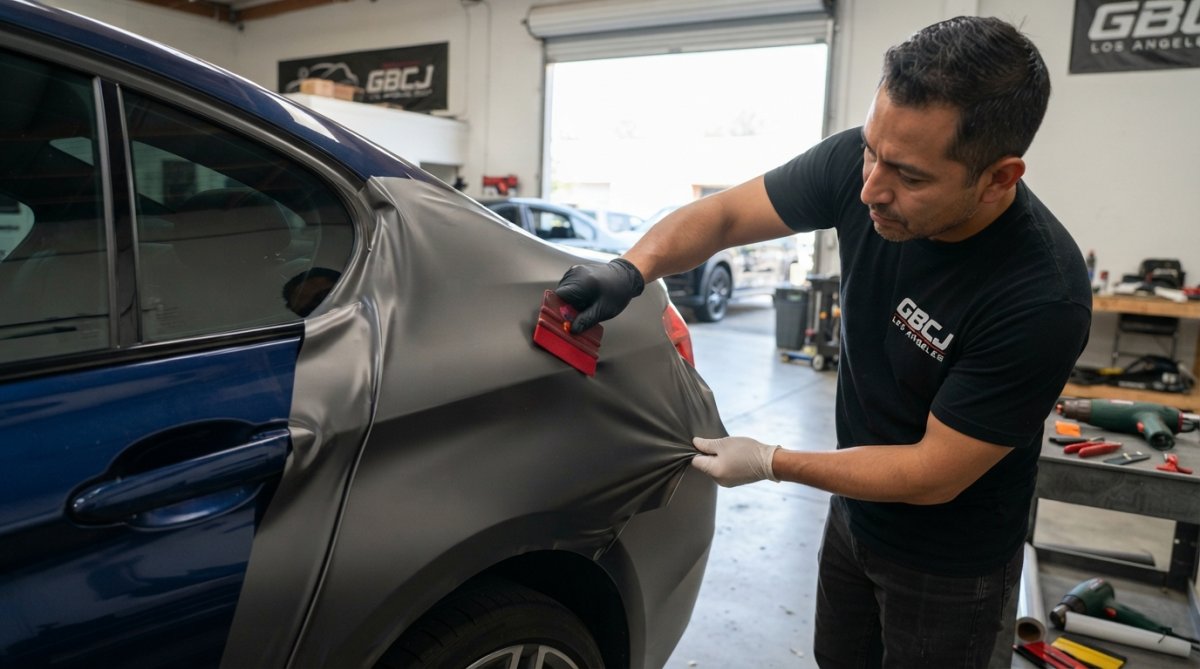
Cast vinyl costs more to manufacture, commanding a premium price. However, extended lifespan often justifies the higher upfront investment across the wrap's usable life.
Calendered Vinyl: Budget-Friendly With Trade-Offs
Calendered vinyl is manufactured by pressing heated material through rollers, a faster, cheaper process. The thicker, stiffer material doesn't conform to complex surfaces as well as cast vinyl.
Calendered vinyl requires more heat and pressure on contoured surfaces, increasing installation costs. On aggressive curves and complex body lines, it's prone to wrinkles, air pockets, and incomplete contact.
Calendered vinyl shrinks more in hot climates, causing edge lifting and adhesion failure. Sun-exposed areas degrade faster than cast vinyl applications.
Calendered vinyl suits short-term wraps and temporary promotions. For long-term branding, it requires more maintenance and fails sooner.
How Long Do Vehicle Wraps Last Under Real Conditions
Quality cast vinyl wraps last five to seven years under typical conditions; calendered vinyl typically performs three to five years before significant degradation.
Garaged vehicles may see longer life; intense UV, temperature swings, or aggressive weather accelerate degradation.
Adhesive backing determines bond longevity. Solvent-based adhesives maintain peel strength longer than pressure-sensitive alternatives. Edge peeling signals adhesive failure; moisture infiltration then accelerates degradation.
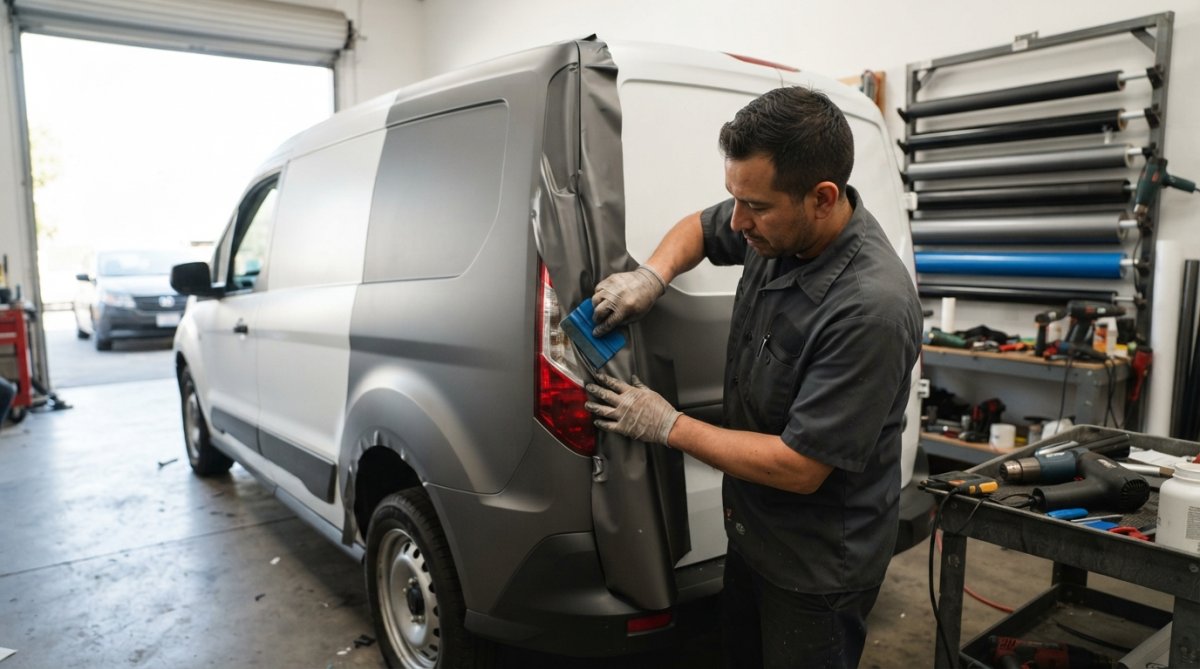
Professional installation with proper surface preparation and post-heating consistently outperforms DIY applications or poor technique.
UV Resistance and Environmental Durability Factors
UV exposure drives vinyl degradation, but rates vary by climate and altitude. Understanding your climate helps select materials that deliver expected durability.
UV Intensity and Geographic Variation
UV intensity varies geographically. High-altitude regions (above 5,000 feet) receive 20-30% more annual UV exposure than sea-level areas due to thinner atmosphere.
Desert climates expose wraps to intense year-round UV. Tropical regions combine high UV with humidity and salt spray. Temperate climates experience less UV but greater thermal cycling stress.
High-UV environments require cast vinyl with premium topcoats; calendered vinyl shows visible fading within 2-3 years. In moderate-UV climates, quality calendered vinyl performs adequately for 4-5 years.
Topcoat Protection and UV Absorbers
Quality vehicle wrap materials include UV-absorbing additives and protective topcoats (0.5-1.0 mil thick) that absorb UV before it reaches the colored vinyl.
Premium topcoats remain effective longer; budget wraps show noticeable fading within 12-18 months in high-UV climates.
Matte finishes show UV damage more readily than gloss finishes due to textured topcoats that provide more surface area for UV attack. Gloss finishes maintain appearance longer but require more frequent cleaning.
Carbon fiber finishes mask minor degradation through pattern; textured surfaces hide dirt and scratches better than smooth finishes.
Thermal Cycling and Dimensional Stability
Temperature cycling accelerates degradation independent of UV. Vehicles in direct sun experience surface temperatures 40-60°F higher than ambient; rapid cooling creates mechanical stress.
In climates with significant temperature swings, cast vinyl's superior dimensional stability keeps edges sealed and adhesion consistent.
Calendered vinyl shrinks more in hot climates, causing edge lifting. Sun-exposed areas degrade faster than cast vinyl in extreme seasonal variation.
Humidity, Moisture, and Salt Exposure
Moisture infiltration beneath wraps promotes adhesive failure and corrosion. Coastal salt spray accelerates corrosion and degrades adhesive bonds through osmotic pressure.
Solvent-based adhesives with air-release channels provide better moisture resistance than pressure-sensitive alternatives. In coastal environments, moisture-resistant adhesives are as important as UV-resistant vinyl.
Climate-Based Material Selection Matrix
High-UV, Hot, Dry Climates: Cast vinyl with premium topcoat and solvent-based adhesive; expect 5-7 years. Inspect edges quarterly for lifting.
Moderate-UV, Temperate Climates: Calendered or cast vinyl both perform adequately. Expect 4-6 years (calendered) or 6-8 years (cast). Ensure professional installation with proper post-heating.
High-Humidity, Coastal Climates: Cast vinyl with solvent-based adhesive is essential. Expect 4-6 years. Quarterly inspection and edge re-sealing extend lifespan.
Tropical Climates: Only premium cast vinyl with advanced topcoats and solvent-based adhesives should be specified. Expect 4-5 years. Monthly inspection and professional removal are critical.
Vehicle Wrap Maintenance Tips to Maximize Lifespan
Regular cleaning with mild soap and soft brushes removes contaminants. Avoid high-pressure washers, which force water under edges.
Park in shade or covered parking to extend wrap life. For vehicles in direct sun, apply protective wax or sealant products designed for vinyl wraps.
Inspect regularly for edge lifting. Have edges re-sealed professionally before moisture infiltrates the substrate.
Avoid abrasive products and harsh chemicals. Use products specifically formulated for vinyl wrap maintenance.
Allow wrapped vehicles to warm gradually before cleaning or mechanical stress. Vinyl becomes brittle in extreme cold.
Adhesive Technology and Removal Safety
Adhesive backing is arguably more important than vinyl for long-term durability. Understanding adhesive chemistry determines whether your wrap lasts five years or fails after eighteen months.
Solvent-Based vs. Pressure-Sensitive Adhesives
Solvent-based adhesives cure through VOC evaporation, developing superior peel strength and flexibility. They chemically bond to the substrate, resisting edge lifting better than pressure-sensitive alternatives, ideal for long-term applications.
Pressure-sensitive adhesives (PSA) remain tacky and rely on contact pressure. They're easier to reposition but vulnerable to temperature fluctuations. PSA works for short-term wraps (6-18 months) but degrades faster under UV and thermal cycling.
For long-term durability, solvent-based adhesives significantly outperform pressure-sensitive alternatives.
Air-Release Channel Technology
Quality adhesive backings incorporate microscopic air-release channels that allow trapped air to escape during application, critical for long-term durability.
Without air-release technology, installers must work harder to eliminate air pockets, often using excessive heat or aggressive squeegee pressure. This mechanical stress damages the vinyl and weakens the adhesive bond. Air pockets that remain trapped become nucleation points for moisture infiltration and adhesive failure. Wraps applied with air-release adhesives achieve better substrate contact, which translates directly to longer lifespan and cleaner removal.
Budget vinyl products often omit sophisticated air-release design, which is why they're cheaper to manufacture but more difficult to install and less durable long-term.
Adhesive Longevity and Failure Modes
Solvent-based adhesives on quality cast vinyl wraps typically maintain peel strength for 5-7 years under normal conditions. Peel strength, the force required to remove the wrap without tearing, gradually increases during the first year as the adhesive fully cures, then remains relatively stable. After 5-7 years, peel strength begins declining as UV exposure and thermal cycling degrade the adhesive polymers.
Edge lifting is the most common adhesive failure mode. It begins when moisture infiltrates beneath the wrap at panel seams or edges, breaking the adhesive bond from underneath. Once edge lifting starts, it accelerates rapidly because moisture wicks under the wrap, progressively weakening adhesion. This is why catching edge lifting early and having edges re-sealed by a professional is critical, it prevents catastrophic failure.
Secondary adhesive failure occurs when the adhesive itself degrades from UV exposure or thermal stress, rather than from moisture infiltration.
Paint Safety During Removal
The adhesive formulation directly determines whether removal damages the vehicle's paint. Quality solvent-based adhesives, when properly applied and allowed to cure fully, release cleanly from the substrate without leaving residue or pulling clear coat. The adhesive bond is strong enough to hold the wrap for years but not so aggressive that it damages paint during removal.
Selecting Durable Materials for Your Fleet
When evaluating vehicle wrap materials for fleet applications, establish clear priorities. If your fleet vehicles turn over every three to five years, calendered vinyl may be cost-effective despite shorter lifespan. If vehicles stay in service longer or visibility is critical to brand perception, cast vinyl's durability justifies the premium.
Conclusion
The best vehicle wrap materials for long-term durability balance cast vinyl's superior conformability and dimensional stability with realistic budget constraints. Cast vinyl delivers five to seven years of reliable performance under typical conditions, while calendered vinyl offers three to five years at lower cost. Your choice depends on climate exposure, vehicle lifespan, and how critical brand visibility is to your business.
Frequently Asked Questions
What type of car wrap lasts the longest?
Cast vinyl wraps typically last 5-7 years or longer with proper maintenance, outperforming calendered vinyl which lasts 3-5 years. Cast vinyl's superior conformability, thinner construction, and higher-quality adhesive backing contribute to longer durability. UV-resistant topcoats and professional installation further extend lifespan. Environmental factors like sun exposure and climate significantly impact longevity regardless of material type.
What is the difference between cast and calendered vinyl for vehicle wraps?
Cast vinyl is manufactured by casting liquid polymeric material onto a backing, creating a thinner, more flexible film with better dimensional stability and conformability to curved surfaces. Calendered vinyl is produced by rolling heated material through mechanical pressure, resulting in thicker, less flexible film that shrinks more over time. Cast vinyl resists fading better and maintains gloss retention longer, while calendered vinyl costs less but offers reduced longevity and heat resistance.
How does sun exposure affect the durability of vehicle wraps?
Direct UV radiation causes vinyl degradation, leading to fading, gloss loss, and eventual cracking. Vehicles exposed to intense sun experience accelerated finish degradation, with topcoat protection becoming critical. Matte finishes show UV damage more visibly than gloss finishes. Climate intensity matters significantly, vehicles in high-heat regions experience greater thermal expansion and contraction, stressing adhesive bonds and accelerating peeling. UV-resistant topcoats can extend durability by 1-2 years in harsh conditions.
What maintenance steps extend the life of a high-quality vehicle wrap?
Regular washing with mild soap and soft brushes prevents dirt accumulation that can degrade adhesive bonds. Avoid high-pressure washers near seams and edges. Park in shade when possible to minimize UV exposure and thermal stress. Inspect edges quarterly for lifting or peeling, and address damage immediately to prevent further deterioration. Avoid harsh chemicals and solvents that can compromise topcoat integrity. Proper maintenance can add 1-2 years to wrap lifespan.