 how-to
How to Maintain Vehicle Wrap Quality: 2026 Guide
Table of Contents
- What You'll Need to Maintain Vehicle Wrap Quality
- Best Cleaning Products for Vinyl Wraps
- Step 1: Hand Wash Your Vehicle Wrap
- Step 2: Dry and Spot Clean Stubborn Contaminants
- Can You Wax a Vinyl Wrap?
- How Long Do Vehicle Wraps Last?
- Seasonal Maintenance and the Post-Installation Curing Period
- Frequently Asked Questions
Last Updated: September 17, 2026
What You'll Need to Maintain Vehicle Wrap Quality
Maintaining vehicle wrap quality starts with the right tools and a simple routine. A vinyl film wrap is a thin layer of colored or printed vinyl applied over your vehicle's paint. It protects the surface underneath and gives your brand a moving billboard. But vinyl is not paint. It needs different care.
At GBCJ Los Angeles, we've installed vehicle graphics for over 15 years. We've seen wraps last five years and wraps fail in twelve months. The difference is almost always maintenance.
Below, we'll show you exactly what to use, what to avoid, and how to spot-treat the messes that ruin wraps fastest.
What you'll need:
- Two buckets (one for soap, one for rinse water)
- pH-neutral car soap
- Soft microfiber cloths and wash mitts
- Isopropyl alcohol for spot cleaning
- A hose or pressure washer with a wide spray tip
- Non-abrasive sponge for stubborn spots
Best Cleaning Products for Vinyl Wraps
The best cleaning products for vinyl wraps are pH-neutral soaps made for cars. Skip anything with wax, silicone, or harsh solvents. Those break down the adhesive and dull the finish.
Here's what works:
- pH-neutral car soap for regular washes
- Isopropyl alcohol for spot cleaning and pre-seal prep
- Non-abrasive microfiber cloths for drying and wiping
- Vinyl-safe degreaser for fuel spills and road grime
Avoid bristle brushes, scouring pads, and any product labeled "heavy-duty." A common mistake is grabbing dish soap. It strips the protective layer and leaves the vinyl dry.
For a deeper look at safe products, the Specialty Equipment Market Association tracks aftermarket care standards for wraps and films.
Step 1: Hand Wash Your Vehicle Wrap
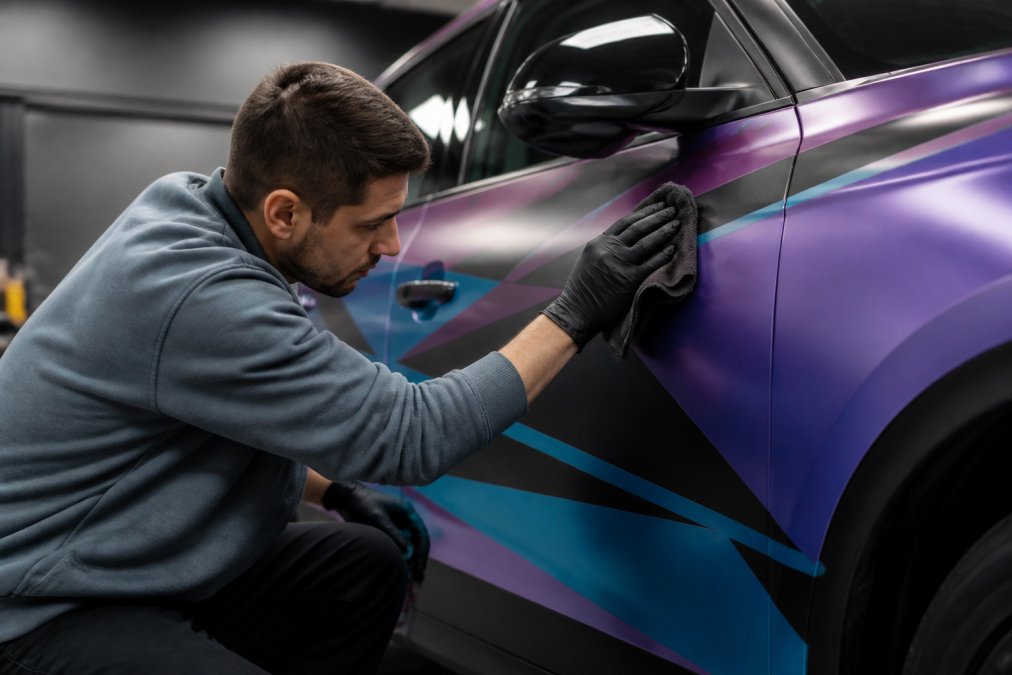
Hand washing is the only safe way to clean a wrapped vehicle. Rinse first to remove loose grit. Then wash top to bottom with soapy water and a microfiber mitt. Rinse again, then dry immediately.
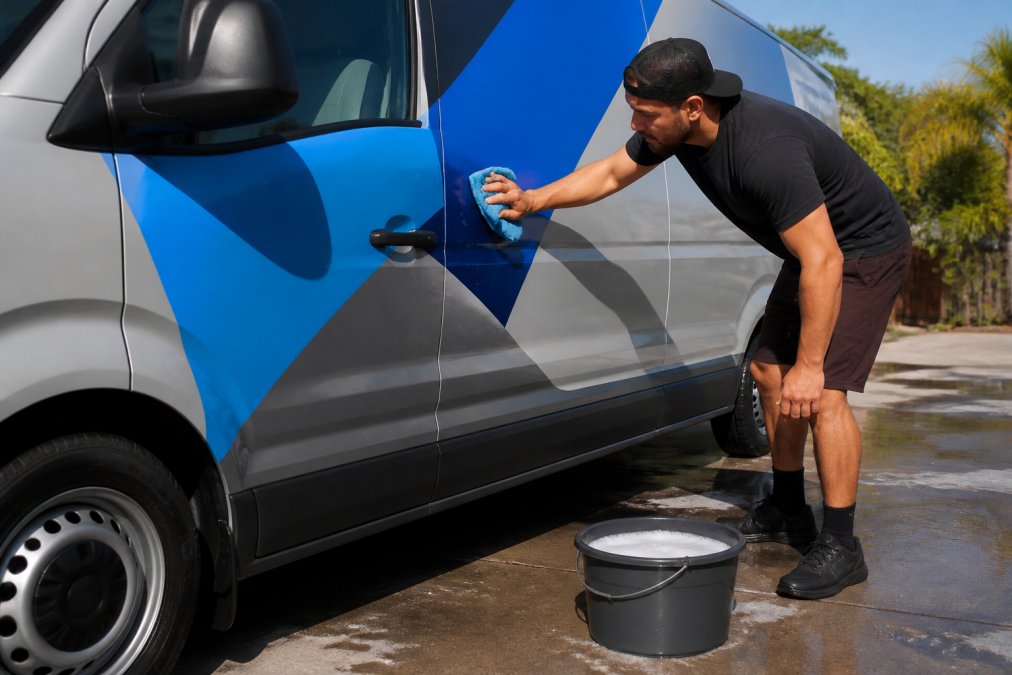
Work in shade when you can. Direct sun dries soap too fast and leaves water spots. Keep the surface wet the whole time.
Pressure Washer Settings and Safety Limits
Keep your pressure washer under 2,000 psi and the nozzle at least 12 inches from the surface. Higher pressure can lift edges and force water under the film.
Use a wide fan tip, never a pinpoint stream. Aim at a 45-degree angle, not straight on.
Why You Should Avoid Automatic Car Washes
Automatic car washes destroy wraps. The spinning bristle brushes scratch the vinyl and catch on edges. The harsh chemicals strip the finish.
Step 2: Dry and Spot Clean Stubborn Contaminants
Dry your wrap with a clean microfiber cloth right after washing. Letting it air dry leaves water spots and mineral marks. Use light pressure and work in one direction.
DIY Spot Treatment for Bird Droppings, Tree Sap, and Fuel Spills
Different contaminants need different methods:
| Contaminant | Fix | Why It Matters |
|---|---|---|
| Bird droppings | Soak with warm soapy water, wipe gently | Acidic and etches fast in heat |
| Tree sap | Dab with isopropyl alcohol on a cloth | Dissolves sap without scrubbing |
| Fuel spills | Wipe immediately with mild soap and water | Fuel breaks down adhesive |
| Road salt | Rinse with fresh water, then wash | Corrodes edges and seams |
| Bug splatter | Soften with soap, wipe with microfiber | Hard scrubbing causes swirl marks |
Never scrub hard. If a spot won't lift, soak it longer, then try again.
Can You Wax a Vinyl Wrap?
No, you should not wax a vinyl wrap. Traditional car wax leaves a residue that builds up and dulls the finish. It also attracts dust.
How Long Do Vehicle Wraps Last?
Most vehicle wraps last five to seven years with proper care. Quality cast vinyl film, a clean installation, and regular maintenance all extend the lifespan. Poor care, automatic washes, harsh solvents, neglected contaminants, can cut it to two or three years.
Here's what affects longevity:
- UV exposure: Constant sun fades pigments and dries the film, making it brittle
- Washing habits: Hand washing adds years; automatic washes subtract them
- Climate: Extreme heat and repeated freeze-thaw cycles stress the adhesive
- Storage: Garage-kept vehicles outlast street-parked ones
- Film type: Cast film conforms and lasts longer than calendared film on complex curves
Repair vs. Replace: A Decision Framework
Patch or spot-repair (maintenance still works):
- A single nick, scratch, or bubble smaller than a few inches
- One lifted edge that can be re-adhered with heat and pressure
- Isolated contaminant staining that a vinyl-safe cleaner lifts
- Damage confined to one panel, with the rest of the film intact
Professional repair (targeted fix, not full replacement):
- A tear or gouge that exposes the paint underneath
- Edge lifting along multiple seams that keeps returning after re-adhesion
- Fading or discoloration limited to one or two sun-facing panels
- Delamination where the clear top layer separates from the color layer
Replace the wrap:
- Widespread fading, chalking, or color shift across multiple panels
- Cracking or crazing in the film surface
- Adhesive failure, film peeling back on its own across large areas
- Damage spanning more than roughly a third of the vehicle
- The wrap is near or past its expected service life and repairs would cost a meaningful fraction of a new install
When in doubt, get a professional assessment before spending money on a fix that won't hold. A qualified installer can tell in minutes whether a wrap is a maintenance case or a replacement case.
Seasonal Maintenance and the Post-Installation Curing Period
New wraps need a curing period before their first wash. Curing lets the adhesive fully wet out and bond to the paint or substrate. The timeline depends on temperature:
- 70°F and above: wait 48 to 72 hours before the first wash
- 50°F to 70°F: wait 5 to 7 days
- Below 50°F: wait 10 to 14 days, or until the film feels firmly bonded at the edges
Seasonal Care: Summer vs. Winter
Most guides give one generic routine. In practice, the two extremes of the year demand different tasks.
Summer (UV and heat):
- UV exposure is the leading cause of fading and film embrittlement. Park in a garage or under a cover when possible.
- Bug splatter and bird droppings bond faster in heat. Rinse them off the same day, acidic droppings can etch vinyl within hours on a hot panel.
- Wash in the early morning or evening. Soap dries too fast on a hot surface and leaves water spots.
- Reapply a vinyl-safe sealant more often, every 8 to 12 weeks instead of quarterly, because heat breaks down the protective layer faster.
Winter (salt, grit, and freeze-thaw):
- Road salt is the biggest threat. It collects along edges and seams and corrodes the adhesive line. Rinse the lower panels and wheel arches with fresh water at least once a week during salt season.
- Wash more often, not less. Grit embedded in the film acts like sandpaper every time you touch it.
- Never chip ice off a wrap. Use a de-icer spray or let the vehicle warm up. Scrapers cut and lift vinyl.
- Avoid washing in freezing temperatures. Water that freezes in seams can pry edges loose as it expands.
- After a wash, dry edges and seams thoroughly. Trapped moisture that refreezes is a common cause of winter edge lift.
Frequently Asked Questions
How long will a quality car wrap last?
A quality vehicle wrap typically lasts five to seven years with proper care, though this depends on the vinyl film quality, sun exposure, and how well you maintain it. Parking in a garage and washing regularly can push lifespan toward the higher end. If you skip maintenance or use harsh chemicals, you may see fading or peeling in three years or less.
Can you take a wrapped car through an automatic car wash?
No. Automatic car washes use bristle brushes and harsh detergents that scratch vinyl film, lift edges, and cause swirl marks. Hand washing with a pH-neutral soap and a microfiber cloth is the only safe method. If you must use a touchless wash, confirm it has no brushes and uses mild detergent. Even then, hand washing remains the safest choice for preserving your wrap.
Will rubbing alcohol damage vinyl wrap?
Isopropyl alcohol is safe for spot cleaning vinyl wrap when diluted and used sparingly. It removes tree sap, bird droppings, and fuel spills without harming the film. Do not use it as a general cleaner or let it sit on the surface. Wipe the area with a clean microfiber cloth, then rinse with water. For regular washing, stick to pH-neutral soap.
How often should you wash a wrapped vehicle?
Wash your wrapped vehicle every two weeks, or weekly if you drive in areas with heavy road salt, tree sap, or industrial fallout. Regular washing prevents contaminants from bonding to the vinyl film and causing stains. In winter, rinse the wrap after every snowstorm to remove road salt. A consistent maintenance schedule is the single best way to extend wrap lifespan.
Vinyl wraps take a beating from sun, weather, and daily driving. A simple hand-wash routine and quick spot treatment keep yours looking sharp for years. When a wrap reaches the end of its life, or when you're ready for a fresh design, GBCJ Los Angeles can help. We bring over 15 years of experience in vehicle graphics, a customer-first approach, and affordable pricing to every project. Get started with GBCJ Los Angeles and give your brand a wrap that turns heads on every street.