 how-to
Large Format Printing: A How-To Guide
Table of Contents
- What Is Large Format Printing?
- Common Applications and Use Cases
- Large Format Printing File Requirements
- Large Format Printing Resolution Guide
- Best Materials for Outdoor Signage
- Printing Technology and Equipment Types
- Design Considerations for Large Scale Projects
- Maintenance and Longevity Tips
- Frequently Asked Questions
Last Updated: September 30, 2026
What Is Large Format Printing?
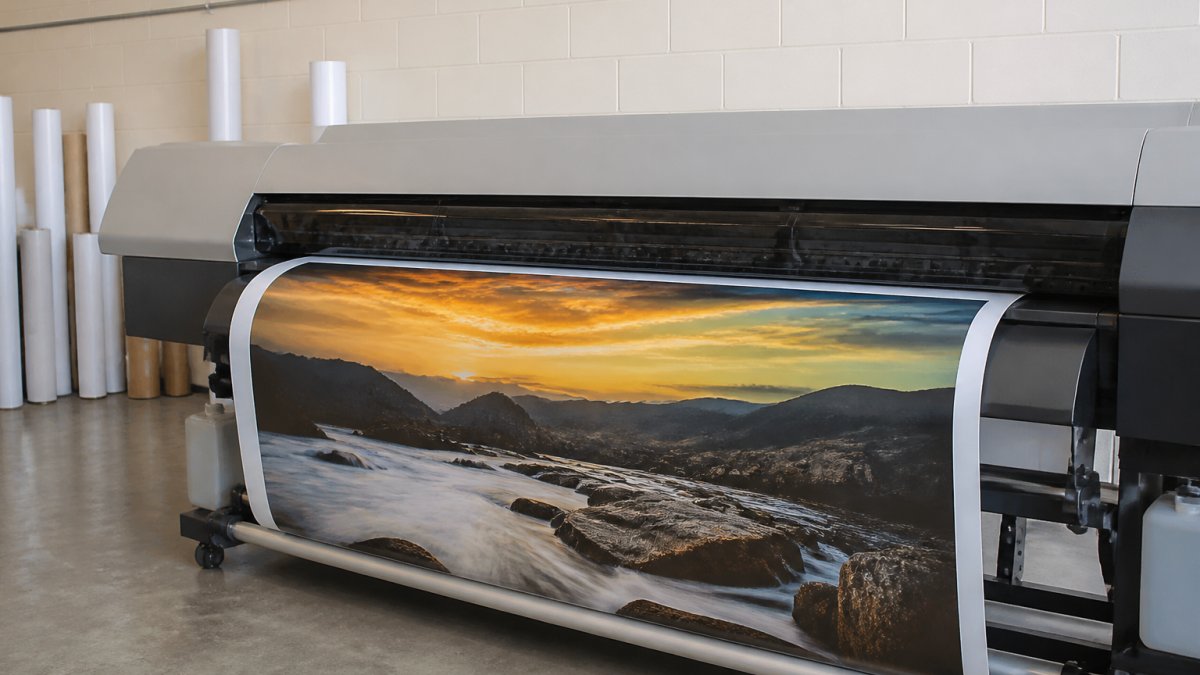
Large format printing is the process of producing images and graphics on substrates larger than standard paper sizes, typically starting at 18 inches wide and extending to several feet. Unlike traditional office printing, large format printing uses specialized equipment designed to handle roll-fed or flatbed systems that can accommodate oversized materials. This technology allows businesses to create high-impact visual communications that grab attention and reinforce brand identity.
Large format printing applies CMYK inks to substrates via digital or solvent-based processes, translating digital files into precise color placements. Resolution, ink type, and substrate choice determine final quality and durability.
Common Applications and Use Cases
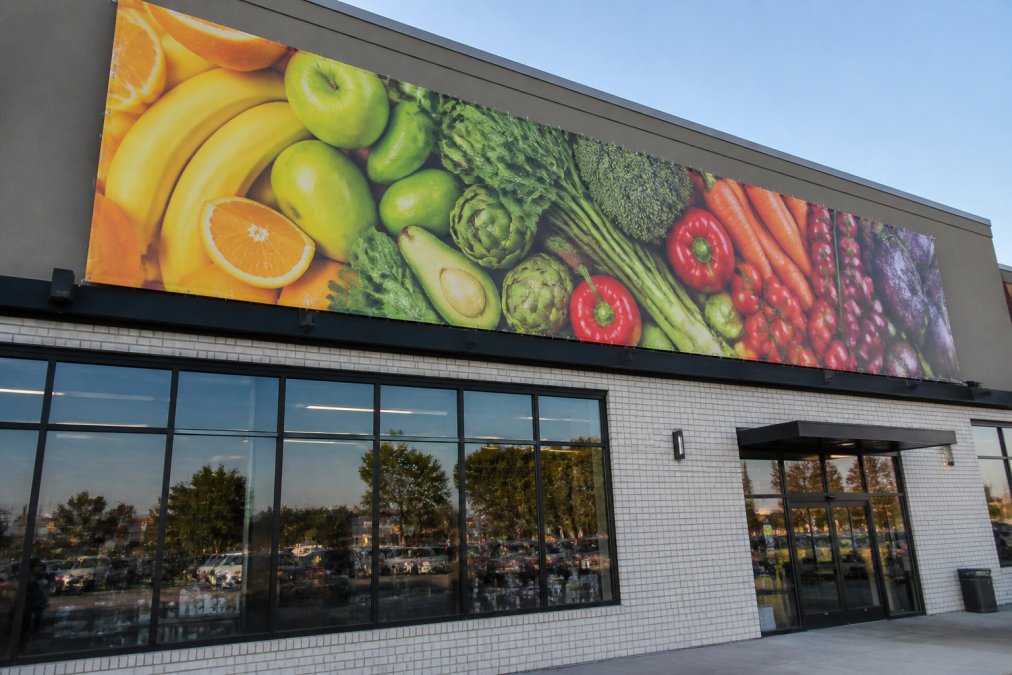
Common applications include storefront signage, vehicle graphics, trade show displays, wall graphics, window decals, and point-of-purchase materials, each with different durability and design requirements.
Retail uses large format printing for window displays and entrance signage. Event companies rely on trade show graphics and booth backdrops. Professional offices use interior wall graphics. Vehicle fleets benefit from branded wraps. Property managers maintain consistent branding across multiple spaces. Marketing agencies execute campaigns demanding scale and visual impact. Large format printing creates visual experiences that reinforce brand and drive results.
Large Format Printing File Requirements
Resolution and DPI Standards
For large format printing, resolution depends on viewing distance. Close-viewing graphics need higher DPI; distant-viewing graphics can use lower DPI without quality loss.
Not all large format printing requires 300 DPI. Here's what matters:
- Close-viewing graphics (6 feet or closer): 150-300 DPI recommended
- Medium-distance graphics (6-20 feet): 100-150 DPI acceptable
- Distance viewing (20+ feet): 50-100 DPI sufficient
Viewing distance determines acceptable resolution and prevents unnecessary file bloat and delays.
Color Modes and File Formats
Large format printing requires CMYK color mode, which combines cyan, magenta, yellow, and black inks to produce the full color spectrum.
Vector graphics (.ai, .eps, .pdf) scale infinitely without quality loss. Raster images (.jpg, .png, .tiff) have fixed dimensions and degrade if enlarged. Use vector files whenever possible; ensure raster images are sized appropriately for final output before printing.
Bleed, Trim, and Safe Area Specifications
Large format printing requires bleed area, extra material beyond trim lines to ensure color extends to edges. Standard bleed is 0.125 inches on all sides.
Your design should include:
- Bleed area: Extra 0.125-0.25 inches beyond the trim line on all edges
- Trim line: The final cut size of your printed piece
- Safe area: The region at least 0.25 inches inside the trim line where critical text and logos must live (to avoid accidental cropping)
Failing to include bleed is a top reason for reprints and delays.
Color Profile Management: RGB vs. CMYK
RGB designs must convert to CMYK before large format printing. Bright colors often dull; some RGB colors have no CMYK equivalent. Work in CMYK from the start, or request a color proof before full production. Specify your color profile to prevent surprises.
Vector vs. Raster: When to Use Each
Vector graphics (Adobe Illustrator, CorelDRAW, Inkscape) scale infinitely; raster images (photographs, illustrations) have fixed resolution. For large format printing: use vector for text, logos, and design elements; use high-resolution raster (minimum 150 DPI at final size) for photographs. Avoid mixing low-res raster with vector. Vector files: .ai, .eps, .pdf, .svg. Raster files: .jpg, .png, .tiff, .bmp.
Common File Preparation Mistakes and How to Avoid Them
Common file errors: unembedded fonts, unlayered files, transparent backgrounds in CMYK, linked (not embedded) images, and incorrect dimensions. Ask your printer for a file specification sheet before designing to avoid these issues.
Large Format Printing Resolution Guide
For large format printing, determine viewing distance (storefront decals: 2-3 feet; vehicle wraps: 10-30 feet; billboards: 100+ feet), then select DPI accordingly. Confirm output dimensions, viewing distance, and DPI with your printer before starting to prevent rework.
Best Materials for Outdoor Signage
Vinyl and Flexible Substrates
Vinyl is durable, weather-resistant, and flexible for outdoor large format printing. Matte vinyl reduces glare; glossy vinyl produces vibrant colors; cast vinyl conforms to curves. Quality vinyl resists fading, moisture, and UV damage, maintaining color vibrancy for 3-5 years in direct sunlight.
Rigid Materials and Durability
Aluminum composite offers premium appearance and 7-10 year durability. PVC is lightweight and affordable, lasting 2-4 years. Corrugated plastic suits temporary applications. Rigid materials cost more but last longer; flexible materials cost less and work better for curves or frequent changes.
Printing Technology and Equipment Types
Large format printing uses roll-fed systems (for continuous material) or flatbed systems (for rigid sheets). Three ink technologies, UV-curable, latex, and solvent-based, each offer distinct advantages, costs, and environmental profiles affecting timeline, materials, and investment.
UV-Curable Ink Systems
UV-curable inks dry instantly under ultraviolet light.
Advantages:
- Fastest turnaround (often 24 hours or less)
- Handles the widest range of substrates, including specialty materials
- Produces vibrant, durable colors
- No off-gassing or odor concerns
Disadvantages:
- Higher equipment and ink costs
- Cannot print on heat-sensitive materials
- Produces stiffer prints on flexible substrates (less ideal for vehicle wraps that need flexibility)
- Requires careful handling of uncured ink
Best for: Trade show graphics, rigid signage, specialty applications requiring fast turnaround, and projects where material flexibility isn't critical.
Latex Ink Systems
Latex inks are water-based and cure through evaporation and absorption, becoming increasingly popular as environmental regulations tightened.
Advantages:
- Eco-friendly (water-based, low VOC emissions)
- Lower ink costs than UV systems
- Produces softer, more flexible prints (better for vehicle wraps and banners)
- No special safety equipment required for operators
- Prints maintain color vibrancy comparable to solvent inks
Disadvantages:
- Longer curing time
- Slightly slower print speeds than UV systems
- Not ideal for very glossy finishes (though matte and satin finishes are excellent)
- Requires climate control during curing (humidity and temperature affect cure time)
Best for: Banners, vehicle wraps, wall graphics, and projects where flexibility and environmental impact matter.
Solvent-Based Ink Systems
Solvent inks use organic solvents to keep ink liquid until it evaporates and bonds to the substrate, but are being phased out in favor of UV and latex alternatives.
Advantages:
- Proven durability in outdoor conditions (5+ years)
- Works on nearly any substrate
Disadvantages:
- Strong odor and VOC emissions (requires ventilation)
- Slower than UV systems
- Environmental and health concerns driving regulatory restrictions
Best for: Outdoor applications where maximum durability is non-negotiable and environmental concerns are secondary.
Ink Choice and Material Compatibility
Material and ink technology must align: vinyl banners work with all inks (latex most flexible); rigid substrates prefer UV/solvent; fabric prefers latex; specialty materials prefer UV. Ask your printer for recommendations; latex-compatible materials often cost less.
Cost-Benefit Analysis: Which Technology for Your Budget?
Cost depends on ink technology, material, and turnaround. Latex and solvent both deliver 3-5 year outdoor life. Latex is water-based, produces minimal VOC emissions, and uses recyclable substrates.
Sustainability and Eco-Friendly Printing
Corporate buyers increasingly evaluate the environmental footprint of their printing partners. Understanding ink and substrate sustainability helps you make informed choices:
Latex inks produce minimal volatile organic compounds (VOCs) compared to solvent inks. They're water-based and don't require hazardous solvent disposal.
Recyclable substrates are becoming standard. Vinyl can be recycled through specialized programs. PVC and aluminum composite are increasingly manufactured from recycled content.
Energy efficiency varies by equipment. Modern UV systems use LED curing (more efficient than older mercury lamps). Latex systems require less energy for curing than solvent systems.
If sustainability is important to your brand, request a sustainability summary from your printer. This transparency is becoming a competitive advantage in the large format printing market.
Design Considerations for Large Scale Projects
Designing for large format printing requires different thinking than designing for digital screens or standard print. Scale changes everything about how your design communicates.
Start with simplicity. Details that read perfectly at 8.5" × 11" disappear at 10 feet wide. Bold typography, large image elements, and high contrast between foreground and background work better at large scale. Small text becomes unreadable. Thin lines disappear.
Color behaves differently at scale. Bright colors command attention on large surfaces. Subtle color variations that work in small print can look washed out when enlarged. Test your color choices on a small proof before committing to full production.
Think about viewing distance and angle. A vehicle wrap gets viewed from multiple angles and distances. A window decal might be viewed up close from one side. A billboard gets viewed from moving vehicles. Each scenario demands different design approaches.
Work with bleed areas. Large format printing requires extra material beyond your final trim lines to ensure color extends all the way to the edges. Discuss bleed requirements with your printer before finalizing your design files.
Maintenance and Longevity Tips
Proper maintenance extends the life of your large format printing investment. Vinyl banners, vehicle wraps, and outdoor signage all benefit from basic care.
Clean printed surfaces regularly with mild soap and water. Avoid harsh chemicals and abrasive scrubbing, which can damage the ink layer and substrate. For vehicle wraps, hand wash is preferable to automatic car washes, which can catch edges and cause peeling.
Inspect mounted graphics regularly for signs of wear.
Frequently Asked Questions
What is large format printing used for?
Large format printing creates oversized graphics for signage, banners, vehicle wraps, wall displays, and event graphics. Businesses use it for storefront signs, point-of-purchase displays, trade show materials, and interior branding. The technology handles widths from 18 inches to over 16 feet, making it ideal for high-impact visual communication that captures attention in retail, commercial, and event environments.
What file requirements do I need for large format printing?
Your file must be in CMYK color mode, saved as PDF or TIFF. Vector graphics (AI or EPS files) work best for logos and text. Provide files at actual print size when possible. Include 0.25-inch bleed margins on all sides. RGB files will be converted, potentially shifting colors, so always submit in CMYK for accurate results.
How does resolution affect large format print quality?
Resolution measured in DPI (dots per inch) determines sharpness. Closer viewing distances require higher DPI. Insufficient resolution results in pixelation and blurred edges, while excessive resolution increases file size without visible improvement.
What materials work best for outdoor signage durability?
Vinyl banners with UV-protective inks resist fading for 3-5 years outdoors. Rigid materials like aluminum composite, PVC, or corrugated plastic offer longer durability (5-10 years) and better wind resistance. For maximum longevity, choose materials with laminated finishes and UV-curable or latex inks. Consider your climate, installation location, and expected lifespan when selecting. Proper mounting and regular cleaning extend the life of any outdoor signage material.