 how-to
How to Refresh Brand Identity with Signage in 2026
Table of Contents
- Why Signage Is the Most Visible Part of a Brand Refresh
- Signs Your Business Needs a Brand Refresh (and a Signage Audit)
- Rebranding Signage Checklist: From Logo Redesign to Installation
- Signage Design Best Practices for Rebranding
- How to Choose a Sign Consultant for Your Brand Refresh
- The Cost of Replacing Business Signage: Budgeting and ROI
- Navigating Signage Compliance, Zoning, and Permits
- Conclusion: Making Your Brand Identity Signage Transition Work
- Frequently Asked Questions
Last Updated: September 17, 2026
Why Signage Is the Most Visible Part of a Brand Refresh
Brand identity signage is the physical expression of your company's visual communication, and knowing how to refresh brand identity with signage turns logos, colors, and typography into three-dimensional touchpoints customers encounter daily. For most small businesses, the storefront sign is the single most-seen branded asset they own. At GBCJ Los Angeles, we've spent over 15 years in the industry, and we understand the importance of signage in a brand refresh.
Signs Your Business Needs a Brand Refresh (and a Signage Audit)
- Exterior sign: legible, undamaged, colors match current brand?
- Interior wayfinding: consistent fonts and hierarchy?
- Vehicle graphics: peeling, faded, or outdated logo?
- Window and door graphics: aligned with brand messaging?
- Hours, address, and phone details current?
If more than a third of your assets fail these checks, a coordinated refresh usually costs less than replacing them piecemeal.
Rebranding Signage Checklist: From Logo Redesign to Installation
Knowing how to refresh brand identity with signage starts with a rebranding signage checklist that keeps the project from stalling between design approval and installation, where most delays happen.

- Finalize the logo and color palette. Signage can't begin until these are locked; last-minute logo changes force expensive rework.
- Complete the signage audit. Know exactly what exists before deciding what changes.
- Translate brand colors to physical materials. Screen colors and vinyl or paint colors don't match one-to-one, request physical samples.
- Set the typography hierarchy. Decide which text is largest, which is secondary, and which is regulatory.
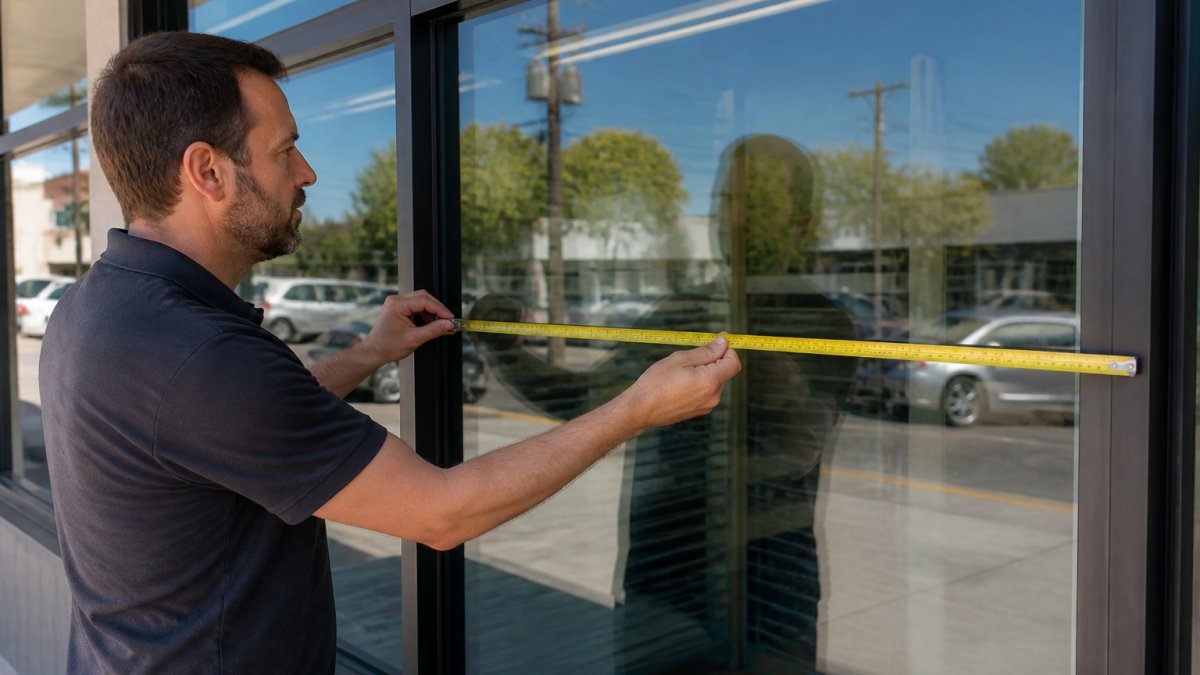
- Confirm dimensions and placement. Measure every location; a design that looks right on screen can fail at actual scale.
- Check permit requirements early. Applications take time and often run in parallel with fabrication.
- Approve a final proof. Sign off on color, size, and spelling before production.
- Schedule installation. Plan around business hours and weather.
Signage Design Best Practices for Rebranding
Legibility beats decoration: a sign that wins design awards but can't be read from a moving car has failed at its job.
- Contrast drives readability. Light text on a dark background or the reverse. Low-contrast palettes disappear at distance.
- Limit typefaces. Two fonts is usually enough: one for the brand name, one for supporting text.
- Respect visual hierarchy. The most important element should be the largest. Don't let a tagline compete with the logo.
- Design for the viewing distance. A vehicle graphic read at highway speed needs larger text than an interior wayfinding sign read at arm's length.
- Plan for design flexibility. Build a system that works across sizes so future assets stay consistent.
How to Choose a Sign Consultant for Your Brand Refresh
A good partner will:
- Review your brand guidelines and flag conflicts with physical materials
- Handle permit research and paperwork on your behalf
- Provide physical samples for color and material approval
- Coordinate installation without disrupting your business
- Explain trade-offs between durability, appearance, and budget
This matters most for small teams. A consultant who owns the process from design through installation saves you from coordinating three vendors and absorbing the blame when something slips.
The Cost of Replacing Business Signage: Budgeting and ROI
Most brand-refresh guides wave at "budget" and move on. That's wrong: signage is usually the largest single line item in a physical rebrand, and sequencing determines whether you spend the money once or three times.
- Design and proofs, logo adaptation to physical formats, color matching, and a physical proof. This is a small share of total cost but the cheapest place to catch an expensive mistake.
- Fabrication, materials, size, illumination, and quantity. This is where the bulk of the money goes.
- Permits and compliance, application fees, design-review submissions, and any required engineering or electrical sign-off.
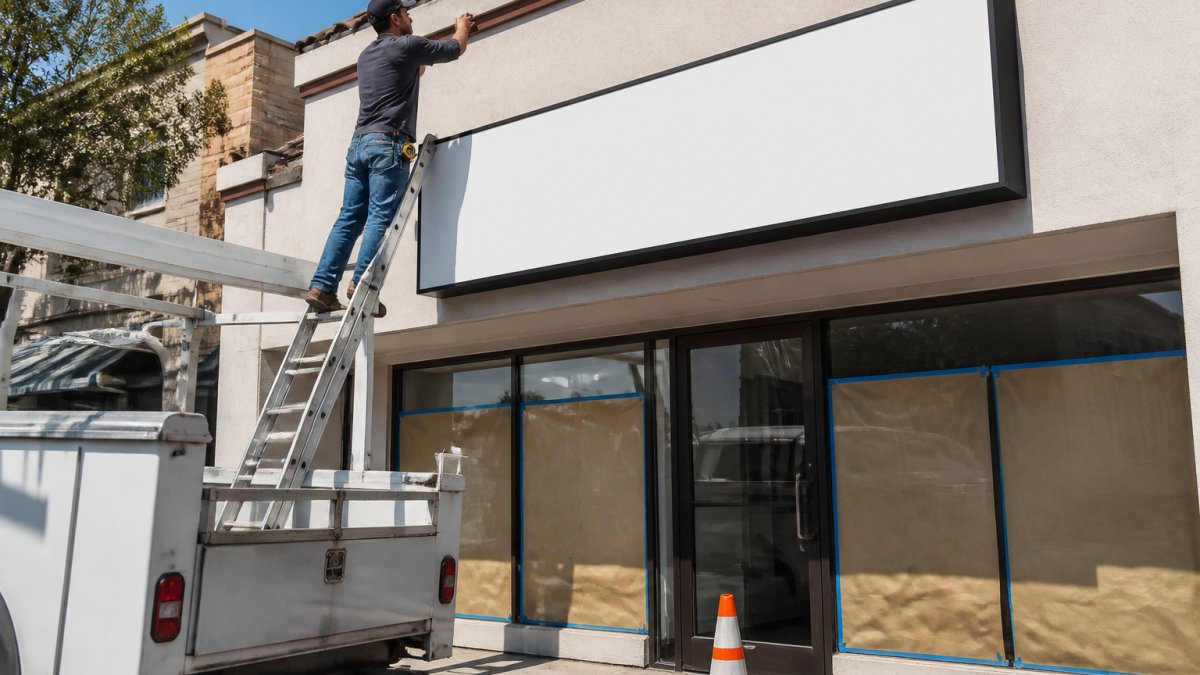
- Installation, labor, equipment (bucket truck, crane), electrical connection, and any wall or fascia repair.
The variables that actually move the number
| Variable | Why it swings cost | How to control it |
|---|---|---|
| Material | Vinyl, acrylic, aluminum, and illuminated channel letters sit at very different price points and lifespans | Match material to how long you intend to keep the sign, not to the lowest quote |
| Illumination | Adding or changing electrical service is often the single biggest surprise | Confirm whether existing wiring and transformers can be reused before you design |
| Size and quantity | Cost scales with square footage and with the number of locations | Standardize dimensions across sites so one design serves many |
| Permits | Fees and review timelines vary by jurisdiction and by sign type | Confirm requirements before fabrication, not after |
| Installation access | Height, setback, and street access drive equipment needs | Bundle multiple assets into one installation visit |
| Revisions | Every post-approval change reopens fabrication | Lock the logo and palette before production begins |
A simple ROI frame
The ROI case for signage is unusual because the asset works continuously. A practical frame:
- Estimate the daily impressions. Count the traffic that passes your location, foot traffic, vehicle traffic, or both, and treat the sign as a media buy that runs every day of the year.
- Compare against a comparable ad channel. If you were paying to reach that same audience through local advertising, what would a year of it cost? That figure is your rough annual value of the sign.
- Divide the project cost by that annual value. The result is your payback period in years. A sign that pays back inside two to three years is generally considered a strong investment.
The refresh-vs-replace decision
Not every asset needs replacing. A useful triage:
- Refresh when the structure is sound and only the face, vinyl, or graphics are dated. Re-skinning an existing cabinet is typically far cheaper than a new sign and preserves the existing permit in many jurisdictions.
- Replace when the sign is failing structurally, when the new brand requires a different size or shape, or when illumination is being added or changed.
- Retire when an asset no longer serves a purpose, a redundant directional sign, for example.
Where the money actually leaks
Three recurring overruns show up again and again:
- Late logo changes. Any change after fabrication begins means re-cutting materials and re-paying for installation.
- Electrical surprises. Assuming existing wiring will support new illumination, then discovering it won't.
- Permit timing. Rushing fabrication before approval, then rebuilding to match what the jurisdiction will actually allow.
Each is preventable with sequencing, not a bigger budget. Build the estimate around the variables above, get a physical proof before production, and confirm permit requirements before committing to a design.
Navigating Signage Compliance, Zoning, and Permits
This is the section most brand-refresh guides skip, and it's the one that most often kills a signage project after the design is paid for. Zoning and sign codes govern what you may legally put on your building, size, height, placement, illumination, sometimes color and materials. A design that ignores them must be rebuilt at your expense.
What sign codes actually regulate
Sign codes are typically adopted at the municipal level and administered by a planning or zoning department, with a separate building or electrical permit for illuminated or structural signs. Common regulated dimensions include:
- Sign area, total square footage allowed, often expressed as a ratio to building frontage or lot size.
- Height and clearance, how high a sign may sit and how far it must clear the ground or a sidewalk.
- Setbacks, how far a sign must sit from the property line, curb, or right-of-way.
- Illumination, brightness limits, hours of operation, and in some areas dark-sky or light-trespass rules that restrict upward or outward light.
- Materials and attachment, some codes restrict projecting signs, roof signs, or signs above a certain weight without engineering.
- Design review, historic districts and some commercial corridors require an architectural or design-review board to approve the appearance before a permit is issued.
The sequencing that prevents rework
Order of operations matters more here than anywhere else:
- Pull the current sign code for each location. Do this before design, not after. Codes change, and the rules that applied when the existing sign was installed may no longer be the rules today.
- Confirm whether the existing sign is legally nonconforming. Many older signs are grandfathered, they were legal when installed but wouldn't be approved under current code. This is critical: if you replace a nonconforming sign, you may be required to bring it into full compliance with current rules, which can mean a smaller or differently placed sign than you planned.
- Check whether a re-skin preserves the permit. In many jurisdictions, changing only the face of an existing conforming sign is treated as a minor alteration and does not require a new permit. Changing the size, shape, or illumination usually does.
- Submit for permit before fabrication. Fabricating first and permitting second is the single most common way projects stall.
- Schedule inspection. Most jurisdictions require a final inspection after installation, and some require an electrical inspection as well.
Multi-location complications
For multi-location businesses, compliance is not a single project. Sign codes differ by municipality, so the same design may be compliant at one site and over the size limit at another. Practical consequences:
- Design for the strictest location. If one site caps sign area lower than the others, build the system around that constraint so a single design works everywhere.
- Track permits per site. Applications, fees, and timelines are handled by each jurisdiction separately.
- Expect different review timelines. A historic district review can add weeks that a standard commercial permit does not.
When compliance changes the brand, not just the sign
Occasionally the code constrains the design itself: a jurisdiction may limit illuminated colors, prohibit certain sign types, or require a minimum letter height. Feed that constraint into the signage system early, so the brand's physical expression is designed within the rules rather than retrofitted to them. Checking the code first is not a formality, it's a design input.
Conclusion: Making Your Brand Identity Signage Transition Work
The hardest part of a refresh isn't the design. It's coordinating permits, materials, and installation so the new brand appears everywhere at once instead of piece by piece.
Frequently Asked Questions
What is the difference between a brand refresh and a full rebrand?
A brand refresh updates visual elements like logo, typography, and color palette while keeping your core identity and market positioning intact. A full rebrand changes your brand's fundamental strategy, name, or personality. Signage refresh projects usually fall under the brand refresh category because you're updating physical touchpoints to match an evolved look, not rebuilding customer recognition from scratch. Most small businesses start with a refresh because it costs less and carries lower risk of confusing loyal customers.
How long does it typically take to implement new signage during a refresh?
Timelines vary by sign type and permit requirements. Simple interior updates like vinyl graphics or wayfinding signs can be designed, produced, and installed in one to two weeks. Exterior storefront signs often take four to eight weeks because of design revisions, landlord approvals, and municipal permit processing. Vehicle graphics typically take three to five business days per vehicle once artwork is finalized. If you're opening a new location on a deadline, start the signage process at least six to eight weeks before your target launch date.
How do you ensure signage consistency across multiple locations?
Create a brand guidelines document that specifies exact colors, fonts, logo placement, and approved materials for every sign type. Then work with one fabrication partner who can produce matching signage for all locations. A signage audit across each site before production catches inconsistencies in dimensions, mounting, or lighting. For multi-tenant properties, coordinate with property managers early so each location's exterior signage meets landlord requirements while staying visually consistent with your brand identity.
What materials are best for modernizing storefront signage?
Material choice should balance your brand personality, local climate, and maintenance expectations. We can discuss various options to meet your specific needs.