 how-to
How Long Does Custom Signage Installation Take?
Table of Contents
- What Determines Your Custom Signage Installation Timeline
- The Commercial Sign Installation Process: Phase by Phase
- Signage Permitting Requirements and Municipal Approval Timelines
- Factors Affecting Sign Installation Cost and Speed
- How to Avoid Delays: Permits, Supply Chain, and Site Prep
- What Happens After Installation: Inspections and Maintenance
- Frequently Asked Questions
Last Updated: September 10, 2026
What Determines Your Custom Signage Installation Timeline
Most storefront sign projects move through four stages: design, permitting, fabrication, and installation. The total custom signage installation timeline typically runs from a few weeks for a simple interior sign to several months for a complex illuminated storefront, and the single biggest variable is not the installation crew. It is permitting and fabrication lead time.
At GBCJ Los Angeles, we have guided small business owners, property managers, and marketing teams through hundreds of sign projects since we opened our North Hollywood shop over 15 years ago. The pattern is consistent: clients who understand the phases up front avoid the delays that catch everyone else off guard.
Here is what matters most before we break down each phase:
| Phase | Typical Duration | Biggest Delay Risk |
|---|---|---|
| Design and proofing | 1-2 weeks | Slow revision cycles |
| Permitting | 2-6 weeks | Zoning review, denials |
| Fabrication | 2-6 weeks | Material lead times |
| Installation | 1-3 days | Site readiness |
The numbers above are general ranges, not a quote for your project. Every sign is different, and the only way to get a real timeline is to have your specific scope reviewed.
Why Sign Type Changes Everything
A simple interior vinyl graphic can be designed, printed, and installed in under a week. A large monument sign with illuminated channel letters can take two to three months from first sketch to final inspection.
The difference comes down to three things: how the sign is built, whether it needs an electrical connection, and whether it requires a municipal permit. A flat wall-mounted sign with no lighting and no permit often moves faster than a client expects. An illuminated sign on a storefront almost always triggers a longer chain of approvals and inspections.
If you are opening a retail location and need a sign fast, ask your sign partner which sign types meet your landlord's requirements and your city's rules with the fewest approval hurdles. That single question can save weeks.
The Commercial Sign Installation Process: Phase by Phase
The commercial sign installation process is not a single event. It is a sequence of dependent steps, and each one waits on the last.
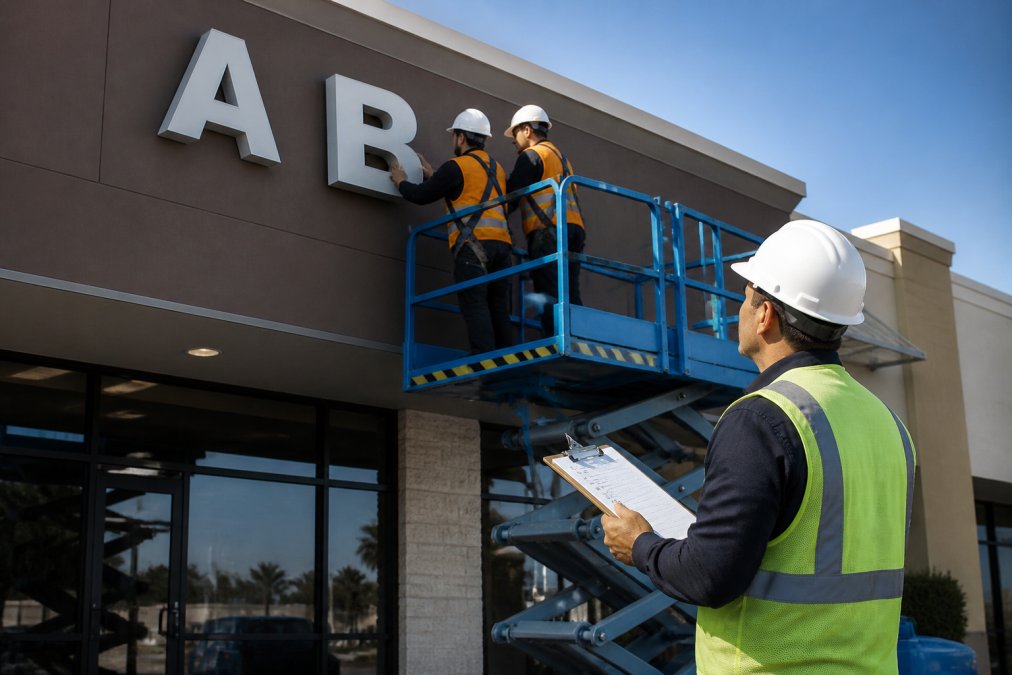
Design and Proofing
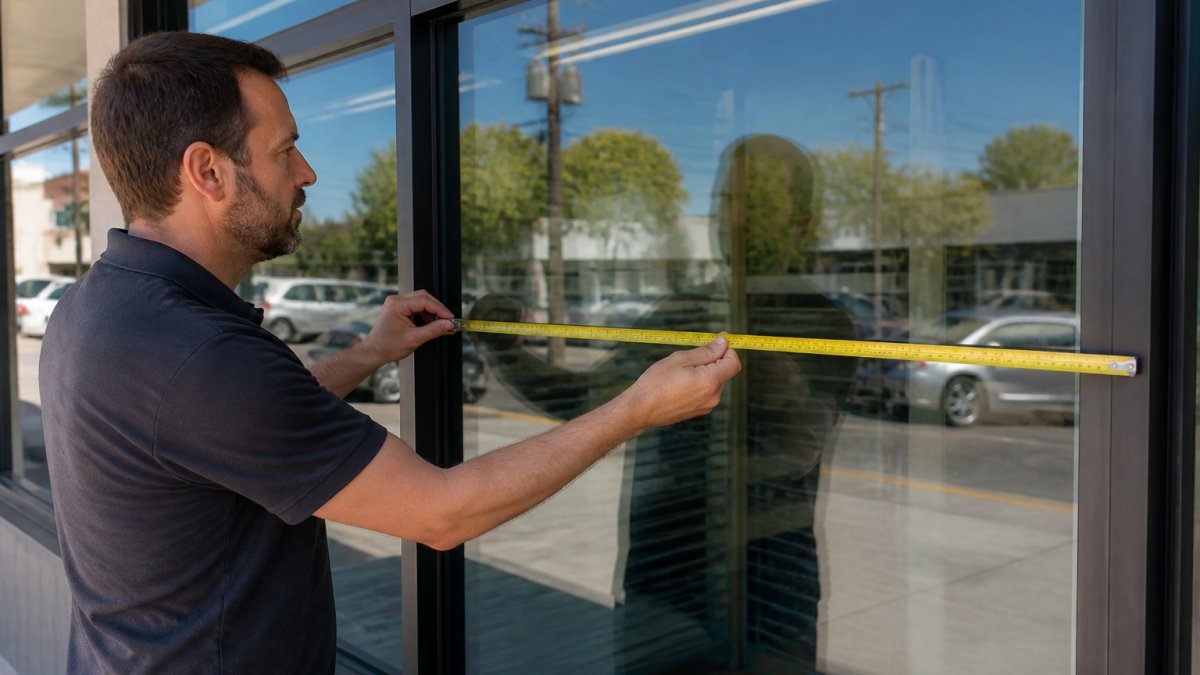
Design and proofing is where the schedule is either protected or lost. A focused design phase takes one to two weeks for most projects, including a site survey, a first proof, and one or two rounds of revisions.
What most guides miss is that revision cycles are the real time sink. When a client gathers feedback from five people and sends it back in one consolidated round, the project moves. When feedback trickles in over two weeks, the schedule slips by two weeks. If you are not a designer, that is fine. A good sign partner can turn a vague brand direction into a professional proof. Just decide who on your side has final approval authority before the first proof goes out.
Fabrication and Site Work
Fabrication begins only after the design is approved and, for permitted signs, after the permit is issued. Custom fabrication for channel letters, monument signs, and illuminated signage typically takes two to six weeks depending on complexity and material availability (sba.gov).
Channel letters are built to order. Monument signs may require concrete work, masonry, or structural engineering sign-offs before the sign itself is even produced. Supply chain and material lead times can add days or weeks, especially for specialty acrylics, LEDs, or custom metal finishes. This is the phase where a well-managed project stays on track and a poorly managed one stalls without anyone noticing until the install date is close.
Signage Permitting Requirements and Municipal Approval Timelines
Signage permitting requirements are the most underestimated part of any exterior sign project. Most jurisdictions require a permit for any permanent exterior sign, and review can take two to six weeks for a straightforward application. But the number that matters more is the one nobody quotes: how long a denial adds. A rejection that triggers a revision and resubmission cycle can push a project four to eight weeks past its original install date, and in some cases forces a redesign that invalidates fabrication already in progress (sba.gov).
The way to protect your schedule is to understand why applications get rejected before you file. A common pattern in sign permitting is that denials cluster around a handful of recurring issues, not exotic ones:
- Sign area over the district cap. Most zoning codes limit total sign area as a percentage of the building facade or as a flat square-footage maximum. A sign that looks reasonable on a proof can still exceed the cap once the wall area is measured.
- Height and setback violations. Monument signs and freestanding signs are usually governed by maximum height and minimum distance from the property line, and those numbers change by zoning district.
- Illumination conflicts. Some districts restrict internally illuminated signs, ban certain colors, or require downward-facing or shielded fixtures to limit light spill. An illuminated channel letter set that is fine two blocks away may be non-compliant in an overlay district.
- Historic or design-review overlay. Historic districts and planned developments often layer an additional design review on top of the standard permit, with its own submission calendar and its own reviewers.
- Incomplete submittals. Missing site plans, elevation drawings, electrical details, or contractor licensing information is one of the most common and most avoidable causes of delay. A file that is administratively incomplete does not even reach substantive review.
A practical way to de-risk the permit phase is to request a pre-application review or an over-the-counter zoning check before you finalize the design. Many planning departments will confirm the applicable sign area, height, and illumination rules for a specific address, often at no cost and often within days. That single step can catch a fatal issue while it is still a line on a drawing rather than a finished sign.
If a denial does happen, treat the correction notice as a checklist and respond in one consolidated resubmission rather than a series of partial replies. Each partial reply restarts the review clock. Ask the reviewer, in writing, to confirm which items must change and which are advisory. That distinction prevents you from redesigning around a comment that was never a hard requirement.
Before you sign a lease or finalize a storefront layout, confirm what the property allows and what the jurisdiction requires. Many landlords also enforce their own sign criteria that run alongside municipal rules, and the stricter of the two governs. Getting both sets of rules in hand before design begins is the cheapest insurance against a multi-week stall.
Look up your local sign code and permit application requirements
Factors Affecting Sign Installation Cost and Speed
The factors affecting sign installation cost and speed overlap heavily. The same variables that raise cost usually extend the timeline.
- Sign type and complexity: Flat signs install faster and cost less than illuminated channel letters or monument signs.
- Permit requirements: A permitted sign adds review time; an unpermitted sign risks removal later.
- Site conditions: A clear, accessible facade installs in hours. A facade needing electrical work, structural reinforcement, or scaffolding takes longer.
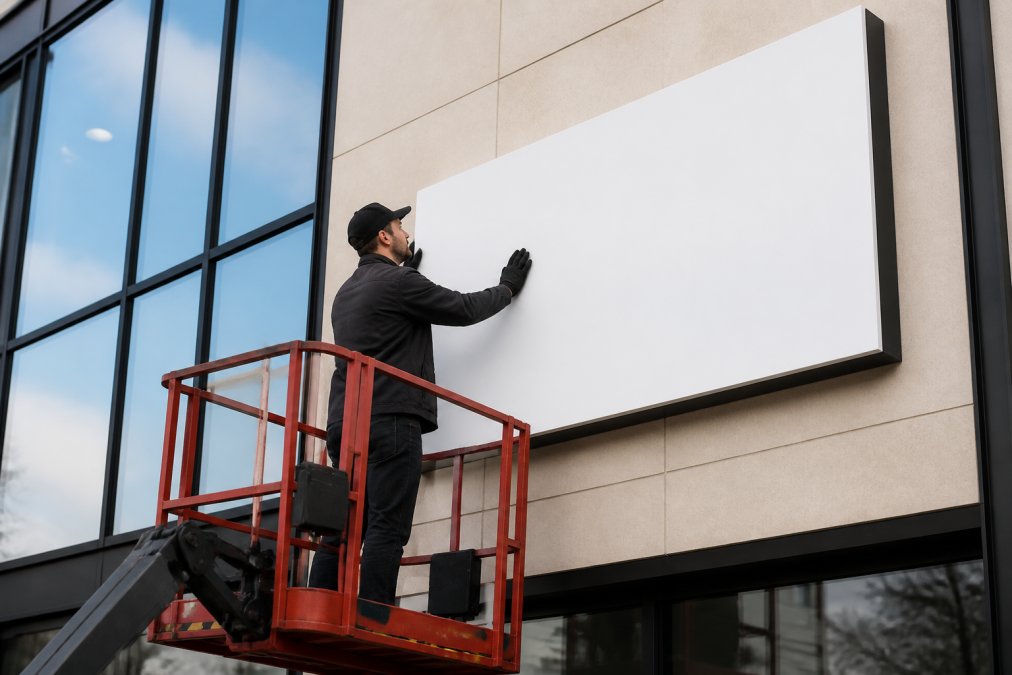
- Installation logistics: Lift equipment, traffic control, and after-hours work all affect scheduling and price.
- Materials: Specialty finishes and custom colors add lead time.
Pricing depends on quantity, dates, and delivery, so we do not quote from a range. GBCJ Los Angeles reviews each project individually and provides a written quote based on your actual scope.
How to Avoid Delays: Permits, Supply Chain, and Site Prep
Avoiding delays comes down to sequencing. Start permitting before fabrication. Confirm material availability before you commit to a design that depends on it. Prepare the site before the crew arrives.
A simple checklist keeps most projects on schedule:
- Confirm landlord sign criteria and city zoning rules before design
- Submit the permit application early and track it
- Approve proofs in one consolidated round
- Verify material lead times with your fabricator
- Complete any electrical or structural site prep before install day
- Schedule installation around weather and business hours
- Plan for the final inspection
What Happens After Installation: Inspections and Maintenance
Post-installation is a phase most clients forget to plan for, and it is the one that determines whether the sign is legally active. In many jurisdictions, a permitted sign is not considered compliant until a final inspection is passed and, in some cases, until a certificate of approval or sign-off is issued. Until that happens, the sign may be treated as an unpermitted installation even though it is physically mounted and working.
The inspection itself is usually quick, but scheduling it is the variable. Depending on the jurisdiction and the inspection workload, a final sign inspection can be scheduled within a few days or can run one to three weeks out. Electrical inspections, where a sign includes illuminated components, are often handled by a separate inspector and a separate calendar from the structural or zoning inspection. That means a project with illuminated channel letters can require two inspections, each with its own wait.
A failed inspection is the expensive outcome, because it typically means a return visit and another scheduling wait. The most common reasons a sign inspection fails are predictable:
- Work not matching the approved plans. If the installed sign differs in size, placement, or illumination from what was permitted, the inspector cannot sign off.
- Electrical work not accessible or not labeled. Junction boxes, disconnects, and wiring need to be reachable and, where required, labeled for the inspector.
- Missing or unposted permit. Some jurisdictions require the permit card to be posted at the site during inspection.
- Site not ready for access. Locked gates, blocked access, or an unavailable point of contact can result in a failed or aborted inspection even when the work is correct.
Once the sign is up and signed off, maintenance determines how long it stays compliant and presentable. Illuminated signage should be checked periodically for LED failures, water intrusion, and loose hardware. Vinyl graphics on windows and vehicles need cleaning and eventual replacement. A sign that is maintained lasts years longer and keeps your branding sharp, and documented maintenance is useful if a jurisdiction ever questions the condition of a permitted sign.
The installation itself is usually the shortest part of the project, but the project is not finished when the sign goes up. It is finished when the final inspection passes and the sign-off is issued. Build that step into your timeline from the start, and the sign is active the day you planned for.
Frequently Asked Questions
How long does it take to install a sign?
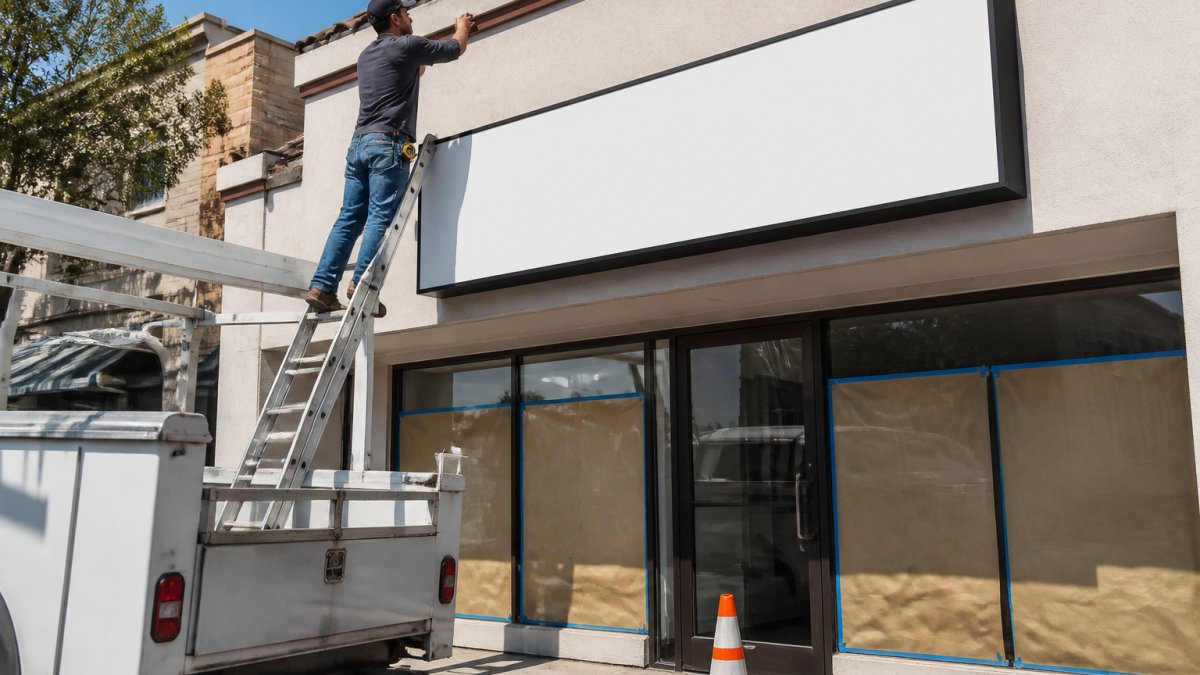
A straightforward storefront sign like flat panel letters can be installed in 2 to 4 hours once the site is ready. Channel letters with electrical connections typically take 4 to 8 hours. Monument signs and large pylon structures can require 1 to 3 days because they involve concrete work, structural mounting, and sometimes a crane. The installation itself is only one part of the total timeline, which also includes permitting, fabrication, and site preparation.
What is the difference between sign fabrication time and installation time?
Fabrication is the period when your sign is being built in the shop, which can range from 1 to 6 weeks depending on complexity, materials, and current workload. Installation is the on-site work of mounting, wiring, and securing the sign, which usually takes hours to a few days. Custom signage installation timelines often get confused with total project timelines because fabrication is the longest phase and installation is the shortest.
Do I need permits for my business sign installation?
Yes, most municipalities require a sign permit before installation begins. Signage permitting requirements vary by city and can include zoning compliance checks, structural drawings, and electrical permits for illuminated signs. The approval process can take 2 to 8 weeks depending on your local jurisdiction and whether any revisions are requested. Starting the permit application early is one of the most effective ways to keep your project on schedule.
What factors affect how long custom signage installation takes?
The main factors are sign type and complexity, permit approval speed, material availability, site readiness, and weather. A simple flat sign on a prepared wall goes up fast. A large illuminated sign that needs electrical rough-in, structural reinforcement, or a crane will take longer. Factors affecting sign installation cost also influence the timeline because rushed orders, expedited permits, and after-hours installation all add expense.