 listicle
Custom Storefront Sign Fabrication Services: 2026 Guide
Table of Contents
- What Custom Storefront Sign Fabrication Services Actually Cover
- Types of Outdoor Storefront Signs for Every Business
- Permits, Zoning Compliance, and Installation Services
- Understanding the Cost of Custom Business Signage
- ROI and Business Impact: Why Professional Signage Pays Off
- How to Choose a Sign Fabrication Company That Delivers
- Sustainable Fabrication and Long-Term Sign Maintenance
- Frequently Asked Questions
Last Updated: September 2, 2026
Most businesses spend more time choosing their logo font than vetting the company that will fabricate and install their storefront sign. That's a costly mistake. At GBCJ Los Angeles, we've spent over 15 years helping small businesses, retail shops, and commercial property managers navigate custom storefront sign fabrication services. The difference between a sign that drives foot traffic and one that sits ignored often comes down to decisions made before a single piece of material is cut.
This guide covers everything that matters: the fabrication process, sign types, permits, cost factors, ROI, and how to choose a fabrication partner who won't leave you with a half-finished install two days before your grand opening.
What Custom Storefront Sign Fabrication Services Actually Cover
Storefront sign fabrication is the end-to-end process of designing, engineering, manufacturing, and installing custom signage for commercial and retail environments. It encompasses structural engineering, material selection, electrical work for illuminated signs, and compliance with local building codes, not simply printing a graphic.
A full-service fabrication company handles concept development, design proofing, permit applications, substrate fabrication, finishing, and final installation. That's the difference between a vendor and a true turnkey solution.
From Concept to Install: The Fabrication Process Step by Step
Professional custom storefront sign fabrication follows a defined sequence. Skipping steps, especially permitting, is the most common source of delays and added costs.
- Design consultation: The fabricator reviews your brand identity, site dimensions, and visibility requirements.
- Design proofing: A digital proof is produced showing the sign in context. Revisions happen here, not after fabrication begins.
- Permit application: Drawings are submitted to the local planning or building department.
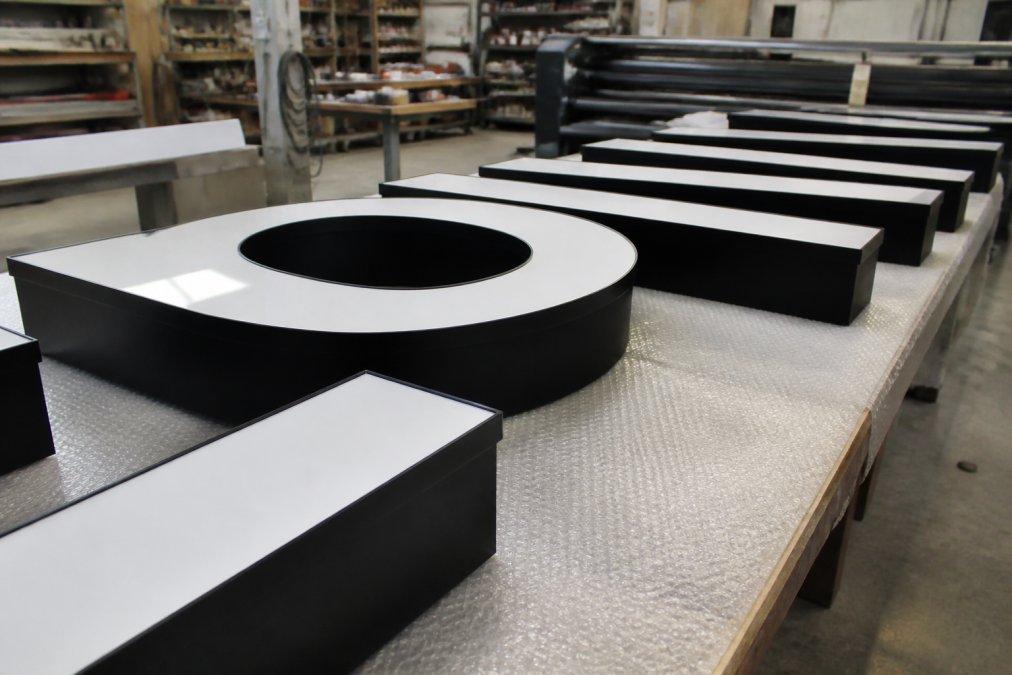
- Material procurement and fabrication: Substrates are cut, formed, and finished. Dimensional lettering is routed or cast. LED modules are wired for illuminated signs.
- Quality inspection: Finished panels are checked against the approved proof.
- Installation: Mounting hardware is selected for the substrate and building surface. Electrical connections are made for illuminated signs.
- Final sign-off: The installer confirms alignment, illumination, and structural integrity.
Materials Used in Sign Manufacturing
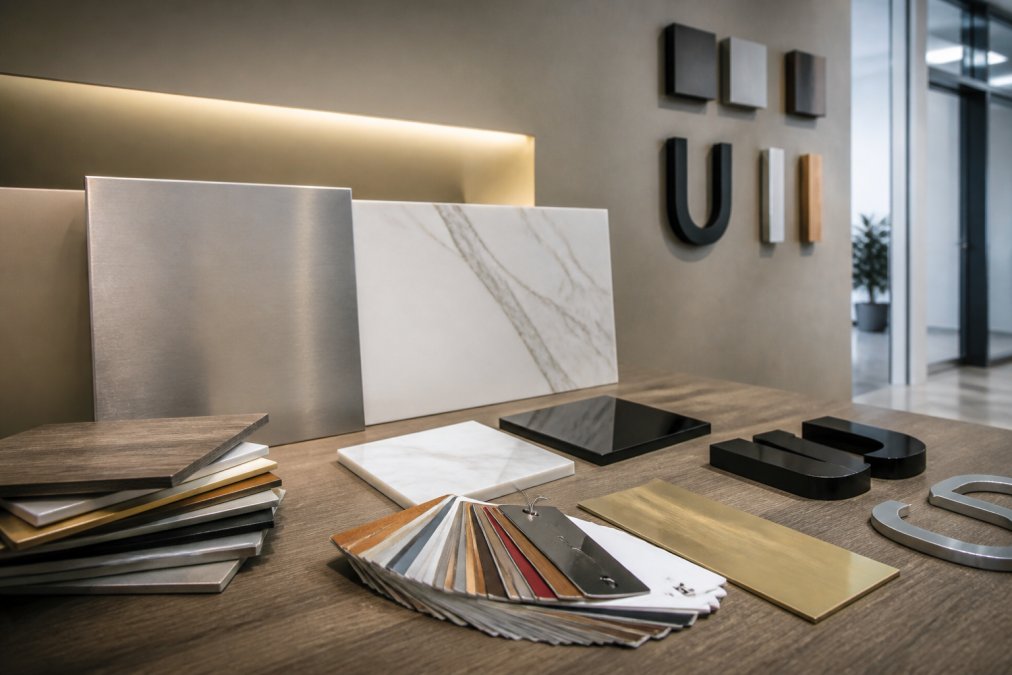
Material choice drives both the look and longevity of a sign. The most common substrates include aluminum composite panels, acrylic, HDU foam, steel, and PVC. Aluminum is the default for outdoor applications because it resists corrosion and holds paint and vinyl decals without delamination. Acrylic is standard for illuminated channel letters because it transmits LED light evenly. HDU foam is used for dimensional lettering where weight is a concern. For weather-resistant outdoor applications, all materials should be finished with UV-stable coatings and sealed edges.
Types of Outdoor Storefront Signs for Every Business
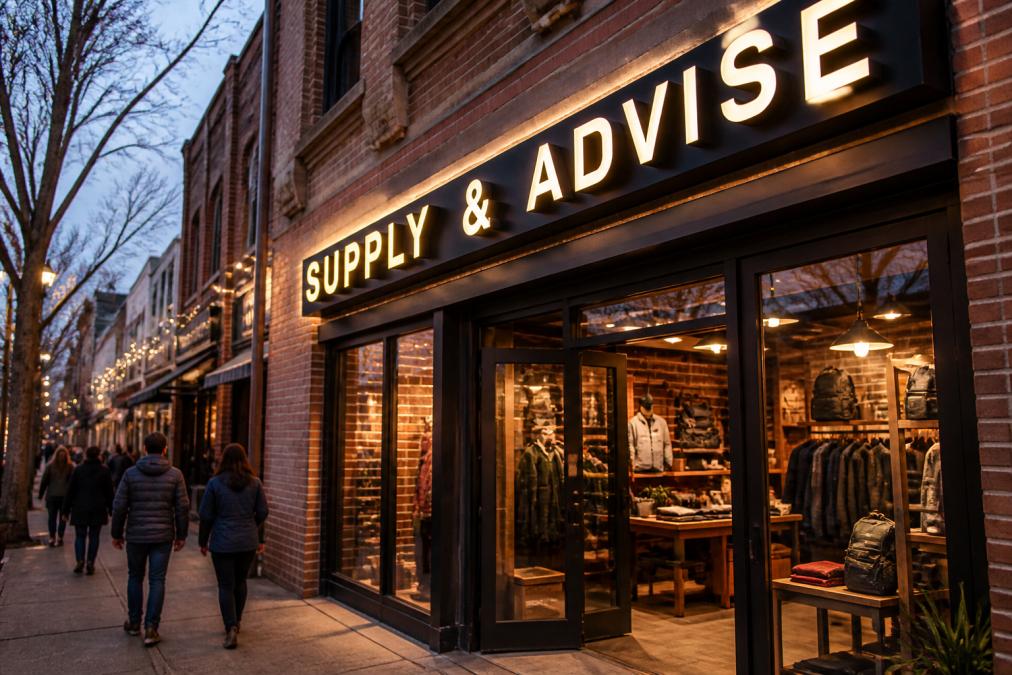
Choosing the right sign type is a practical decision. The building facade, landlord restrictions, visibility distance, and available power supply all constrain your options before design begins.
| Sign Type | Best For | Key Consideration |
|---|---|---|
| Channel letters | Retail, restaurants, medical | Requires electrical; most visible at night |
| Dimensional lettering | Professional offices, boutiques | No power needed; architectural appeal |
| Cabinet/box signs | Strip malls, franchise locations | Landlord approval often required |
| Pylon/monument signs | Multi-tenant properties, roadside | Permitting intensive; high visibility |
| Vinyl banners | Temporary promotions, events | Not a permanent solution |
| Window decals/vinyl | Retail, service businesses | Low cost; easy to update |
| LED illuminated panels | High foot-traffic retail | Energy-efficient; high nighttime impact |
Dimensional Lettering and Channel Letters
Dimensional lettering is fabricated from aluminum, acrylic, or HDU foam and mounted directly to the building facade with standoffs, creating a three-dimensional shadow effect. Channel letters are individually fabricated metal letters with internal LED illumination, the standard for retail signage where nighttime visibility matters. Both options reinforce brand identity more effectively than flat printed panels because they create depth and visual weight that reads from a distance.
The real difference comes down to power access and budget. Channel letters require an electrical connection and a licensed electrician. Dimensional lettering is purely mechanical, with lower installation complexity and often lower total project cost.
LED Illuminated and Architectural Signage
LED illumination has largely replaced neon and fluorescent in commercial signage because it consumes significantly less energy, lasts longer, and produces consistent color output. According to the U.S. Department of Energy's guidance on LED commercial lighting, LED lighting uses at least 75% less energy than traditional incandescent sources, which matters when signs run 12-16 hours per day.
For businesses in competitive retail corridors, LED illuminated signage is the baseline for nighttime visibility.
Vinyl Banners, Decals, and Large Format Printing
Large format printing covers vinyl banners, window graphics, and building wraps. These are the most accessible entry point into custom signage because they require no structural fabrication and can be produced and installed quickly. Vinyl decals applied to storefront windows add brand messaging and reduce interior solar heat gain.
The limitation is longevity. Outdoor vinyl banners are temporary visual communication tools, not permanent brand assets. For businesses opening a new location, large format printing is useful for pre-opening promotion, but it should be paired with a plan for permanent fabricated signage.
Permits, Zoning Compliance, and Installation Services
Every municipality regulates commercial signage through its zoning code. The International Sign Association's overview of sign codes and permitting notes that sign regulations vary significantly by city, county, and zoning district. Common restrictions include maximum sign area relative to building frontage, limits on illumination brightness, and height limits for freestanding signs.
For businesses in shopping centers or multi-tenant buildings, a landlord sign criteria package typically dictates allowable sign types, dimensions, and materials. This document must be reviewed before design begins.
A full-service fabrication company handles permit drawings, submittals, and coordination with the building department on your behalf. The realistic timeline from permit submittal to approval ranges from two weeks to eight weeks depending on the municipality and sign complexity.
For businesses on a 30-day opening timeline, permit applications should be submitted on day one.
Understanding the Cost of Custom Business Signage
The cost of custom business signage varies considerably based on sign type, materials, size, complexity of fabrication, illumination, and installation requirements. Any quote received online without a site survey and design brief should be treated as a rough estimate, not a firm number.
The variables that most directly affect cost include:
- Sign type: Illuminated channel letters cost more than dimensional lettering; monument signs cost more than wall-mounted panels
- Materials: Aluminum and acrylic cost more than PVC; stainless steel costs more than standard aluminum
- Size: Larger signs require more material, more fabrication time, and heavier mounting hardware
- Illumination: LED wiring, transformers, and licensed electrical installation add to the total
- Permitting fees: Municipal permit fees vary by city
- Installation complexity: Second-story installs, concrete anchoring, and crane lifts increase labor costs
Request an itemized quote that separates design, fabrication, permitting, and installation. This makes it easier to compare proposals on an apples-to-apples basis. For current pricing tailored to your project, contact GBCJ Los Angeles directly for a detailed quote.
ROI and Business Impact: Why Professional Signage Pays Off
Professional signage is one of the few marketing investments that works continuously without recurring spend. A fabricated storefront sign installed today is still generating impressions and driving foot traffic five years from now.
According to the Small Business Administration's guidance on marketing and visibility, physical location visibility is one of the most significant factors in retail customer acquisition. Signage is the primary driver of that visibility for brick-and-mortar businesses.
The return on investment case for professional signage rests on three mechanisms:
- Foot traffic capture: A well-positioned, well-lit sign converts passersby who had no prior awareness of your business.
- Brand credibility: A professionally fabricated sign signals permanence and legitimacy.
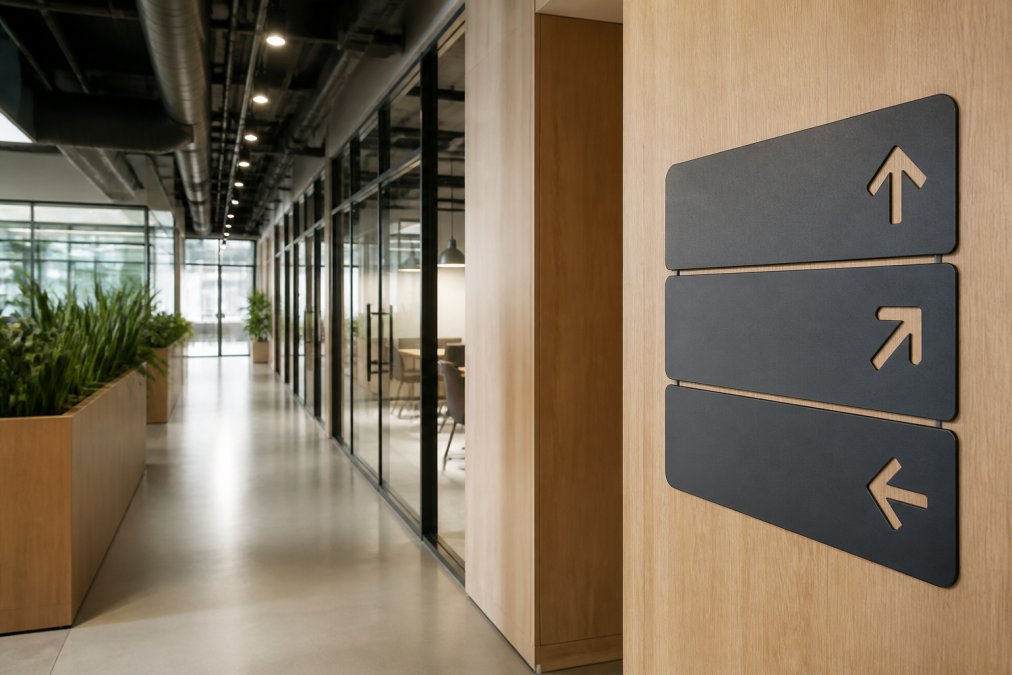
- Wayfinding: Customers who already know your business need to find you. Clear, well-placed signage reduces friction and failed visits.
A cheap sign that looks cheap communicates cheap, and that's the first impression your brand makes on every person who walks past your storefront.
How to Choose a Sign Fabrication Company That Delivers
The right fabrication partner is not necessarily the one with the lowest quote. Experience with your sign type, in-house fabrication capability, permit handling, and post-installation support are what predict a good outcome.
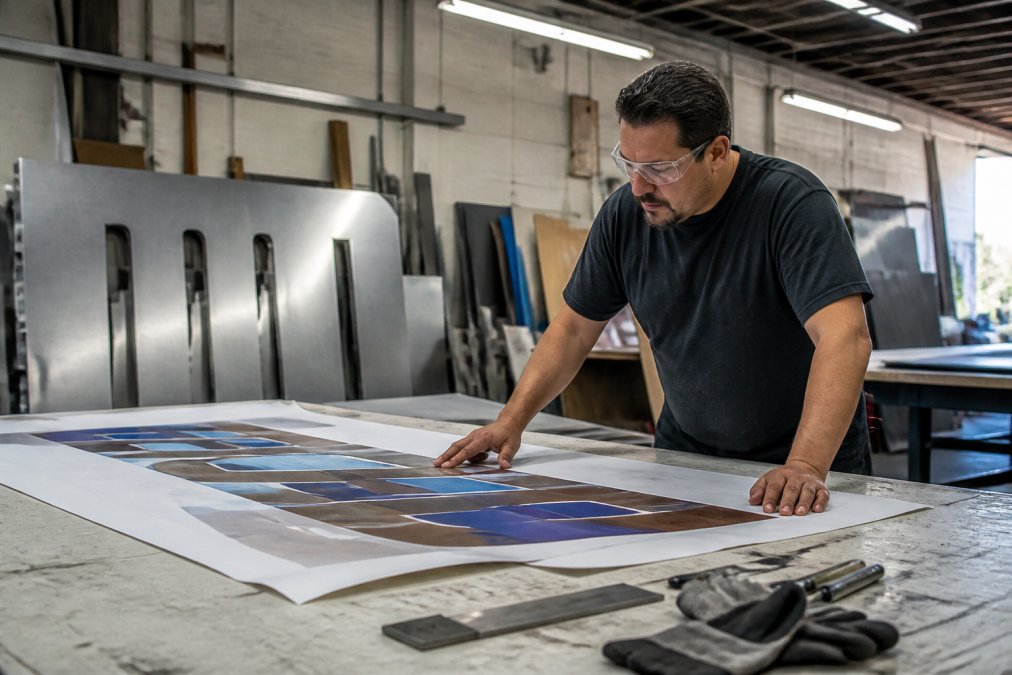
A common mistake is choosing a company based on a single impressive portfolio piece without asking whether that sign type is representative of their core capability. A company that excels at large format printing may not have the metalworking capability to fabricate dimensional lettering in-house, which means subcontracting and less quality control.
Questions to Ask Before You Commit
Before signing a contract with any sign fabrication company, get clear answers to these questions:
- Do you handle permitting in-house, or do I need to manage that separately?
- Is fabrication done in-house or subcontracted?
- What is your installation timeline from approved permit to completed install?
- What materials do you use for outdoor applications, and what is the expected lifespan?
- Can you provide references from projects similar in scope and sign type to mine?
- What happens if the sign is damaged during installation or fails within the first year?
The GBCJ Los Angeles team works closely with clients from initial design consultation through permitted installation, with over 15 years of experience across storefront signs, vehicle graphics, and event displays. For businesses that don't have time for endless back-and-forth, that collaborative process is designed to get it right before fabrication begins.
Sustainable Fabrication and Long-Term Sign Maintenance
LED illumination is the baseline sustainable choice for any illuminated sign. Beyond illumination, some fabricators now offer aluminum substrates with recycled content, water-based inks for large format printing, and PVC-free alternatives for vinyl applications. If sustainable fabrication matters to your business, ask prospective fabricators specifically about their material sourcing and waste handling practices.
Long-term maintenance protects your signage investment:
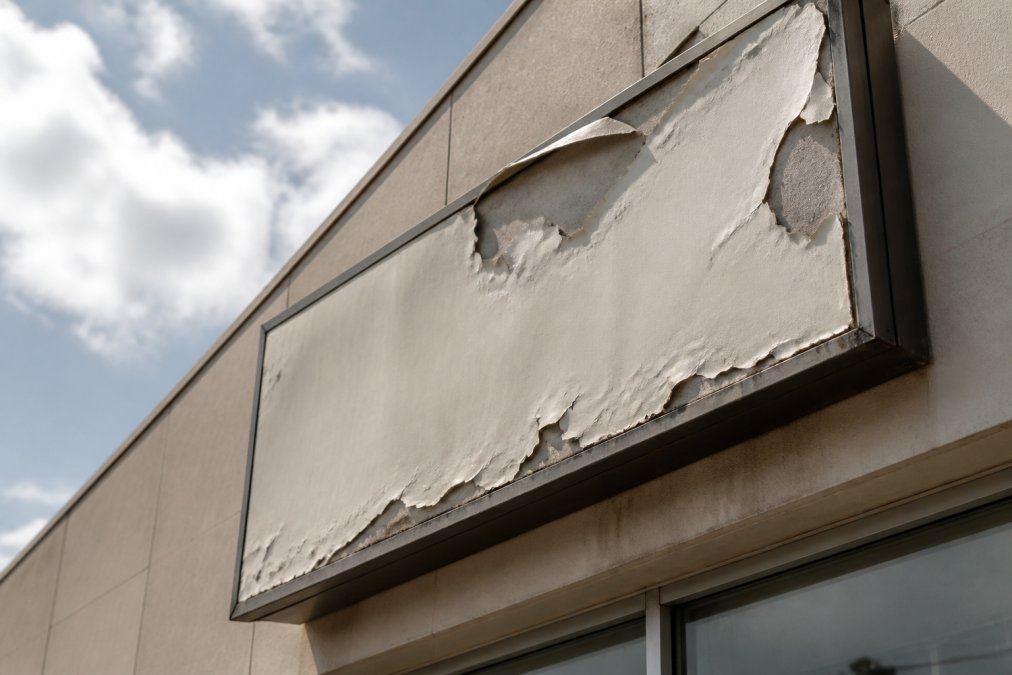
- Annual inspection: Check mounting hardware for corrosion or loosening
- Cleaning: Use non-abrasive solutions; avoid pressure washing directly at seams
- LED module replacement: Individual LED modules can be replaced without full sign replacement
- Vinyl refresh: Large format vinyl typically needs replacement every three to five years depending on sun exposure
- Electrical inspection: Illuminated signs should have wiring and transformer inspected every few years by a licensed electrician
A sign that is maintained properly will last significantly longer than one that is ignored. For further guidance on signage durability and material standards, the International Sign Association's technical resources for sign professionals provides industry standards for fabrication quality and material performance.
| Consideration | What to Evaluate | Why It Matters |
|---|---|---|
| Sign type | Illuminated vs. non-illuminated; dimensional vs. flat | Affects permit requirements, cost, and nighttime visibility |
| Material | Aluminum, acrylic, HDU, PVC | Determines weather resistance and lifespan |
| Fabrication | In-house vs. subcontracted | Affects quality control and timeline accountability |
| Permitting | Handled by fabricator vs. DIY | Skipping this step risks fines and removal |
| Installation | Turnkey vs. supply-only | Turnkey reduces coordination burden significantly |
| Maintenance | Planned vs. reactive | Planned maintenance extends sign lifespan substantially |
Custom storefront sign fabrication is a multi-step technical process that most businesses underestimate until they're in the middle of it. Permitting delays, material mismatches, and subcontracted installs are the most common failure points. GBCJ Los Angeles handles the full process, from design consultation and permit drawings through fabricated sign delivery and professional installation, with the experience and customer-centric approach that small businesses and commercial property managers need. Contact us to start your project with a team that treats your storefront sign as the long-term brand asset it is.
Frequently Asked Questions
How much does custom storefront sign fabrication typically cost?
Pricing for custom storefront sign fabrication varies widely based on sign type, size, materials, and whether installation and permitting are included. A simple vinyl banner costs far less than an illuminated channel letter cabinet with mounting hardware. Because substrate selection, finishing services, and project complexity all affect the final number, the best approach is to request a detailed quote from your fabrication company so you can compare scope, not just price.
Do I need a permit for a new custom storefront sign?
Most municipalities require a permit before installing a new storefront sign. Requirements are set by local zoning ordinances and building departments, which regulate sign size, height, illumination, and placement. A full-service sign fabrication company handles the permit application as part of their turnkey solutions, preparing drawings and documentation that meet local code. Skipping this step can result in fines or forced removal, so confirm upfront whether your provider manages permitting.
What materials are best for long-lasting outdoor storefront signs?
Weather-resistant materials including aluminum composite panels, powder-coated steel, acrylic faces, and high-grade vinyl are standard choices for outdoor signage. Aluminum resists rust and holds up in direct sun and rain. Acrylic faces paired with LED illumination maintain color clarity for years. The right substrate depends on your sign type and local climate. A reputable sign fabrication company will recommend durable materials suited to your specific installation environment.
What is the difference between a sign shop and a sign fabricator?
A sign shop typically focuses on printing and smaller-format production, such as vinyl decals, banners, and window graphics. A sign fabricator handles the full manufacturing process: cutting and forming metal signage, assembling dimensional lettering, wiring LED illumination, and engineering mounting hardware. Many full-service providers combine both capabilities, taking a project from custom design consultation through signage fabrication, permitting, and professional installation under one roof.
How long does the custom sign fabrication process take?
Timelines depend on sign complexity, material lead times, and whether permits are required. A straightforward vinyl banner or window decal can be produced in a few business days. Fabricated metal signage with LED illumination typically takes two to four weeks from approved design to installation. Projects requiring municipal permits add time, sometimes several additional weeks. Share your move-in or opening date with your fabrication company early so they can build a realistic project timeline.