 comparison
Best Custom Storefront Signage Companies in North Hollywood
Table of Contents
- What North Hollywood Small Businesses Should Look For in a Storefront Signage Company
- Side-by-Side Comparison of Storefront Signage Providers
- What Drives Storefront Sign Cost for Small Businesses
- Storefront Sign Materials That Hold Up in Southern California
- Storefront Sign Permits and Landlord Approval in North Hollywood
- Business Sign Installation and Reinstallation: What to Expect
- Which Signage Company Fits Your Storefront Type?
- Frequently Asked Questions
Last Updated: October 17, 2026
What North Hollywood Small Businesses Should Look For in a Storefront Signage Company
Choosing the best custom storefront signage companies in North Hollywood for small businesses comes down to one question: can this shop take your brand from a vague idea to an installed, permitted sign without you managing the process?
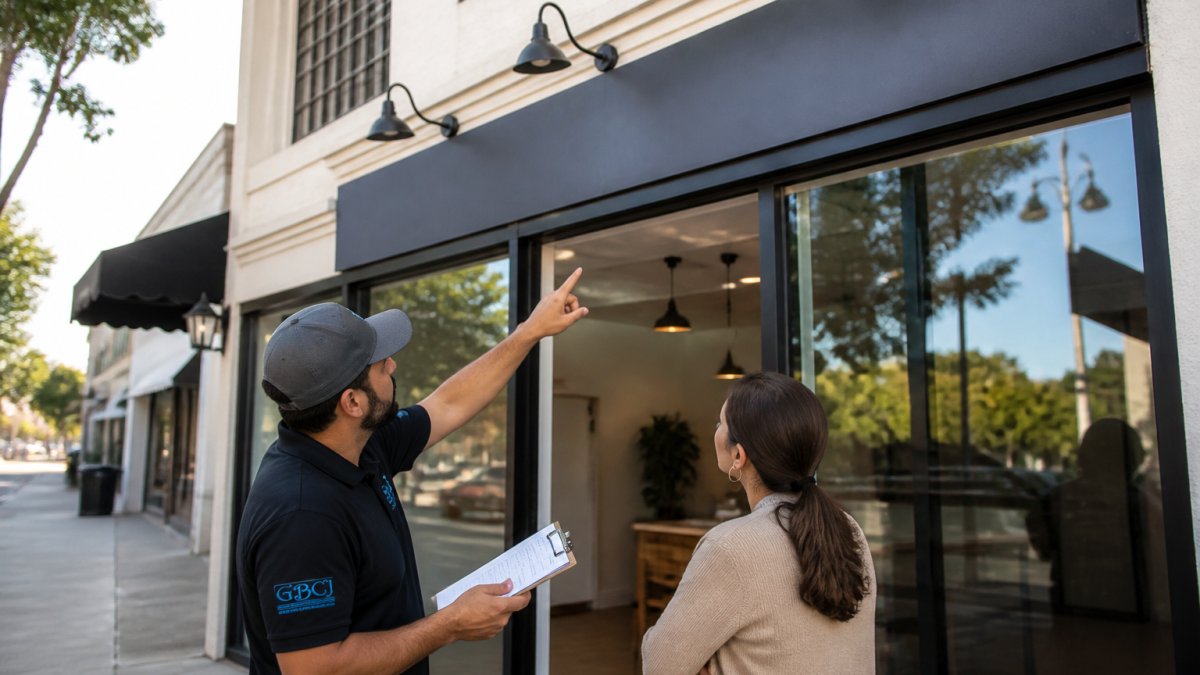
This guide from GBCJ Los Angeles breaks down what to evaluate, what drives cost, how permits work, and which provider type fits your storefront.
Evaluation Criteria for Choosing a Sign Company
Judge a sign company on five things: in-house fabrication capability, permit handling, installation crew, warranty terms, and design support. A shop that outsources fabrication or installation adds delay and finger-pointing when something goes wrong.
- In-house sign manufacturing: Ask directly whether they fabricate or broker the work.
- Permit experience: They should know the local approval path, not just say "we'll look into it."
- Installation and reinstallation: Own crews mean one accountable party.
Side-by-Side Comparison of Storefront Signage Providers
Most guides compare "provider types" and stop there. That is not a comparison, it is a category list. For a small business owner choosing among the best custom storefront signage companies in North Hollywood, the useful comparison is a verified shortlist scored on the same criteria, plus a framework you can apply to any shop you add to it.
A Consistent Evaluation Framework
Score every candidate on the same seven criteria so quotes are comparable line by line, not just by total:
| Criterion | What to Verify | Why It Matters |
|---|---|---|
| Design and proofing | In-house designer, revision rounds included, proof approval process | Prevents costly re-cuts after fabrication |
| Fabrication | In-house vs. brokered; materials sourced and cut where | Brokered work adds lead time and finger-pointing |
| Permit handling | Who prepares, submits, and tracks the sign permit | Permit delays are the most common schedule killer |
| Installation | Own crew vs. subcontractor; insurance and bonding | One accountable party if something goes wrong |
| Warranty | Written terms, coverage length, what is excluded | Separates a one-year face from a five-year system |
| Turnaround | Quoted production and install dates in writing | Opening dates depend on it |
| Aftercare | Repair response time, maintenance visits, removal and wall patching | Long-term cost of ownership |
Verified Local Shortlist
Use this as a starting point, then confirm current details directly, ownership, addresses, and service areas change. The point is to give you named shops to call, not to rank them for you.
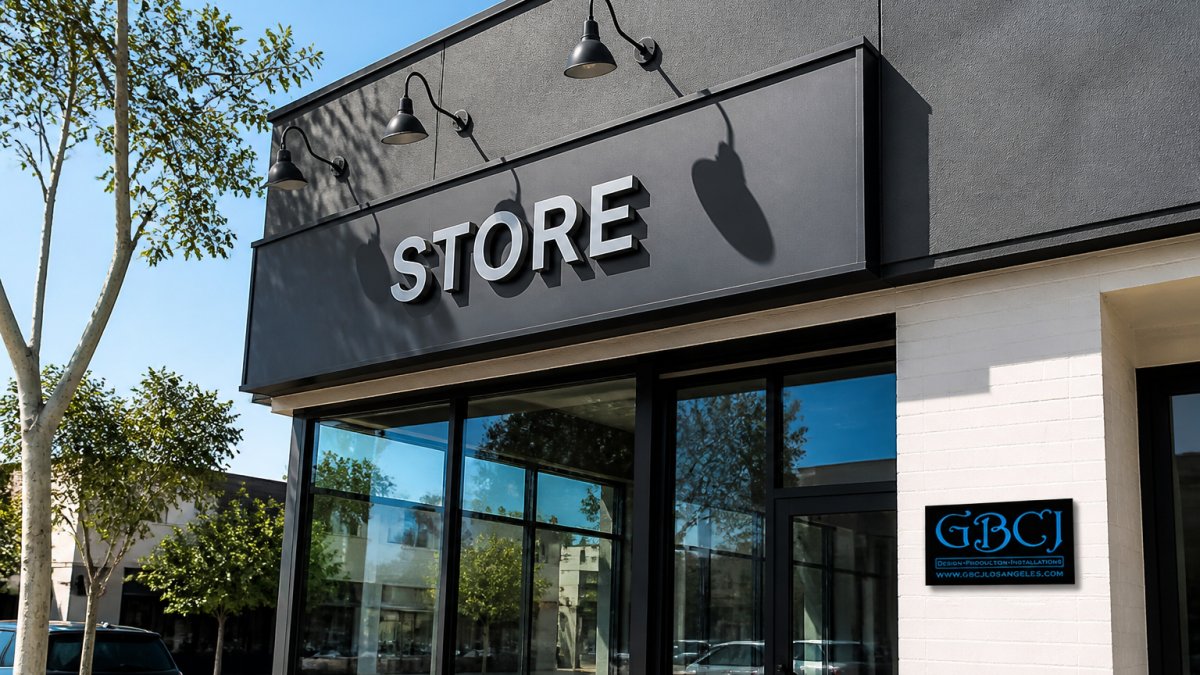
- Full-service fabricators with local install crews: Shops in the North Hollywood and greater San Fernando Valley area that fabricate channel letters, cabinet signs, and monument signs in-house and handle permits and installation with their own crews. Ask for the name of the permit coordinator on the first call.
- Neon and illuminated specialists: Shops that focus on custom neon, LED retrofits, and illuminated storefront signs. Confirm whether they handle electrical permitting or coordinate with a licensed electrician.
- Vinyl, banner, and window-graphics shops: Fast-turnaround providers for window lettering, perforated window film, and promotional banners. Best for temporary or seasonal needs, not for illuminated storefront signs.
Search the city's business license and contractor lookup to verify a shop's license and bonding
How to Run the Comparison Yourself
- Send the same brief to three shops: storefront photos, dimensions, sign type, opening date, and whether you need design help.
- Ask each to quote design, fabrication, permit, installation, and electrical as separate line items.
- Ask each to name the permit coordinator and the installation crew lead.
- Request the written warranty and the aftercare terms.
- Compare line items, not totals, a low total usually means something was left out.
For a single-location shop that needs design, fabrication, permits, and installation under one roof, a full-service local fabricator removes the most coordination risk. That is the model we work from at GBCJ Los Angeles, and it is why we recommend it for first-time storefront owners, but run the framework above on any shop, including us.
What Drives Storefront Sign Cost for Small Businesses
Storefront sign cost depends on size, material, illumination, installation complexity, and permit fees, not on a flat rate card. Two signs of identical dimensions can land far apart in price once you factor in electrical work or a masonry install. The useful question is not "what does a sign cost" but "which line items move the total, and by how much."
The Line Items That Make Up a Quote
Ask every shop to break the quote into these lines so you can compare apples to apples:
| Line Item | What It Covers | What Moves It |
|---|---|---|
| Design and proofing | Layout, revisions, proof approval | Number of revision rounds; custom lettering vs. stock fonts |
| Fabrication | Substrate, faces, letters, illumination components | Size, material, letter count, illuminated vs. non-illuminated |
| Permit and engineering | Application prep, submission, structural review if required | Sign type, projection, whether engineering stamps are needed |
| Electrical | Wiring, transformer, connection to building power | Illumination type; whether a licensed electrician is required |
| Installation | Labor, equipment, site protection, cleanup | Height, surface (stucco, masonry, metal), after-hours work |
| Removal and patching | Old sign removal, wall repair, disposal | Whether the old sign is illuminated or anchored into masonry |
Cost Drivers in Plain Terms
- Size and letter count: More square footage and more individual letters mean more material and labor. Channel letters are priced largely by letter count and height.
- Illumination: Custom neon and illuminated signs add electrical components, wiring, and often a licensed electrician. LED retrofits usually cost less to operate than traditional neon.
- Material choice: Acrylic, aluminum composite, and foam each carry different fabrication costs. A premium face material costs more upfront but usually outlasts a cheap substrate.
Permit and Installation Fees to Expect
Permit fees are set by the local permitting authority and vary by sign type, size, and valuation, they are not negotiable and not the same as the fabricator's permit-handling fee. Ask each shop to separate the government fee from their own permit-prep charge. Installation fees likewise vary with height, surface, and electrical work; a shop that bundles installation into a single total is hiding the line you most need to compare.
Total Project Cost, Not Sticker Price
Small businesses should budget for the full project: design, fabrication, permit fees, electrical, installation, and any removal and patching, plus a maintenance reserve for repairs and lamp or LED replacement over the sign's life. A sign that costs less to buy but fades or fails in two summers costs more over five years than a better-built sign installed once.
We do not publish fixed prices because every project differs, and we will not invent a number to look transparent.
Storefront Sign Materials That Hold Up in Southern California
Storefront sign materials should resist intense sun, heat, and the occasional coastal moisture without fading or warping. Southern California conditions are hard on cheap substrates, so material choice affects how long your sign looks new.
- Acrylic: Clean, colorfast, and holds up well to UV exposure.
- Aluminum composite: Rigid, lightweight, and takes digital printing cleanly.
- Vinyl graphics: Budget-friendly for windows and temporary promotional graphics.
- Flexible face materials: Common in illuminated signs and easy to replace.
Durability is where material savings backfire. A lower-grade substrate that fades in two summers costs more over five years than a better material installed once.
Storefront Sign Permits and Landlord Approval in North Hollywood
Storefront sign permits and landlord approval should be settled before fabrication starts, not after. Sign rules vary by jurisdiction, and many retail leases require landlord sign-off on size, placement, and illumination.
Two separate approvals usually apply:
- Landlord approval: Check your lease for sign criteria, including size limits and mounting rules.
- Local permit: The city or county reviews sign type, dimensions, and placement.
Ask your sign company whether they prepare and submit the paperwork or leave it to you. A shop that handles permits saves you weeks of back-and-forth, especially if you are opening on a deadline.
Business Sign Installation and Reinstallation: What to Expect
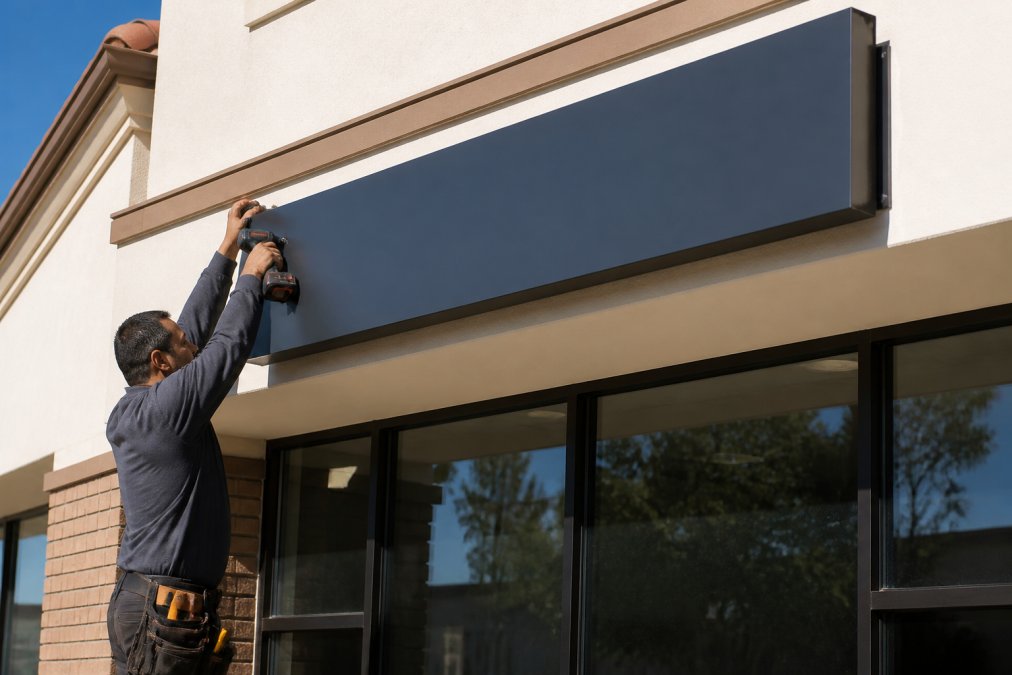
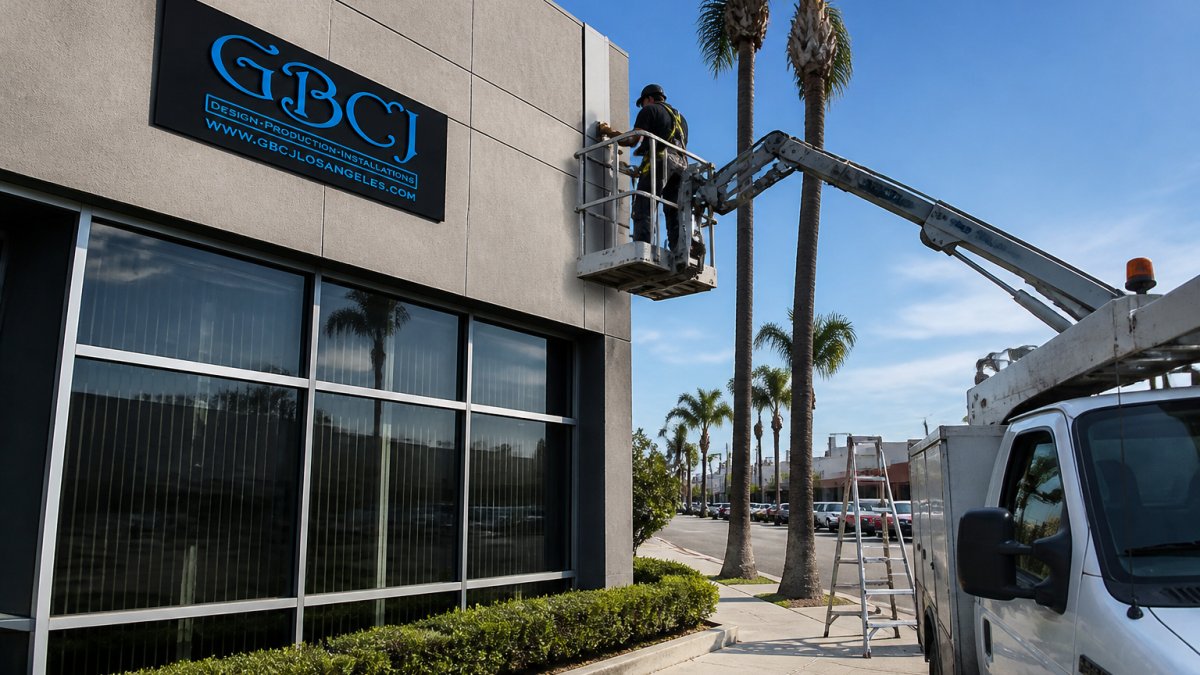
Business sign installation typically runs a few hours for a simple flat sign and longer for illuminated or large-format work. The process starts with a site survey to confirm mounting surfaces, electrical access, and clearance.
What a professional install covers:
- Site survey: Measure the mounting area and check structural support.
- Scheduling: Coordinate with your landlord and any required inspections.
- Installation: Mount, wire, and secure the sign.
- Cleanup and walkthrough: Confirm everything works and looks right.
Sign reinstallation matters when you rebrand, relocate, or refresh a storefront. Ask whether the company removes and disposes of the old sign and whether they patch and finish the wall afterward.
Which Signage Company Fits Your Storefront Type?
Match the provider to your storefront, not the other way around. A boutique retail shop needs different support than a service business with a fleet.
- New retail storefront: Full-service fabricator for design, permits, and install.
- Office or lobby refresh: A shop experienced with interior signs and lobby signs.
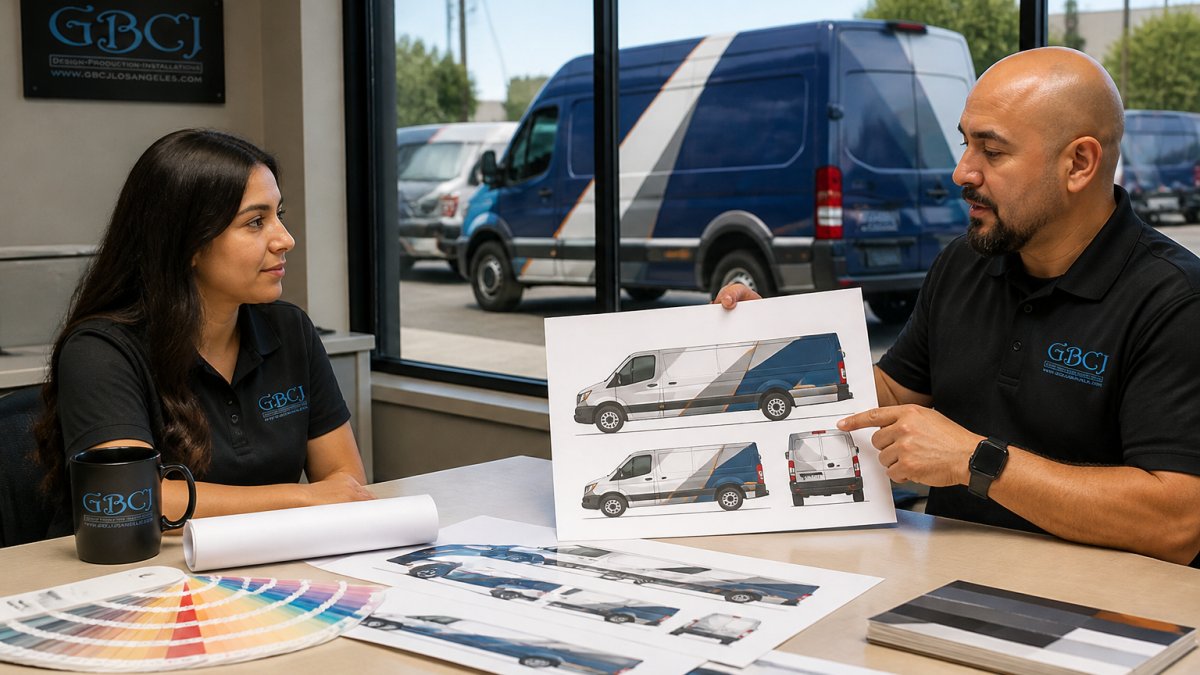
- Service business with vehicles: Look for vehicle graphics alongside storefront work.
- Temporary or seasonal space: Banners and vinyl graphics with fast turnaround.
If you are unsure, start with a quote request that includes photos of your storefront and your opening date. A good sign company will tell you what is realistic and what is not.
Frequently Asked Questions
Do storefront signs need permits in North Hollywood?
Yes. Most exterior storefront signs in North Hollywood require a sign permit from the Los Angeles Department of Building and Safety, and many retail locations also sit within specific zoning or design overlay districts with additional rules. Your landlord may require separate written approval before fabrication begins. A reputable storefront signage company will confirm permit requirements, prepare drawings, and submit paperwork on your behalf. Ask upfront whether permit handling is included in the quote or billed separately, and factor approval time into your opening schedule.
How much does a custom storefront sign cost for a small business?
Storefront sign cost depends on size, materials, illumination, installation complexity, and permit fees, so there is no single figure that applies to every shop. A vinyl window graphic costs far less than a fabricated illuminated channel-letter sign. Request itemized quotes that separate design, fabrication, installation, and permits so you can compare providers fairly. Be cautious of quotes that seem unusually low; they often exclude installation or permit work. Ask each company for a written breakdown and confirm what happens if the scope changes mid-project.
What materials are commonly used for storefront signs?
Common storefront sign materials include acrylic, aluminum composite panel, PVC, vinyl, and stainless steel, often combined with LED illumination. Acrylic works well for face-lit signs and holds color over time. Aluminum composite is durable and popular for post and panel signs. Vinyl is the most affordable option for window graphics and temporary banners. In Southern California, UV exposure and heat matter, so ask how each material resists fading and warping. A good sign maker will match materials to your budget, storefront type, and how long you plan to stay in the location.
How long does design, fabrication, and business sign installation take?
A typical timeline runs two to four weeks for design approval, fabrication, permitting, and business sign installation, though illuminated signs and permit-heavy projects can take longer. Design revisions and city review are the most common sources of delay. If you are opening in 30 days, tell the signage company your deadline at the first call and ask which sign types can realistically be delivered in that window. A vinyl window graphic can often go up quickly while a fabricated exterior sign is still in production, which keeps your storefront looking finished on opening day.
Opening a storefront in North Hollywood means juggling design, permits, and a launch date, and the last thing you need is a sign company that disappears after the deposit. At GBCJ Los Angeles, we handle custom business signs, illuminated signs, lobby signs, and vinyl graphics under one roof, with over 15 years of experience and a customer-centric process built for small businesses. Contact us for a quote and get your storefront signage moving.