 ultimate-guide
Why Retail Storefront Visibility Matters in 2026
Table of Contents
- Why Retail Storefront Visibility Matters in 2026
- The Impact of Storefront Signage on Foot Traffic
- How to Design Window Decals for Maximum Retail Visibility
- Retail Signage Best Practices 2026
- Real-Time Data and the Modern Storefront
- The Small Retailer's Guide to Visibility on a Budget
- Frequently Asked Questions
Last Updated: September 24, 2026
Why Retail Storefront Visibility Matters in 2026
Retail storefront visibility is the degree to which a physical shop can be seen, recognized, and understood by passersby before they ever step inside. In 2026, that visibility decides whether a store gets discovered at all: foot traffic is increasingly won or lost in the three seconds a person spends glancing at your facade. This guide from GBCJ Los Angeles breaks down why storefront visibility matters now, what signage actually drives walk-ins, and how to design window decals that convert glances into customers.
The Impact of Storefront Signage on Foot Traffic
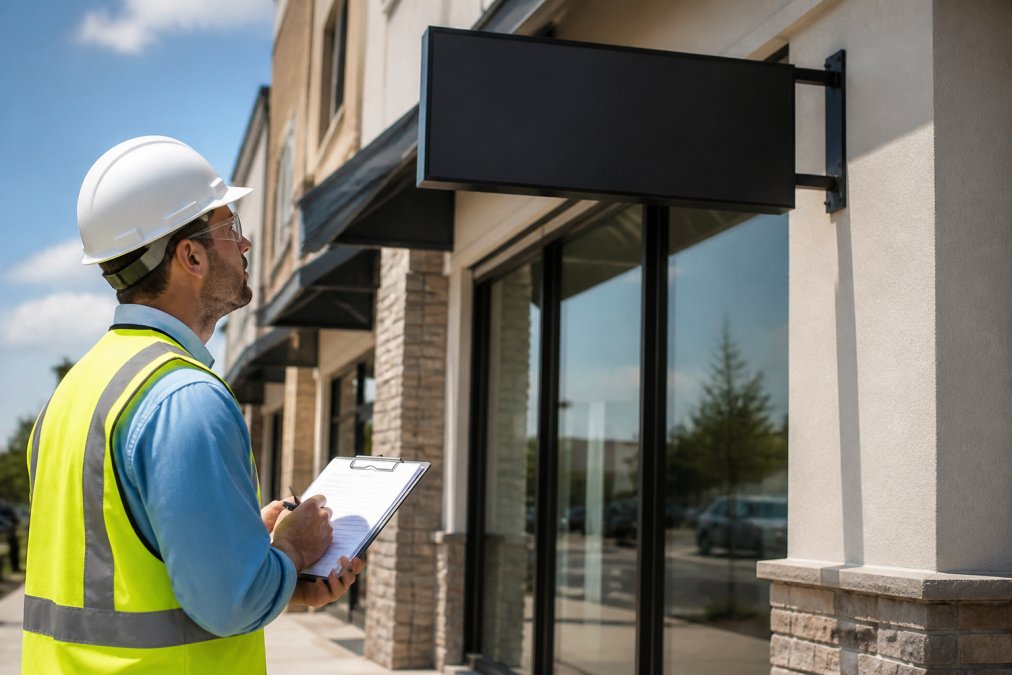
Signage is the single highest-use visibility asset a physical retailer controls. A clear, well-lit sign does more for walk-in volume than most interior improvements, because it works on people who have not yet decided to enter.
Three factors drive whether signage converts:
- Legibility at distance. A sign must be readable from across the street and from a moving car, not just from the doorway.
- Contrast and lighting. Dark lettering on a light background, or illuminated channel letters, holds up at night when a flat painted sign disappears.
- Placement height. Signs mounted too high or blocked by awnings lose the eye-level glance that triggers entry.
How to Design Window Decals for Maximum Retail Visibility
Window decals turn glass from a barrier into a marketing surface. The goal is to communicate what you sell and why someone should walk in, without blocking the view that makes a store feel open and inviting.
- Cover no more than 30 percent of the glass. Full-coverage vinyl makes a store look closed. Leave sightlines to the interior.
- Lead with a benefit, not a logo. "Fresh Coffee, Open Now" outperforms a centered brand mark for walk-in traffic.
- Use high-contrast, large type. If a decal cannot be read from ten feet away, it is decoration, not signage.
- Place hours and a call to action at eye level. The bottom third of the window is prime real estate for "Open," hours, and a phone number.
- Repeat your brand color. Consistent color across sign, decals, and door graphics builds recognition fast.
Retail Signage Best Practices 2026
The best retail signage in 2026 follows a few durable rules: prioritize legibility over decoration, light the sign for nighttime, and keep the message to one clear idea. Trends change, but these fundamentals hold.
| Practice | What It Solves | Priority |
|---|---|---|
| Illuminated or backlit signs | Nighttime invisibility | High |
| Contrasting color pairs | Poor distance legibility | High |
| Single clear message | Visual clutter | Medium |
| Consistent brand colors | Weak recognition | Medium |
| Regular cleaning and repair | "Closed" impression | High |
Real-Time Data and the Modern Storefront
Modern storefronts increasingly pair physical signage with real-time data to sharpen decisions. Retailers now track which hours draw the most foot traffic, which window displays correlate with walk-ins, and how weather and local events shift patterns. That data-driven decision making turns signage from a guess into a measurable investment.
The practical applications are straightforward:
- Time your promotions to peak foot-traffic hours so your window messaging lands when the most people pass.
- Test two window layouts and compare walk-in counts over a set period.
- Adjust exterior lighting based on evening traffic patterns.
The mechanisms that actually generate storefront data
Most storefront visibility data comes from four sources, and each has a different cost and accuracy profile:
- People counters at the door. Overhead thermal or infrared sensors count entries without identifying anyone. They are the cheapest reliable source of hourly foot-traffic data and pair cleanly with a point-of-sale (POS) system to compute a walk-in-to-purchase conversion rate.
- POS timestamps. Every transaction already carries a time stamp. Aggregating receipts by hour reveals peak windows even without a dedicated counter, though it misses browsers who never buy.
- Wi-Fi and Bluetooth analytics. Access points can estimate device counts and dwell time, but accuracy varies with signal strength and phone settings, and the data is inherently less precise than a door counter.
- Manual observation. A staff member logging walk-ins in 15-minute blocks for two weeks produces a surprisingly usable baseline, especially for a single-location shop.
Turning data into signage decisions
Once you have a baseline, the loop is simple:
- Set a hypothesis. "Adding an 'Open Now' decal at eye level will lift weekday afternoon entries."
- Change one variable. Swap the decal, keep everything else constant for two weeks.
- Compare entry counts. If entries rise without a corresponding drop in average transaction value, keep the change.
What most guides miss is that visibility data does not require expensive software. A simple count of walk-ins by hour, paired with a photo log of your window displays, gives a small retailer enough signal to make better choices. The technology matters less than the habit of measuring.
Store-level KPIs worth tracking
| Metric | What It Tells You | How to Capture It |
|---|---|---|
| Storefront conversion rate | Whether your window converts passersby | Door counter ÷ entries |
| Peak traffic hours | When to schedule promotions and staff | Hourly entry counts |
| Dwell time | Whether your display holds attention | Wi-Fi analytics or manual observation |
| Signage refresh cadence | Whether messaging has gone stale | Calendar log of display changes |
None of these require a data team. They require a routine: count, log, compare, adjust.
The Small Retailer's Guide to Visibility on a Budget
Small and mid-sized retailers often assume high-impact signage is out of reach. It is not. The highest-return improvements are usually the cheapest: better lighting, a cleaner window, and one strong sign instead of three weak ones. But the bigger opportunity in 2026 is that independent retailers can adopt visibility practices that enterprise chains handle clumsily, specifically around privacy and frontline staff.
A practical budget sequence looks like this:
- Fix lighting first. Well-lit signage beats a bigger sign in the dark.
- Clean and repair existing signage before replacing it.
- Invest in one high-visibility element, such as a backlit sign or bold window decal.
- Keep colors and fonts consistent across every surface.
- Refresh seasonally rather than redesigning from scratch.
The privacy advantage independents have
Larger chains increasingly deploy facial recognition, license-plate readers, and persistent Wi-Fi tracking to measure storefront traffic. Those tools carry real legal and reputational risk, and several states have moved to restrict biometric data collection in commercial settings. An independent retailer can sidestep the entire problem by choosing anonymous, aggregate-only measurement: door counters that count bodies rather than identify them, POS timestamps, and manual observation.
Employee-centric visibility: your staff as a sensor network
Most visibility content treats frontline staff as a cost to be monitored. The better frame is the opposite: your employees are the most accurate, lowest-cost visibility sensor you have.
- Ask them what customers say when they walk in. "I didn't know you sold that" is a signage failure, not a customer failure.
- Have them log what draws comments. If three customers mention the window display in a week, that display is working.
- Give them authority to flag a dead sign. A burned-out bulb noticed on Tuesday is a week of lost evening walk-ins if nobody acts.
- Rotate who owns the window. A staff member who designs the display is far more likely to maintain it.
A realistic first-90-days roadmap
| Week | Action | Cost Profile |
|---|---|---|
| 1-2 | Photograph storefront day and night; log walk-ins by hour | Free |
| 3-4 | Fix lighting and clean existing signage | Low |
| 5-8 | Install one high-visibility element (backlit sign or bold decal) | Medium |
| 9-12 | Test two window layouts; compare entry counts | Free |
| Ongoing | Staff log of customer comments; seasonal refresh | Free |
This is where working with an experienced fabricator pays off. At GBCJ Los Angeles, we have spent over 15 years helping small businesses get storefront signs, window graphics, and vehicle graphics that make a strong first impression without overspending. Our customer-centric process starts by listening to how you want your brand to feel, then turning that into signage that actually brings people through the door.
Frequently Asked Questions
How does physical storefront visibility impact omnichannel sales?
Physical storefront visibility drives omnichannel sales by acting as a 24/7 billboard that builds brand recall. When customers see your signage, they are more likely to search for your business online later. This bridges the gap between offline impressions and online conversions. A strong sign creates a local presence that supports your digital marketing efforts, making your brand recognizable whether customers are walking by or browsing on their phones.
How can small businesses improve their storefront visibility on a budget?
Small businesses can improve storefront visibility by focusing on high-impact, low-cost improvements. Start with clean, well-lit windows and a clear, readable sign. Use window decals to advertise hours or promotions. Ensure your entrance is unobstructed. For a bigger impact, consider a professional vehicle wrap to turn your fleet into mobile advertising. Prioritize legibility and contrast over expensive materials to get the most value from your budget.
What role does signage play in modern retail customer acquisition?
Signage is a primary customer acquisition tool because it captures local attention at the moment of decision. Unlike digital ads that can be skipped, a well-designed storefront sign is unavoidable for foot traffic. It communicates what you sell and entices passersby to enter. In 2026, signage also includes digital displays that can change messaging based on time of day, further increasing its effectiveness in drawing in new customers.
Why is physical presence still critical for retail brands in 2026?
Physical presence remains critical because consumers still value tactile experiences and immediate gratification. A storefront builds trust and legitimacy that an online-only brand struggles to match. It serves as a fulfillment hub for online orders and a space for personal interaction. In an increasingly digital world, a physical location with strong visibility differentiates your brand and creates a memorable experience that drives loyalty and repeat business.