 ultimate-guide
Why Professional Sign Installation Matters in 2026
Table of Contents
- What Does Professional Sign Installation Actually Include?
- Structural Safety and Stability: The Non-Negotiable Basics
- Common Sign Installation Mistakes That Cost You Money
- ADA Sign Installation Requirements: Compliance Is Not Optional
- Navigating Permits, Zoning Laws, and Building Codes
- The Cost of Commercial Sign Installation: What You're Paying For
- Surface-Specific Mounting Techniques and Weatherproofing
- Why Professional Sign Installation Matters for Your Bottom Line
- Frequently Asked Questions
Last Updated: September 4, 2026
What Does Professional Sign Installation Actually Include?
Professional sign installation is the process of safely mounting, securing, and wiring signage according to engineering specifications, local codes, and manufacturer guidelines. It is far more than hanging a panel and calling it done. At GBCJ Los Angeles, we've seen how the right process protects both your investment and your liability exposure.
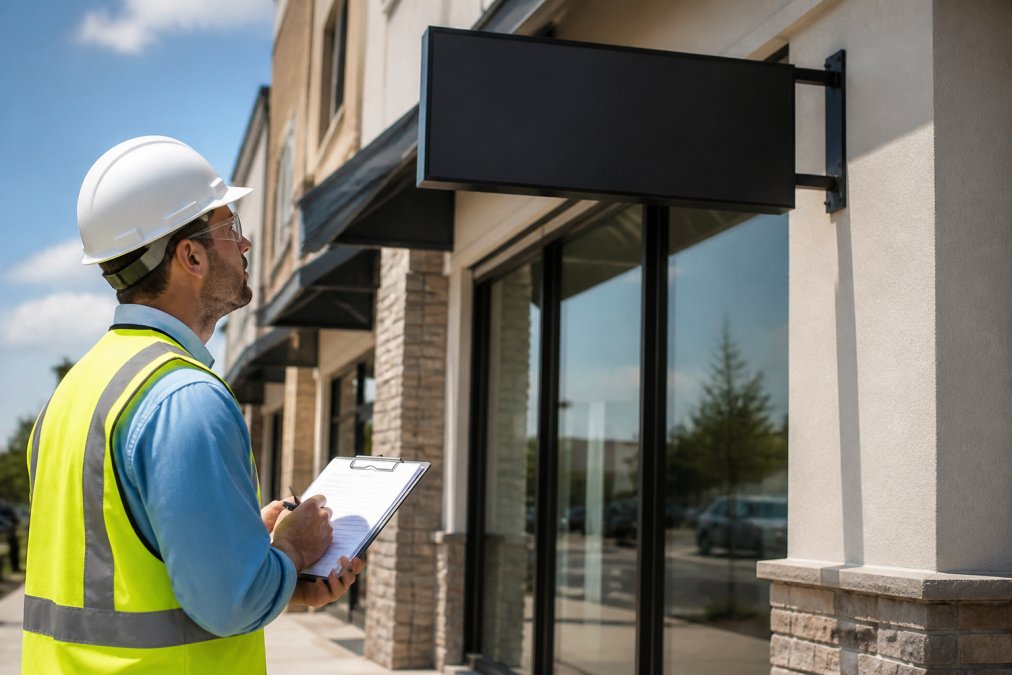
A full professional installation starts with a site survey to evaluate the mounting surface, structural integrity, and visibility sightlines. From there, the scope covers engineering approval, permit acquisition, electrical connections, and the use of proper mounting hardware. Each step is documented, which matters when you need to prove compliance to an inspector, landlord, or insurer.
The difference between a sign that lasts a decade and one that fails in two years is rarely the sign itself. It is almost always the quality of the installation. This guide explains why professional sign installation matters, what it costs, and where cutting corners creates the most risk.
Structural Safety and Stability: The Non-Negotiable Basics
A commercial sign is a load-bearing structure. Wind loads, seismic activity, and vibration all stress the mounting points, so a sign that is under-engineered becomes a public safety hazard.
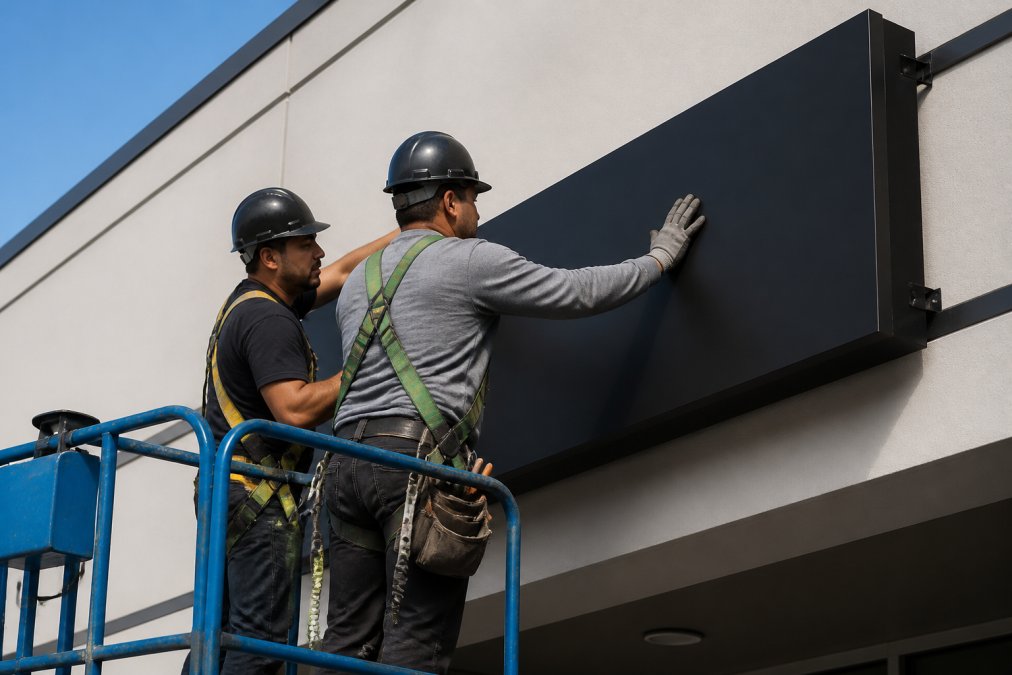
Professional installers calculate the required fastening systems based on the substrate material, sign weight, and exposure. They use high-reach equipment to access the facade safely and torque fasteners to specification. This is the difference between a sign that holds and one that comes down in a storm.
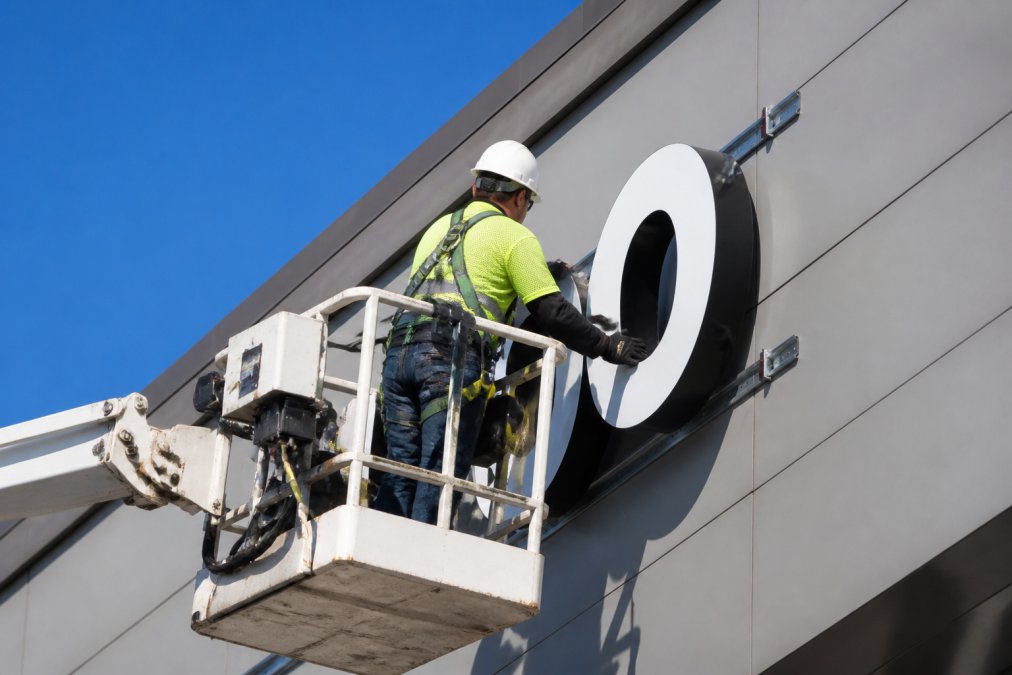
The liability implications are significant. If an improperly mounted sign falls and injures someone, the property owner and the business share responsibility. Many commercial leases require proof of professional installation and liability coverage before a sign is approved. Skipping this step puts your business at risk.
Common Sign Installation Mistakes That Cost You Money
Most sign failures trace back to a handful of preventable errors, but the financial impact goes far beyond the cost of re-hanging a panel. When a sign fails, you are not just paying for a second installation, you are paying for facade repair, lost business during downtime, and potentially a liability claim if the failure causes injury or property damage.
Poor alignment is the most visible mistake, but it is rarely the most expensive. A crooked sign undermines brand perception, but the real cost driver is what misalignment signals: the installer did not use a laser level or account for the building's actual plumb line. Over time, an improperly aligned sign experiences uneven wind load distribution, which accelerates fatigue on one set of fasteners. That single point of stress can turn a $2,000 installation into a $15,000 emergency replacement plus a week of lost visibility.
Weatherproofing failures are the second most common issue, and they are also the most insidious. If the mounting holes are not sealed with the correct grade of sealant, not just any caulk from a hardware store, water penetrates the wall cavity. In a masonry wall, freeze-thaw cycles cause the water to expand and contract, spalling the brick and compromising the anchor's grip (nist.gov). In a metal stud wall, moisture leads to corrosion at the fastener points, which silently weakens the connection over 18 to 24 months. The sign may look fine from the street while the wall behind it is rotting.
The mistake that most DIY installers and even some low-bid contractors make is skipping the torque specification. Every fastener has a designed clamping force. Under-torquing means the fastener can loosen under vibration from wind or nearby traffic. Over-torquing strips the threads or crushes the substrate material. Professional installers use a calibrated torque wrench and follow the manufacturer's spec sheet for each fastener type. This is not a nicety; it is the difference between a connection that holds for a decade and one that fails on the first windy night.
Other frequent mistakes that carry hidden costs include:
- Using galvanic-incompatible metals. If the sign's mounting brackets are aluminum and the fasteners are untreated steel, electrolysis corrodes the connection point. The fix requires removing the sign, replacing all fasteners with stainless steel, and repairing any corrosion damage to the building facade.
- Failing to account for thermal expansion. A 10-foot channel letter sign can expand and contract by up to 1/4 inch across a typical seasonal temperature range. If the mounting system does not allow for this movement, the fasteners will eventually shear or the sign face will crack.
- Ignoring the manufacturer's installation specifications. Most sign manufacturers provide detailed installation manuals that specify minimum fastener sizes, mounting patterns, and sealant types. Deviating from these specs voids the warranty, meaning the next failure is 100% your cost.
- Skipping the post-installation inspection. A professional team walks the installation after mounting to verify alignment, sealant coverage, and electrical continuity. This final check catches issues while the crew is still on site, not after the sign has been up for six months.
Each of these mistakes shortens the lifespan of your sign and increases the total cost of ownership. The pattern across all of them is the same: the installer optimized for the lowest upfront bid rather than the lowest cost over the sign's expected 10-year service life. A professional installation is not an expense; it is an insurance policy against the predictable ways that signs fail.
ADA Sign Installation Requirements: Compliance Is Not Optional
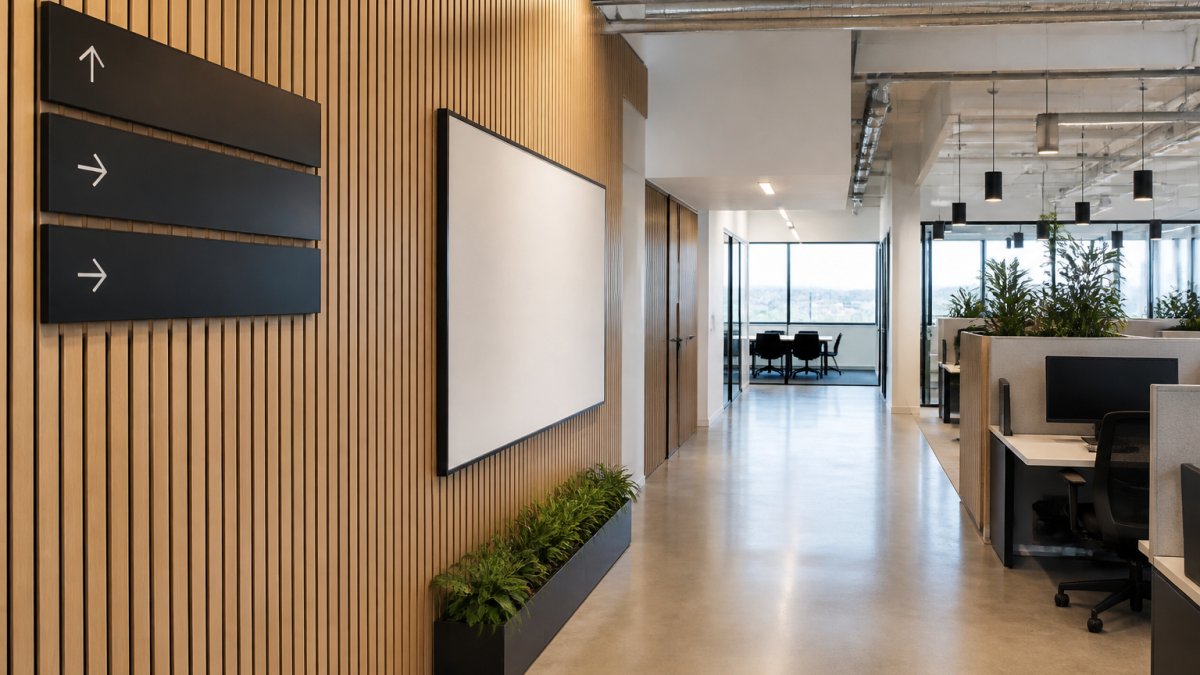
ADA sign installation requirements are federal mandates under the Americans with Disabilities Act, not design suggestions. Signs for permanent rooms and spaces must include tactile characters, braille, and specific mounting heights and locations.
The technical specifications are precise. Tactile characters must be a minimum height and the sign must be mounted at a specific height range beside the door (ada.gov). Braille must be Grade 2 and placed below the corresponding text (ada.gov). Getting these details wrong means a costly redo and potential legal exposure.
Professional installers verify ADA compliance during the site survey and again after mounting. They also confirm that the sign doesn't protrude into the path of travel, which is a separate violation. This is one area where the cost of commercial sign installation is clearly justified: the penalties for non-compliance and the cost of re-fabrication are both higher than doing it right the first time.
Navigating Permits, Zoning Laws, and Building Codes
Before any sign goes up, it must clear local zoning regulations and building codes. These rules govern sign size, height, illumination, and placement relative to property lines.
The permitting process is where many DIY projects stall. Applications often require engineering drawings, electrical load calculations, and proof of structural integrity. A professional team manages this paperwork, coordinating with the local authority to secure permit acquisition before fabrication begins.
Zoning laws also dictate what types of signs are allowed in specific districts. A monument sign might be permitted in one commercial zone but prohibited in another. Navigating these requirements without experience leads to rejected applications and lost time. Professional installers bring familiarity with local codes and established relationships with permitting offices, which compresses the approval timeline.
The Cost of Commercial Sign Installation: What You're Paying For
The cost of commercial sign installation reflects the engineering, labor, equipment, and insurance required to do the job safely. Pricing depends on the sign type, mounting surface, height, and electrical requirements.
You are paying for more than labor hours. The quote covers a site survey, engineered mounting plans, permit fees, and the use of specialized equipment like boom lifts. It also includes liability insurance, which protects you if something goes wrong during the install.
Professional teams also warranty their workmanship. If a sign loosens or a seal fails, they return to fix it. That long-term coverage is built into the price. When you compare quotes, verify what is included: a lower bid that excludes permits, engineering, or insurance is not a bargain. For specific pricing on your project, contact GBCJ Los Angeles directly for a quote tailored to your signage and location.
Surface-Specific Mounting Techniques and Weatherproofing
Not all walls are the same. A sign mounted on brick, stucco, concrete, or metal stud framing requires different mounting hardware and techniques. Using the wrong fastening system for the substrate is a leading cause of installation failure.
For masonry surfaces, installers use expansion anchors rated for the weight of the sign. For metal studs, they must locate the studs and use self-tapping screws with proper backing. Each substrate has its own load-bearing capacity, and exceeding it compromises safety.
Weatherproofing is equally critical. Sealing the mounting points and penetrations prevents moisture intrusion, which is the primary environmental stressor affecting signage durability. In regions with significant temperature swings, expansion and contraction must be accounted for in the mounting design.
Why Professional Sign Installation Matters for Your Bottom Line
Your sign is a direct investment in visibility and revenue, but most business owners never calculate the actual return on that investment. The truth is that professional installation pays for itself through a measurable combination of reduced repair costs, avoided regulatory fines, and increased customer traffic.
Start with the repair-cost side of the equation. A professionally installed sign typically carries a workmanship warranty of 1 to 5 years, depending on the installer. That warranty covers loose fasteners, failed seals, and electrical issues that arise from the installation itself. Without that warranty, the average service call for a sign issue runs between $300 and $800, and a full re-installation can cost 60% to 80% of the original installation price. If a DIY or low-bid installation fails within the first two years, which is the pattern most practitioners see with improper weatherproofing or wrong fastener selection, you are paying for the same job twice.
Then factor in the regulatory risk. A sign that does not meet local zoning or building codes can be cited and forced into removal. The cost of removal, plus the cost of a compliant re-installation, plus the lost business during the gap, typically runs three to four times the cost of doing it right the first time. Professional installers carry the permitting burden and verify code compliance before the sign goes up, which eliminates this entire category of risk.
The revenue side is harder to quantify but follows a consistent pattern. A sign that is properly positioned, illuminated, and aligned maximizes its visibility window, the hours each day when passing traffic can actually read it. A sign that is mounted too high, angled away from the primary traffic flow, or partially obscured by an architectural feature loses a measurable percentage of that visibility. For a business doing $500,000 in annual revenue, even a 5% lift in foot traffic from a properly visible sign translates to $25,000 in additional revenue per year. That single figure dwarfs the typical cost of professional installation for a storefront sign.
Here is a simple framework for calculating your own installation ROI:
- Estimate your annual revenue from the location where the sign will be installed.
- Estimate the visibility lift, a conservative 3% to 5% increase in walk-in traffic from a properly installed, well-positioned sign versus a poorly installed one.
- Multiply the two to get the annual revenue benefit.
- Subtract the installation cost and the estimated annual maintenance cost (typically 2% to 5% of installation cost for a professional job).
- Divide by the installation cost to get your first-year ROI.
For most businesses, this calculation shows a positive return in the first year, with the benefit compounding over the sign's 7 to 10 year expected lifespan.
The hidden factor is the cost of inaction. Every month a sign is misaligned, under-illuminated, or non-compliant is a month of lost visibility that you cannot recover. Unlike a marketing campaign that can be re-run, a sign's missed impressions are gone forever. Professional installation compresses the timeline from permit approval to final mounting, which means your sign starts generating revenue sooner.
Professional sign installation matters because it protects your physical assets, your legal standing, and your brand reputation, but it also matters because it is one of the few marketing investments where the ROI is both calculable and consistently positive. The installation is not an afterthought; it is the foundation of your sign's performance, and that performance has a direct, measurable line to your bottom line.
Frequently Asked Questions
What are the primary responsibilities of a certified sign installer?
A certified sign installer handles the entire process beyond just mounting a sign. This includes conducting a site survey to assess the substrate and structure, obtaining necessary permits, ensuring electrical connections meet code, and using the correct fastening systems for the specific material and location. They are responsible for the structural integrity of the installation, ensuring it withstands weather and meets safety protocols. This level of professional sign installation protects your business from liability and ensures the final product is both safe and durable.
How much does professional sign installation typically cost?
The cost of commercial sign installation varies widely based on several factors, not a flat rate. The price depends on the sign's size and weight, the mounting surface (brick, stucco, or concrete), the need for electrical work, and the height requiring high-reach equipment. Permitting fees also add to the total. Because of these variables, it is best to get a detailed quote. A professional will provide a precise estimate after a site survey, which protects you from unexpected costs and ensures the job is done correctly the first time.
Does professional installation affect the longevity of outdoor signs?
Yes, significantly. Professional installation directly impacts signage durability. Experts use the correct mounting hardware and fastening systems to prevent water intrusion and structural stress. They apply proper weatherproofing to seal edges and penetrations, preventing rust and delamination. They also ensure proper load-bearing distribution so the sign doesn't pull away from the building. A poorly installed sign might fail in a few years, while a professionally installed one can last for its full intended lifespan, making it a smart long-term investment.
What are common sign installation mistakes to avoid?
A few frequent mistakes include failing to check for hidden wires or pipes before drilling, using incorrect fasteners for the substrate, and not leveling the sign properly. Skipping the permit process is another major error that can lead to fines and forced removal. Many also underestimate the need for a site survey to confirm the wall can bear the sign's weight. These common sign installation mistakes can lead to property damage, premature sign failure, and safety hazards, making professional expertise a wise choice.