 ultimate-guide
Choosing the Right Sign Company Partner: 2026 Guide
Table of Contents
- Why Your Sign Company Partner Matters for Brand Visibility
- Quick Comparison: What to Look for in a Signage Partner
- Is Hiring a Sign Consultant Worth It for Small Business?
- Questions to Ask a Sign Company Before Hiring
- Signage Permit and Compliance Services: What Your Partner Should Handle
- Total Cost of Ownership: Why the Cheapest Quote Often Costs More
- Red Flags and Recovery: When Permits Fail and Partners Disappear
- Conclusion
- Frequently Asked Questions
Last Updated: September 21, 2026
Why Your Sign Company Partner Matters for Brand Visibility
Choosing the right sign company partner shapes how customers see your business before they ever walk through the door. A storefront sign is often the first physical touchpoint between a brand and a potential customer, and it works every hour of every day without a day off.
Quick Comparison: What to Look for in a Signage Partner
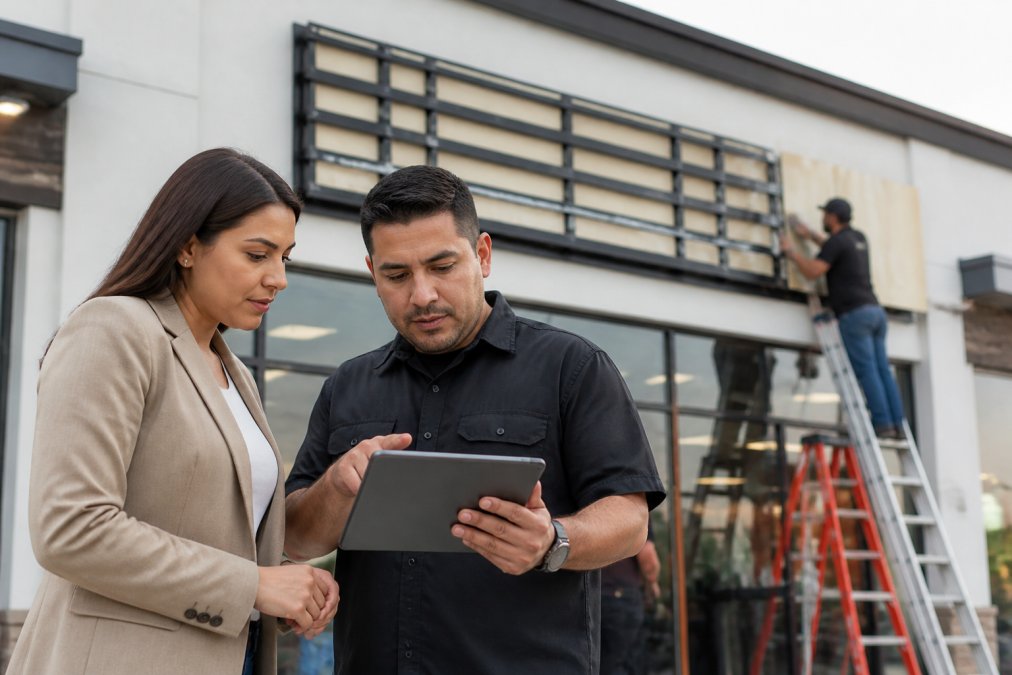
A strong signage partner handles design, fabrication, permitting, and installation under one roof. That single point of accountability is what separates a true full-service provider from a broker who outsources every step.
| Factor | What to Look For | Why It Matters |
|---|---|---|
| Experience | 10+ years in the market | Fewer fabrication and code errors |
| Capabilities | In-house design and fabrication | Consistent quality, faster timelines |
| Permitting | Handles permit acquisition | Avoids costly compliance delays |
| Materials | Durable, weather-resistant stock | Longer signage longevity |
| Communication | Single project manager | Fewer dropped details |
| Warranty | Written coverage terms | Protection if something fails |
Is Hiring a Sign Consultant Worth It for Small Business?
For most small businesses, hiring a sign consultant is worth it when a project involves permits, multiple locations, or a brand refresh. A consultant or full-service sign company partner absorbs the technical and regulatory work that owners rarely have time to manage.
The value shows up in three places:
- Code navigation. Consultants know local zoning regulations and sign ordinances, so they flag problems before fabrication starts.
- Design discipline. A consultant translates a vague brand idea into a buildable, code-compliant design.
- Vendor coordination. They manage fabricators, installers, and inspectors so the owner deals with one contact.
Questions to Ask a Sign Company Before Hiring
The questions you ask a sign company before hiring reveal whether they operate as a true partner or just a vendor filling orders. Ask about materials, warranties, timelines, and permitting early, before you sign anything.
Questions About Materials, Warranties, and Weather Resistance
Start with the physical build. Materials and warranty terms decide how long your sign survives sun, rain, and temperature swings.
- What substrate and finish do you recommend for an exterior sign in this climate, and why?
- How does the warranty handle fading, peeling, or LED failure, and what voids it?
- Do you use LED retrofitting or new LED modules, and what is the rated lifespan?
- Can you show examples of signs you installed five or more years ago that still look sharp?
Questions About Timelines, Revisions, and Project Management
Timelines and revision limits decide whether your project stays on schedule. Ask how many revision rounds are included and who owns the schedule.
- How many design revisions are included before extra charges apply?
- What is the realistic lead time from approved design to installation?
- Who is my single point of contact for the whole project?
- What happens if a permit is delayed, and who manages that delay?
U.S. Small Business Administration guidance on starting a business
Signage Permit and Compliance Services: What Your Partner Should Handle
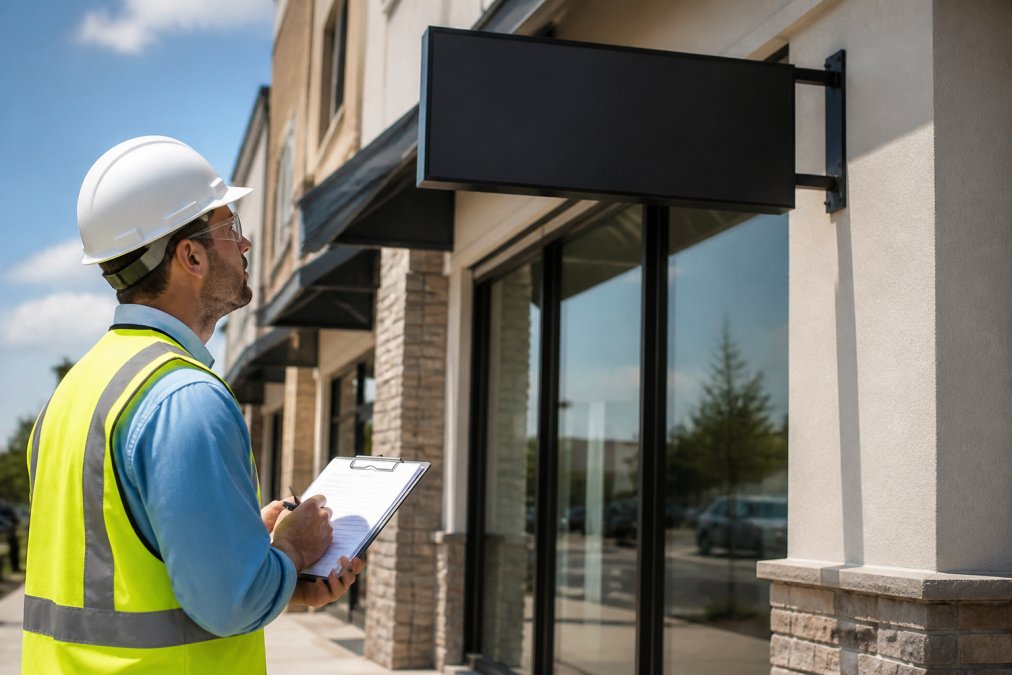
Signage permit and compliance services should cover the entire approval chain: site survey, application preparation, submission, inspection coordination, and any required revisions. Your partner should own this process end to end. But the real test of a regulatory partner is not the routine approval, it is what happens when the application comes back denied. Most guides skip that scenario entirely, and it is where projects stall for weeks.
What a Full-Service Provider Manages
- Site survey. Confirms dimensions, mounting points, and structural requirements.
- Zoning review. Checks local code requirements for size, placement, setback, and illumination.
- Permit acquisition. Prepares and submits the application and tracks it to approval.
- Inspection coordination. Schedules and attends the final sign inspection.
- Compliance records. Keeps documentation for future tenant or ownership changes.
Property managers coordinating signage for multiple tenants should expect a partner who can run several permit applications in parallel. That is where a multi-site rollout gets complicated, and where an experienced partner saves the most time.
When a Permit Is Denied: A Recovery Checklist
Denials are common and rarely fatal. The reasons cluster around a handful of issues: the sign exceeds the allowed square footage, it projects into a setback, it is illuminated in a district that restricts illumination, it conflicts with a historic or design-overlay district, or the application itself was incomplete. A capable partner treats each as a design or documentation problem, not a dead end.
Work through this sequence:
- Get the denial in writing. Ask the reviewing authority for the specific code section cited. Verbal denials are not actionable.
- Map the citation to the design. Identify whether the fix is dimensional (smaller sign), positional (different mounting height or location), material (non-illuminated), or procedural (missing document).
- Check for a variance path. Many jurisdictions allow an administrative variance or a conditional use approval. Ask what the process, timeline, and fee are before assuming you need a full redesign.
- Redesign to code, then resubmit. A partner who built a compliance check into the original design will already have a compliant fallback ready.
- Document the resubmission. Keep the denial letter, the revised drawings, and the new application together. If ownership or tenancy changes, that paper trail matters.
- Escalate only if warranted. A formal appeal is slow and expensive. Reserve it for cases where the denial appears to misapply the code, and get the partner's read before committing.
What to Ask Before You Sign
- How many permit denials have you handled in the last year, and what were the outcomes?
- Do you build a code-compliance review into the design phase, or after fabrication?
- If a denial requires a redesign, is that included or billed separately?
- Can you take over an existing application that another provider abandoned?
A partner who can answer these with specifics is functioning as a regulatory expert, not a paperwork courier. That distinction is what keeps a store opening on schedule.
Total Cost of Ownership: Why the Cheapest Quote Often Costs More
The cheapest quote rarely reflects total cost of ownership. TCO for a sign includes fabrication, installation, permitting, maintenance, repairs, energy draw, and eventual replacement, not just the number on the first invoice. Most guides stop at 'buy quality.' The useful exercise is running the numbers across a realistic service life so the up-front price stops dominating the decision.
The Five Cost Buckets to Model
Build your comparison around these, not around the bid sheet:
- Acquisition. Fabrication, shipping, and installation labor. This is the only number most owners compare, and it is usually the smallest line over a ten-year horizon.
- Permitting and compliance. Application fees, engineering stamps, and any variance costs. A partner who bundles this hides the line item, which makes it harder to compare, ask for it itemized.
- Energy. Illuminated signage runs continuously. LED modules draw a fraction of the power of fluorescent or neon, and the gap compounds over years of 12-to-14-hour daily operation.
- Maintenance and repair. Lamp or module replacement, ballast or driver failure, water intrusion, and face cleaning. Frequency depends heavily on substrate and sealing quality.
- Replacement and disposal. End-of-life removal, disposal fees, and the cost of a new install. A sign that lasts ten years instead of five halves this bucket per year of service.
The LED vs. Traditional Lighting Mechanism
The single largest TCO swing in illuminated signage is the light source. Fluorescent and neon systems consume substantially more wattage per lumen than modern LED modules, and they fail more often, lamps burn out, ballasts fail, and neon tubes crack. Each service call carries a truck roll, labor, and parts cost that dwarfs the electricity savings on paper.
How to Compare Two Quotes Fairly
- Ask each provider to itemize fabrication, permitting, installation, warranty terms, and the LED module spec separately.
- Ask what the warranty excludes, fading, water intrusion, and labor are common carve-outs.
- Ask for the rated lifespan of the light source and the substrate.
- Ask what a typical service call costs after the warranty expires.
- Divide total modeled cost by expected service years to get a per-year figure. That number, not the bid, is the real comparison.
A quote that bundles design consultation, permit acquisition, installation, and a written warranty is not more expensive, it is more complete. Signage ROI depends on how long the sign performs and how little it costs to keep performing, not on how little you paid up front.
International Sign Association resources on signage and the economy
Red Flags and Recovery: When Permits Fail and Partners Disappear
Permitting failure and vanishing partners are the two most common ways a signage project goes wrong. Both are recoverable, but only if you catch the warning signs early.
Watch for these red flags:
- Vague answers about who handles permits
- No physical portfolio of completed installations
- Requests for full payment before fabrication begins
- No written warranty or revision policy
- Slow responses once a deposit clears
Conclusion
Finding the right signage partner is a decision that affects your brand for years, and the wrong choice shows up as faded graphics, rejected permits, and lost customers. GBCJ Los Angeles brings over 15 years of experience in custom signage, storefront signs, vehicle graphics, and event displays, with a customer-centric approach that keeps you informed at every step. From design consultation through installation, our team handles the details so your brand makes a strong first impression.
Frequently Asked Questions
What should I look for when hiring a commercial sign company?
Look for a full-service provider that handles design, custom fabrication, permit acquisition, and installation under one roof. Verify they carry liability insurance and workers' compensation, ask about their warranty terms on durable materials, and request case studies from similar projects. A partner with 15 or more years of experience and a portfolio showing work in your specific signage category, whether storefront, vehicle graphics, or architectural signage, is a safer bet than a generalist.
Is hiring a sign consultant worth it for small business?
For most small businesses opening a first location, a full-service sign company already includes consultant-level guidance in its process. You get a design consultation, site survey, and compliance review without paying a separate consultant fee. A standalone consultant makes sense when you are managing a multi-site rollout across different jurisdictions or need an independent technical advocate. For a single storefront, put that budget toward durable materials and proper installation instead.
How do I verify a sign company's installation credentials?
Ask for proof of general liability insurance and workers' compensation coverage, then confirm the installer's experience with your specific sign type and mounting conditions. Check whether the company pulls electrical permits when illuminated signage is involved, since that requires licensed electrical work in most jurisdictions. Request references from projects completed at least two years ago so you can see how the installation has held up over time.
What questions should I ask a potential signage partner?
Ask who handles permit acquisition and what happens if a permit is denied. Ask how many revision rounds are included and what triggers extra charges. Ask about the warranty on materials and labor, and whether it covers peeling, fading, or LED failure. Ask for a project timeline with milestones, not just a completion date. Finally, ask whether they subcontract installation or use in-house crews, because that affects accountability when something goes wrong.
How does a professional sign partner impact brand ROI?
A sign partner who understands brand identity and visual communication delivers signage that stays consistent across storefront, vehicle fleet, and interior displays. Consistent branding builds recognition, and recognition drives repeat business. Durable materials and proper installation also reduce replacement costs over the sign's lifespan. When you factor in avoided permit fines and fewer reprints, the total cost of ownership often favors the more thorough partner over the lowest bidder.
What are the red flags when choosing a custom sign manufacturer?
Watch for quotes that arrive without a site survey, vague timelines, and no mention of permits or compliance. Be cautious if a provider cannot explain what materials they use or why, or if they refuse to put warranty terms in writing. A manufacturer who subcontracts everything and disappears after installation leaves you handling repairs alone. Also treat any quote that is dramatically lower than others with suspicion, since it usually means cheaper materials or skipped permitting steps.