 ultimate-guide
Best Materials for Exterior Business Signs in 2026
Table of Contents
- Aluminum Signage: The Industry Standard for Durability
- Acrylic and Plexiglass Applications for High-Impact Displays
- Aluminum vs Acrylic Signs for Storefronts: A Direct Comparison
- Vinyl Banners and Weather Resistance: What to Know
- Understanding the Cost of Outdoor Business Signs
- Signage Maintenance Best Practices for Long-Term Value
- Conclusion: Choosing the Best Materials for Exterior Business Signs
- Frequently Asked Questions
Last Updated: September 16, 2026
Aluminum Signage: The Industry Standard for Durability
Aluminum is the most reliable substrate for exterior business signs, and it earns that position for one reason: it resists rust without any coating at all. The metal forms its own protective oxide layer when exposed to air, so a painted or laminated aluminum panel keeps its structural integrity through years of rain, heat, and freeze-thaw cycles. For storefronts, monument panels, and regulatory signage, that matters more than any finish option.
What most guides miss is the thickness question. A 0.040-inch panel flexes in wind; a 0.080-inch panel does not. On a high-traffic corner or an exposed fascia, the heavier gauge is the difference between a sign that reads clearly for a decade and one that ripples and delaminates in three years. Aluminum also takes dimensional lettering well, and mounting methods range from concealed Z-clips to standoff hardware, so the same material works for a flat panel or a fabricated logo.
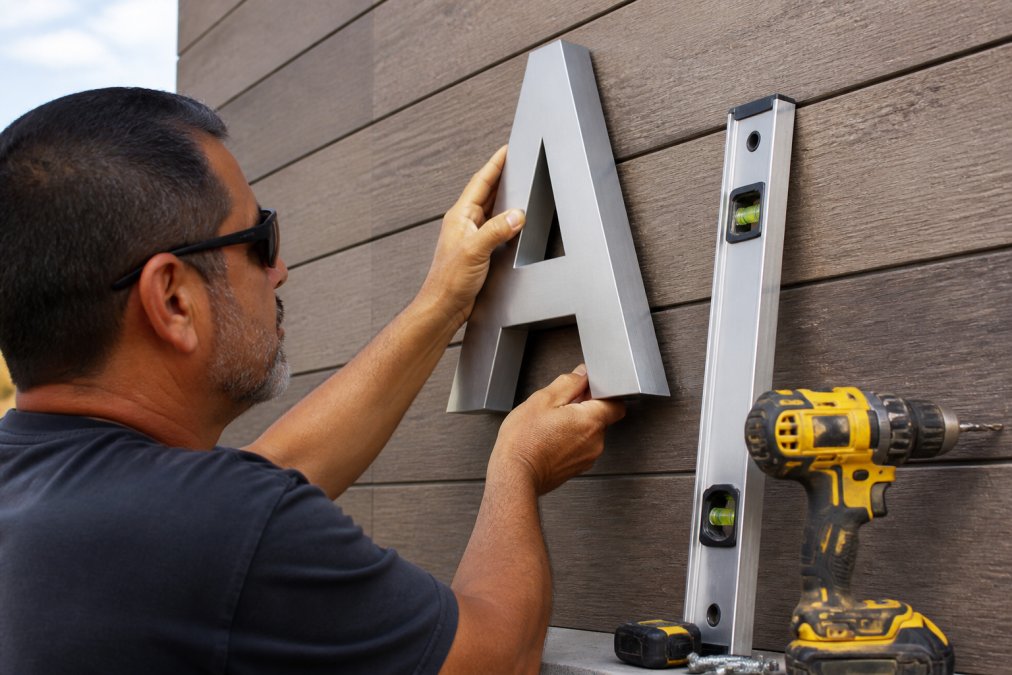
Pros: rust-proof, lightweight, holds dimensional lettering, wide finish range Cons: dents on impact, higher cost than vinyl, needs proper mounting hardware
Acrylic and Plexiglass Applications for High-Impact Displays
Acrylic and plexiglass are the right choice when the sign needs to glow, and that is the whole argument for them. These plastics diffuse light evenly, which makes them the default substrate for illuminated displays, backlit film, and channel letters. They also offer better visual clarity than most alternatives, and they can be cut into shapes that metal cannot match without custom fabrication.
The trade-off is thermal expansion. Acrylic expands and contracts with temperature swings, so mounting holes must be oversized or the panel will crack at the fastener. It is also more scratch-prone than aluminum. For a backlit storefront sign in full sun, acrylic is excellent. For a flat panel that takes direct impact from carts or vehicles, aluminum wins.
Pros: even light diffusion, excellent clarity, shapeable, good impact resistance Cons: expands with heat, scratches, costs more than vinyl
Aluminum vs Acrylic Signs for Storefronts: A Direct Comparison
The choice between aluminum and acrylic signs for storefronts comes down to whether the sign needs to be illuminated. Aluminum is the better substrate for flat, non-lit panels and dimensional lettering. Acrylic is the better substrate for backlit and illuminated displays. Neither is universally superior, and the wrong pick shows up as cracking, flexing, or wasted light within a couple of years.
| Factor | Aluminum | Acrylic / Plexiglass |
|---|---|---|
| Rust resistance | Excellent | Not applicable |
| Weather resistance | Excellent | Good, with movement allowance |
| Illumination | Poor, needs diffuser | Excellent |
| Impact resistance | Dents | Cracks under stress |
| Weight | Lightweight | Lightweight |
| Best for | Flat panels, dimensional letters | Backlit and illuminated signs |
| Maintenance | Occasional cleaning | Careful, scratch-prone |
A common mistake is choosing acrylic purely for the glossy look on an unlit sign. You pay more, you inherit the thermal expansion problem, and you gain nothing the viewer can see.
Vinyl Banners and Weather Resistance: What to Know
Vinyl banner durability depends almost entirely on two specs: the base weight and the ink. A standard 13-ounce banner is fine for a weekend promotion. For a banner that stays up for months, you want 18 ounces or heavier with a UV-stable ink set, or the colors will fade long before the material fails.
Mesh banner is the other option worth knowing.
Understanding the Cost of Outdoor Business Signs
- Acquisition, substrate, finish, graphics, and fabrication labor.
- Installation, mounting hardware, electrical work for illuminated signs, and any wall reinforcement.
- Permitting, sign permit fees and, in some jurisdictions, separate electrical permits for illuminated signs. Fees vary widely by municipality and sign type, so confirm with your local building department before ordering.
- Maintenance and replacement, cleaning supplies, hardware replacement, lamp or LED service, and eventual graphic refresh or full replacement.
A few practical questions to put to any sign vendor:
- What is the expected service life of this substrate in my climate?
- What maintenance does it need, and how often?
- Are replacement graphics or panels available in the same dimensions if I rebrand later?
- Does the quote include permitting and electrical work, or are those separate?
U.S. Small Business Administration guidance on signage and marketing
Signage Maintenance Best Practices for Long-Term Value
Most exterior signs do not fail because the material was wrong. They fail because nobody washed them, nobody checked the fasteners, and nobody noticed a seal had failed until water was already inside the sign cabinet. A maintenance plan is the cheapest insurance you can buy on a sign that cost thousands to fabricate and install.
Material-Specific Care Protocols
Different substrates fail in different ways, so the care routine should match the material.
Climate-Driven Maintenance Schedules
Climate should shape the schedule more than any generic recommendation.
- Coastal and salt-air environments. Salt accelerates corrosion on fasteners, brackets, and any ferrous hardware. Inspect mounting hardware every six months rather than annually, and rinse stainless and painted surfaces with fresh water to remove salt deposits.
- High-UV and desert environments. Expect color fade and chalking before structural failure. Plan a repaint or graphic replacement cycle based on visible fade, and consider a UV-stable overlaminate on printed graphics to extend color life.
- Freeze-thaw regions. Water intrusion into seals and penetrations expands when it freezes, widening cracks season over season. Inspect seals and caulk lines each spring and re-seal any that have pulled away from the wall or sign frame.
- High-wind corridors. Check fasteners, brackets, and any welded or bolted connections after major wind events, and confirm that banner frames and mesh attachments have not loosened.
A Simple Annual Maintenance Checklist
- Wash painted and acrylic surfaces with mild soap and water
- Inspect fasteners, brackets, and mounting hardware for corrosion or loosening
- Check seals and penetrations for water intrusion and re-seal as needed
- Test illumination and replace failed lamps or LEDs
- Inspect acrylic mounting holes for cracking or over-tightening
- Rinse stainless and metal accents in coastal environments
- Photograph the sign for a maintenance record and compare year over year
Documenting each inspection with a photo creates a service history. If you ever sell the business or need to file a warranty claim, that record is worth more than the ten minutes it takes to create.
Conclusion: Choosing the Best Materials for Exterior Business Signs
Choosing the best materials for exterior business signs is a decision about your location, your brand, and your budget over time, not a single purchase. Aluminum covers most storefront needs. Acrylic handles anything that needs to glow. Vinyl handles anything temporary. Get the substrate right and the sign keeps working for years.
Frequently Asked Questions
What is the most durable material for exterior business signs?
Aluminum is widely considered the most durable material for exterior business signs. It resists rust, holds up against UV rays, and maintains its structure in high-wind areas. Acrylic provides excellent impact resistance for illuminated displays. The best choice depends on your specific climate, budget, and visual requirements.
Which sign material is best for high-wind areas?
For high-wind areas, aluminum is a top choice. Aluminum is lightweight yet strong, and it won't rust like some other metals. Avoid thin acrylic panels in exposed locations unless they are properly reinforced with a sturdy frame and mounting hardware designed for wind loads.
How long do different exterior sign materials typically last?
Aluminum signs often last 10 to 15 years or more with proper maintenance. Acrylic signs generally last 7 to 10 years, though they can become brittle over time with prolonged UV exposure. Vinyl banners typically last 1 to 3 years outdoors, depending on weather conditions. Regular cleaning and occasional protective coatings extend the lifespan of all materials.
What are the pros and cons of aluminum vs. acrylic for outdoor signs?
Aluminum is lightweight, rust-proof, and holds paint or vinyl well. It's ideal for flat, non-illuminated signs and dimensional lettering. Acrylic offers a glossy, premium look and works well for illuminated displays. However, acrylic can crack under impact and may yellow from UV exposure. Aluminum is generally more cost-effective for large storefront signs, while acrylic provides better visual clarity for backlit applications.
Do exterior business signs require specific weather-resistant coatings?
Yes, applying a UV-stable clear coat or automotive-grade paint to metal signs helps prevent fading and corrosion. Acrylic signs benefit from UV-resistant finishes to slow yellowing. Vinyl banners should be printed with UV-stable inks. For high-traffic areas or coastal climates, a professional-grade protective coating is essential to maintain color fastness and extend the signage lifespan.
How do I choose a sign material that complies with local zoning regulations?
Start by checking your local zoning ordinances for sign size, height, illumination, and placement restrictions. Many areas require permits for exterior business signs. Materials like aluminum and acrylic are commonly approved, but some historic districts may have specific requirements. Work with a sign fabricator who understands local codes and can handle the permitting process for you.
Most signage projects fail at the material decision, not the design. GBCJ Los Angeles helps business owners and property managers choose the right substrate, handle installation, and keep the sign looking sharp for years. Get started with GBCJ Los Angeles and put a sign on your storefront that earns its cost back.