 blog
blog
Affordable Storefront Sign Fabrication for New Shops
Table of Contents
- What Drives the Cost of Custom Business Signs
- How to Design Window Decals for Maximum Retail Visibility
- Signage Permit Requirements for Small Businesses
- Affordable Storefront Signage Options That Look Expensive
- Why Local Fabrication Keeps Your Signage Affordable
- Affordable Storefront Sign Fabrication: What to Ask Before You Order
- Conclusion
- Frequently Asked Questions
Last Updated: September 13, 2026
What Drives the Cost of Custom Business Signs
The cost of affordable storefront sign fabrication for new shops is driven by four factors: material, size, lighting, and installation method. Material sets the baseline, and everything else scales from there. A flat cut-vinyl panel and a backlit channel-letter sign can serve the same storefront, yet they land in completely different budget brackets because of how they are built.
This is where most new shop owners lose money before they even order. They pick a look from a photo, then discover the fabrication method behind that look costs several times what they assumed. Understanding the drivers first keeps you in control of the quote.
At GBCJ Los Angeles, we have spent more than 15 years walking new retail owners through that exact conversation.
Material Choices and Their Price Impact
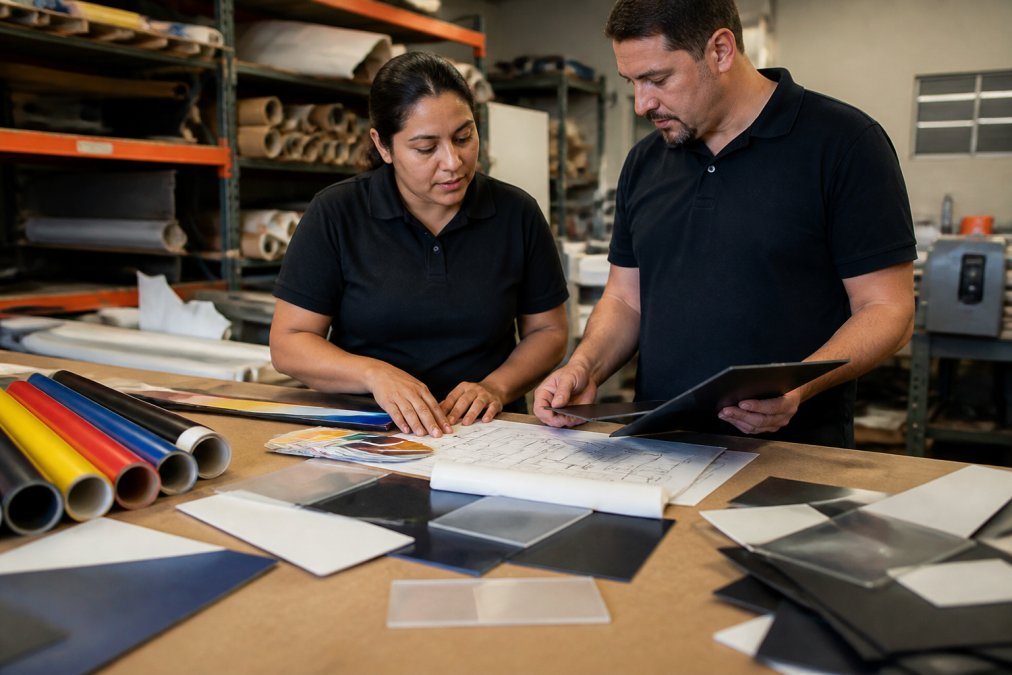
Material selection is the single biggest lever on sign cost. Acrylic, aluminum composite, PVC, and vinyl each carry different fabrication and durability profiles.
A common mistake is choosing material by appearance alone. A rigid acrylic face looks sharp but requires different mounting hardware than a lightweight PVC panel of the same size. The hardware, not the panel, often drives the final number.
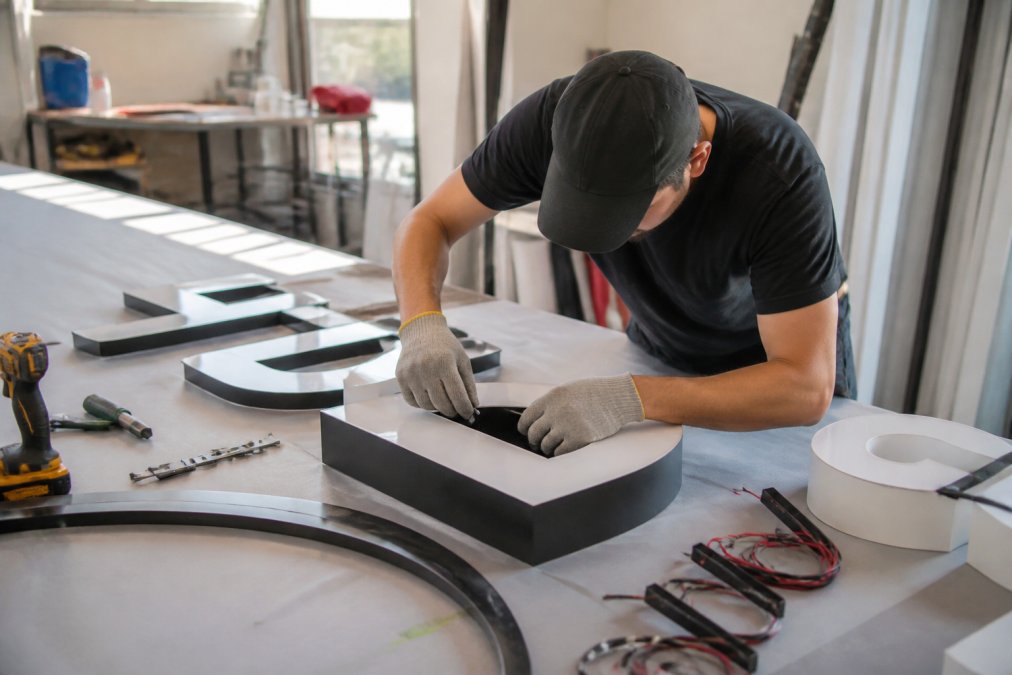
For a new shop watching the budget, flat vinyl on an existing fascia is usually the most economical route. Dimensional letters cost more because each character is cut, finished, and mounted individually. Neither is "better" in the abstract; they solve different problems.
Size, Lighting, and Installation Variables
Larger signs cost more per square foot, and the curve is not linear. Past a certain size, you need structural backing, additional bracing, and sometimes a permit review that smaller signs skip entirely.
Lighting adds a second layer. Illuminated signage requires electrical work, and that work may need a licensed electrician plus an inspection (osha.gov). A fabricator who does not flag this upfront is setting you up for a surprise invoice.
Installation method matters too. A sign mounted to a masonry wall, a glass storefront, or a metal canopy each needs different anchors and different labor time. Ask your fabricator to break the quote into fabrication and installation so you can see where the money actually goes.
How to Design Window Decals for Maximum Retail Visibility
Window decals work best when they guide the eye to one message, not five. Contrast, font size, and placement decide whether a passerby reads your window or walks past it.
Most storefronts fail at the same point: they treat the window as a place to list everything. Hours, services, promotions, logos, and a phone number all compete for the same glance. The result is that nothing registers.
Contrast, Font Size, and Placement That Actually Get Noticed
Start with contrast. Dark text on a light window or light text on a dark tinted window both work; mid-tone on mid-tone disappears. Test your design at a distance by printing it small and holding it at arm's length.
Font size follows viewing distance. A shopper walking past at normal pace needs the primary message legible from several feet away. That usually means a headline far larger than most first drafts.
Placement should respect the sightline. Decals at eye level get read; decals near the floor or ceiling get ignored. Keep the center of the window clear so people can still see into the store, which is often what actually pulls them in.
A practical sequence for designing window decals:
- Pick one primary message for the window
- Choose a high-contrast color pairing
- Size the headline for the expected viewing distance
- Place it at eye level, off-center if the door needs clearance
- Leave the center sightline into the store open
- Proof the design from across the street before printing
That last step catches more problems than any software preview.
Signage Permit Requirements for Small Businesses
Signage permit requirements for small businesses vary by city and by sign type, so the first step is confirming which rules apply to your storefront before you design anything. Most jurisdictions regulate sign size, height, placement, illumination, and sometimes the total amount of sign area allowed per frontage (nlc.org).
The rules that trip people up are rarely the obvious ones. A sign that is perfectly legal on its own can violate a rule about combined signage area once you add a second panel. Illuminated signs frequently trigger a separate electrical review.
What to Prepare Before You Apply
Gather your documentation early. Most applications ask for a site plan, a drawing of the proposed sign with dimensions, and details on materials and mounting (iccsafe.org). Some require a photo of the existing storefront.
If you lease, get written landlord approval before you apply. Many commercial leases make the tenant responsible for permits, and a landlord signature is often required on the application itself. Skipping this step is one of the most common reasons a new shop loses weeks.
Confirm current requirements, forms, and fees directly with your city's building or planning department, since these change and the amounts are set locally.
Affordable Storefront Signage Options That Look Expensive
Affordable storefront signage that looks expensive comes down to restraint and finish quality, not material cost. A well-executed simple sign outperforms a busy expensive one every time.
Here is how the common options compare on the factors that matter to a new shop:
| Option | Relative Cost | Best For | Watch Out For |
|---|---|---|---|
| Flat cut vinyl on fascia | Lowest | Tight budgets, fast turnaround | Less dimension, needs smooth surface |
| Acrylic panel with vinyl lettering | Low to mid | Clean, modern storefronts | Can crack if mounted poorly |
| Dimensional letters | Mid to high | Premium brand positioning | Per-character cost adds up fast |
| Illuminated channel letters | Highest | High-visibility locations | Electrical work and inspection |
The pattern is consistent: the more dimension and light you add, the more you pay. That does not mean the cheapest option always wins. It means you should match the option to how much visibility your location actually needs.
A side-street shop with steady foot traffic rarely needs illuminated channel letters. A location on a fast-moving arterial road often does, because you have a fraction of a second to register.
Finish quality is what separates an affordable sign from a cheap-looking one. Clean edges, consistent letter spacing, and a level mount cost nothing extra but change the entire impression.
Why Local Fabrication Keeps Your Signage Affordable
Affordable storefront sign fabrication for new shops keeps signage affordable by cutting shipping, shortening the feedback loop, and making installation a single coordinated job. A sign built and installed by the same team removes the finger-pointing that happens when a shipped sign arrives damaged or does not fit.
There is a second, less obvious benefit. When your fabricator can see the storefront in person, they catch problems a remote vendor cannot: an uneven mounting surface, an outlet in the wrong place, a door swing that eats into your sign space. Those catches happen before fabrication, when changes are still cheap.
A common mistake is ordering online to save on the headline price, then paying more in rework. A sign that arrives with the wrong dimensions is not a bargain. It is a delay.
Local also means you can walk in and look at material samples in person. Color on a screen and color on a physical panel are not the same thing, and the difference matters most when you are matching an existing brand color.
Affordable Storefront Sign Fabrication: What to Ask Before You Order
The right questions before you order separate a smooth project from a stressful one. Ask them early, and ask them in writing.
Questions That Reveal a Fabricator's Real Process
A fabricator's answers tell you more than their portfolio. Here is what to ask:
- Who prepares the permit drawings, and do you handle the submittal?
- Is installation quoted separately from fabrication?
- What is the expected timeline from approval to install?
- What warranty covers the materials and the installation?
- Can I see material samples before I commit?
- What happens if the sign does not fit as measured?
The last question is the most revealing. A fabricator with a real process will describe how they verify measurements before cutting anything. One without a process will get vague.
For new shops working to a deadline, timeline matters as much as price. A cheaper quote that adds three weeks to your opening is not actually cheaper.
Conclusion
Opening a storefront comes with a fixed opening date and a long list of decisions competing for the same budget. Signage is one of the few items customers see before they ever walk in, so it deserves a fabricator who treats the deadline as seriously as you do. GBCJ Los Angeles brings more than 15 years of sign and graphics experience, a customer-centric process built around listening first, and in-house capabilities across storefront signs, vehicle graphics, and professional displays. Get started with GBCJ Los Angeles and put a sign on your storefront that earns the first impression you have already worked for.
Frequently Asked Questions
What is the most cost-effective type of storefront sign for a new shop?
Vinyl window decals and printed window graphics deliver the lowest upfront cost while still covering a large glass area, which makes them a common starting point for new shops. Dimensional letters and illuminated signs cost more because of materials, wiring, and installation, but they hold up longer and stay readable after dark. Many new owners combine a simple blade sign or fascia panel with window decals to cover both daytime and evening visibility without paying for full illumination everywhere.
Do I need a permit for a new storefront sign?
Most permanent exterior signs require a permit from your city or county before installation, and signage permit requirements for small businesses often include a site plan, dimensions, and sometimes a landlord approval letter. Window decals applied inside the glass frequently fall under different rules than mounted or illuminated signs, so confirm which category your sign fits. A fabricator with local experience can tell you what your jurisdiction typically asks for and help assemble the paperwork before you order materials.
How long does it take to fabricate and install a custom storefront sign?
Simple vinyl window graphics can be printed and installed within a few days once artwork is approved. Dimensional letters, illuminated channel letters, and fabricated panels usually take longer because of material ordering, production, and permit review. The biggest delay for new shops is often the permit approval step, not the fabrication itself. Ask your fabricator for a realistic timeline that includes design revisions, permit turnaround, and an installation window, and build that into your opening schedule.
What should I ask a fabricator before committing to a storefront sign project?
Ask how they handle design revisions, who files the permit, and what the warranty covers for fading, peeling, or hardware failure. Request a written scope that lists materials, dimensions, mounting method, and installation date so nothing is left open. If you are comparing quotes, make sure each one covers the same materials and installation scope, since a lower number often leaves out removal of the old sign, electrical work, or permit fees. A clear scope protects you from surprise costs after the sign is up.