 comparison
Best Materials for Durable Indoor Office Signage
Table of Contents
- Why Material Choice Decides How Long Indoor Office Signage Lasts
- Sign Materials at a Glance: Comparison Table
- Acrylic Office Signs: Clarity, Depth, and Scratch Resistance
- PVC Signs for Offices: Lightweight, Moisture-Resistant Workhorses
- Metal Substrates: Aluminum, Dibond, and Stainless Steel
- Foam Board, Vinyl, and Photopolymer: Where Each Fits
- Office Lobby Sign Ideas and Matching Materials to Sign Type
- Indoor Sign Maintenance and Total Cost of Ownership
- Frequently Asked Questions
Last Updated: October 19, 2026
Why Material Choice Decides How Long Indoor Office Signage Lasts
Walk into two offices with identical budgets and you can spot the difference in seconds. One lobby sign looks sharp after five years; the other is warped, yellowed, or peeling at the corners. The gap usually isn't design talent. It's substrate selection.
Durable indoor office signage is only as good as the material it's printed or mounted on. This guide from GBCJ Los Angeles breaks down common substrates used in office environments, where each one belongs, and considerations for their long-term value. We've spent over 15 years fabricating signs, and the pattern is consistent: the material decision gets made in five minutes and then haunts the space for a decade.
Below, we'll show you how to match material to sign type to help ensure durability.
Sign Materials at a Glance: Comparison Table
Here's the fast version before we go material by material. This table summarizes common substrates, their typical indoor service life, and where each one fits best.
| Material | Indoor Durability | Best For | Watch Out For |
|---|---|---|---|
| Acrylic | 10+ years | Lobby signs, dimensional lettering | Higher upfront cost, scratches show |
| PVC | 7-10 years | Wayfinding, door signs, directories | Can sag on long unsupported spans |
| Aluminum | 15+ years | Directories, permanent plaques | Dents on thin gauges |
| Dibond | 15+ years | Large wall graphics, flat panels | Edge finishing matters |
| Stainless steel | 20+ years | Premium lobby and donor plaques | Heavy, needs solid mounting |
| Foam board | 1-2 years | Temporary promos, mockups | Dents and warps easily |
| Vinyl graphics | 5-7 years (interior) | Window graphics, wall wraps | Surface prep decides lifespan |
| Photopolymer | 10+ years | ADA-compliant room signs | Limited design flexibility |
That's the map. Now the terrain.
Acrylic Office Signs: Clarity, Depth, and Scratch Resistance
Acrylic office signs deliver a crisp visual result. The material is a rigid plastic that prints, engraves, and mounts with glass-like clarity, and it holds dimensional lettering without visible fasteners.
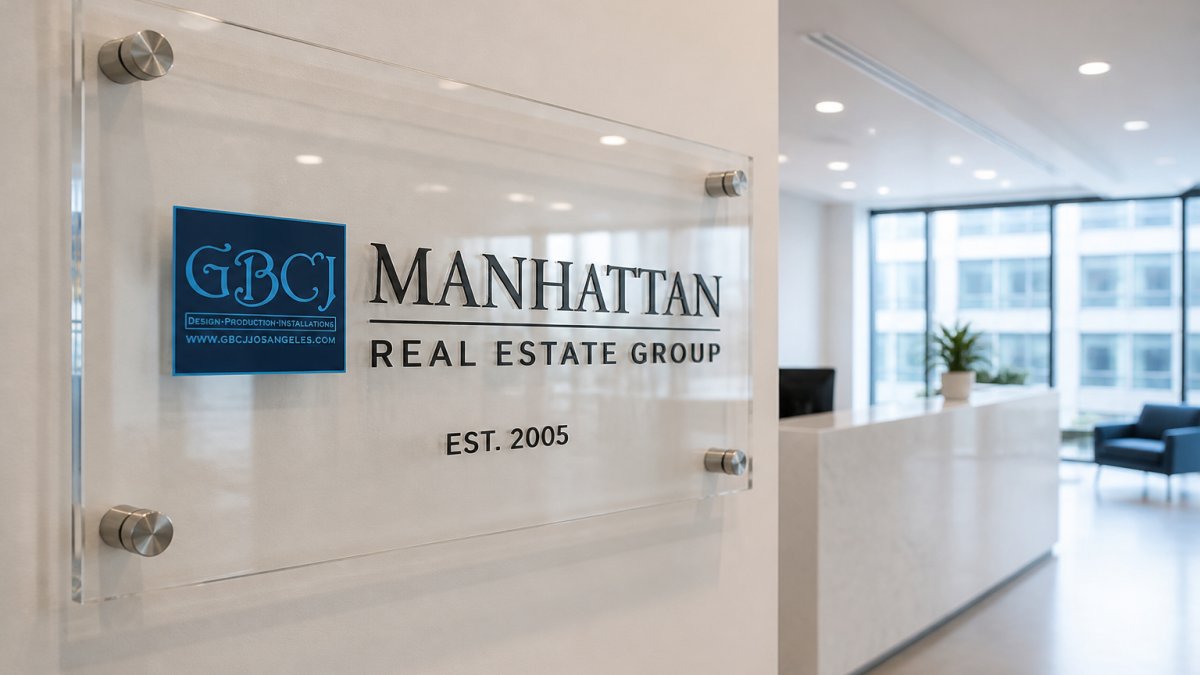
What makes acrylic work in a lobby is depth. Standoff-mounted acrylic panels float off the wall and throw a soft shadow, which reads as premium without a premium metal budget. Scratch resistance is decent. Acrylic handles daily cleaning fine but can show fine scratches under direct sunlight if wiped with dry paper towels.
Pros: excellent clarity, deep dimensional look, moisture resistant, easy to clean Cons: higher cost than PVC, can crack under impact on thin gauges, scratches are permanent
A common mistake is ordering acrylic too thin for the panel size. Anything larger than a standard door sign needs enough thickness to stay flat to prevent bowing over time.
PVC Signs for Offices: Lightweight, Moisture-Resistant Workhorses
PVC signs for offices are the practical middle ground. Expanded PVC is a lightweight, rigid plastic that cuts clean, prints well, and shrugs off the humidity swings that wreck paper-based substrates.
Where PVC earns its keep is wayfinding. Directional signs, room number plates, directory strips, and restroom signage all benefit from a substrate that's affordable enough to produce in volume and durable enough to withstand foot traffic. It's also a straightforward material to mount flush to drywall.
Pros: lightweight, moisture resistant, affordable, easy to fabricate and mount Cons: less premium look than acrylic, can sag on long unsupported spans, not ideal for high-impact areas
Metal Substrates: Aluminum, Dibond, and Stainless Steel
Metal substrates are where you go when the sign needs to outlast the furniture. Aluminum, Dibond (an aluminum composite with a polyethylene core), and stainless steel each solve a different problem.
Aluminum is light, rigid, and rust resistant, which makes it the default for directories, permanent plaques, and any sign that will be touched or leaned against. Dibond is the flat-panel specialist: two thin aluminum skins over a solid core, dead flat across large spans, ideal for big wall graphics and backdrops. Stainless steel is the premium pick for lobby and donor plaques, with a weight and finish that reads as institutional.
Pros: exceptional service life, rust resistance, rigidity, flatness at scale Cons: heavier mounting requirements, higher cost, dents on thin aluminum gauges
Mounting hardware matters as much as the panel. A stainless plaque on weak anchors can be a liability.
Foam Board, Vinyl, and Photopolymer: Where Each Fits
Foam board and foamcore are temporary materials, full stop. They're lightweight, cheap, and print beautifully, which makes them perfect for trade show mockups, seasonal promos, and internal announcements. They are not permanent signage. Expect one to two years before denting, edge wear, or warping may necessitate replacement.
Vinyl graphics are a different animal. Interior vinyl applied to glass, drywall, or painted surfaces can last five to seven years when the surface is prepped correctly. The failure mode is often related to surface contamination rather than the vinyl itself. Photopolymer is the specialist substrate behind ADA-compliant room signs, where tactile lettering and braille are required by the ADA Standards for Accessible Design. Photopolymer signs last a decade or more and hold up to repeated cleaning.
Office Lobby Sign Ideas and Matching Materials to Sign Type
The fastest way to pick a material is to start from the sign type. Indoor signage isn't one use case, and the right substrate for a lobby panel is rarely the right one for a room number plate. Here's how we'd match them, with the reasoning behind each pairing.
- Lobby reception sign: acrylic with standoff mounts for a crisp, dimensional look, or brushed stainless for a more institutional feel. Both tolerate frequent cleaning and hold their finish; acrylic is lighter and easier to mount, stainless is heavier and needs solid anchors.
- Wayfinding and directional signs: PVC, produced as a matching set for visual consistency. It's light enough to mount flush and affordable enough to produce in volume across a floor.
- Room and door signs: photopolymer where ADA compliance is required, PVC elsewhere. Photopolymer holds tactile lettering and braille and survives repeated cleaning; PVC is the practical choice for non-tactile room IDs.
- Wall graphics and brand backdrops: Dibond for flatness across large spans, or interior vinyl for budget flexibility. Dibond stays dead flat where a thin panel would bow; vinyl depends on surface prep for its lifespan.
- Directory boards: aluminum or Dibond for rigidity across large panels. Both resist warping and handle being touched or leaned against.
- Temporary announcements: foam board, replaced as needed. It prints beautifully and costs little, but expect dents and edge wear within a year or two.
Compliance decisions affect material choice early, not late. Where tactile lettering and braille are required, the substrate has to accept raised characters and hold them through cleaning and wear, which narrows the field to photopolymer and similar engraveable materials. Contrast, mounting height, and finish also interact with substrate choice, so confirm the requirements before you finalize room sign specs. The U.S. Access Board's guide to accessible signage is worth reading before you lock in a material for any compliant sign.
For lobby signage specifically, our team at GBCJ Los Angeles fabricates Lobby Signs in acrylic, metal, and mixed materials, and we'll flag mounting issues before fabrication rather than after installation.
Indoor Sign Maintenance and Total Cost of Ownership
Total cost of ownership is a key consideration. A cheaper substrate that fails in two years can cost more than a durable one that lasts ten, once you add removal, re-fabrication, and downtime. It's helpful to compare materials on the same basis: purchase price plus fabrication and mounting, plus cleaning and maintenance labor, plus replacement cycles over the life of the space.
Here's the framework we use when a client asks whether the upgrade is worth it. For each candidate material, estimate four numbers:
- Purchase and fabrication: panel cost plus cutting, printing, edge finishing, and any mounting hardware.
- Installation: labor and wall prep, which is higher for heavy metal and standoff-mounted acrylic than for flush PVC.
- Maintenance: cleaning labor per month and any consumables (microfiber cloths, non-abrasive polish).
- Replacement: how many times you'll re-buy and re-install over your planning horizon, typically five or ten years.
The pattern is consistent: foam board may appear cheapest on the quote but can be more expensive over a decade due to frequent replacement, with each replacement carrying removal and re-installation labor on top of the panel. Acrylic, PVC, and metal cost more upfront but often require only one installation across the same horizon. Vinyl sits in the middle and depends entirely on surface prep; a poorly prepped wall can lead to early replacement.
Maintenance is simple across the durable substrates, but the details decide how a finish ages in a shared workplace. Wipe acrylic with a microfiber cloth and mild soap; avoid dry paper, which can leave fine scratches that show under direct light. Clean PVC with a damp cloth. Metal needs only occasional dusting; stainless benefits from a non-abrasive polish. Vinyl should be cleaned gently to avoid lifting edges. Foam board isn't worth cleaning.
Office cleaning routines add a variable most guides ignore. Disinfectants and routine wipe-downs are common in shared workplaces, and some finishes tolerate them better than others. Non-porous substrates such as acrylic, PVC, and metal generally handle repeated damp wiping well, while printed vinyl and paper-based materials are more sensitive to aggressive cleaners and abrasion. Fingerprints and scuffs concentrate around door signs, directories, and reception panels, so specify a finish that can be wiped often without clouding.
When you're ready to specify materials for a new office or a refresh, Contact Us and we'll walk through substrate options against your sign types, mounting conditions, and cleaning routine.
Frequently Asked Questions
What is the most durable material for indoor office signs?
Acrylic and aluminum are the two most durable indoor office signage materials. Acrylic resists scratching and shattering better than glass and holds up for years in high-traffic corridors. Aluminum and Dibond resist warping, moisture, and impact, and they keep their finish without rusting indoors. For a lobby or reception wall where appearance matters most, acrylic with metal standoffs is a common pick. For directories and wayfinding in busy hallways, aluminum or PVC backed with rigid substrate lasts longer under constant contact. Match the material to how much handling and traffic the sign will face.
Is acrylic or PVC better for office signage?
Acrylic wins on appearance and scratch resistance, while PVC wins on cost and moisture tolerance. Acrylic office signs give a glass-like finish with depth, which suits lobby logos and reception branding. PVC signs for offices are lighter, cheaper, and resist moisture well, so they work for directories, room plates, and back-of-house labels. PVC can warp in direct heat or sunlight, and it scratches more easily than acrylic. If the sign is decorative and visible to clients, choose acrylic. If it is functional and budget-sensitive, PVC is the practical choice.
How long do indoor office signs typically last?
Service life depends on material and traffic. Acrylic and aluminum signs commonly last 10 years or more indoors when cleaned properly. PVC signs generally hold up 5 to 10 years, though heat exposure can shorten that. Foam board is a temporary material and may last only months to a couple of years. Vinyl graphics on walls or glass can last 3 to 5 years indoors before edges lift. Signs in high-touch areas like door plates and directories wear faster, so plan for replacement or refinishing sooner in those spots.
How do you clean and maintain indoor office signs?
Use a soft microfiber cloth and mild soapy water for most indoor sign materials. Avoid abrasive pads, ammonia-based cleaners on acrylic, and solvent sprays that can cloud finishes or lift vinyl. Wipe acrylic and metal with a damp cloth, then dry to prevent water spots. For vinyl graphics, clean gently along the edges and avoid soaking. Check mounted signs every few months for loose standoffs or lifting edges, and tighten or re-adhere early. Consistent indoor sign maintenance keeps lettering crisp and extends service life by years.